
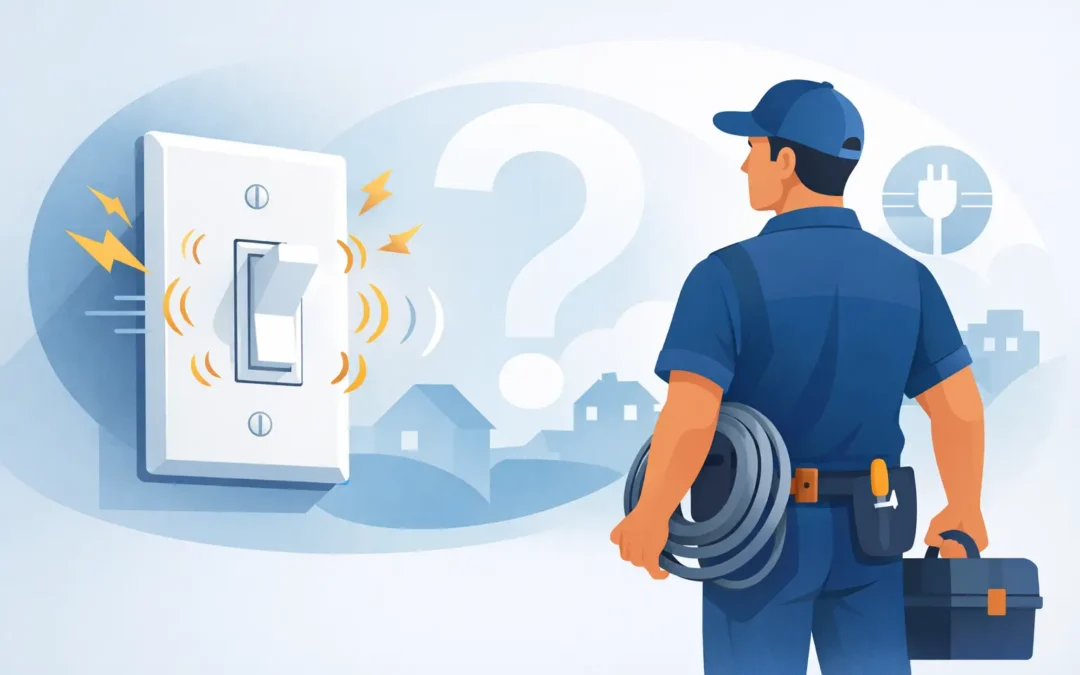
A light switch should make a clean click, then stay quiet. If you are asking why switches buzz, the sound is usually coming from a loose connection, a failing switch, or a lighting control that is not compatible with the load it serves. Some buzzing is minor, but a switch that gets warm, smells burnt, crackles, or produces a loud, persistent hum needs prompt attention.
For homeowners, business owners, and property managers, the safest approach is simple: do not ignore a new electrical noise. A licensed electrician can identify whether the issue is at the switch, in the light fixture, or elsewhere in the circuit before it becomes a larger repair.
Why Switches Buzz: The Most Common Causes
A buzzing sound is created when electrical current causes a component to vibrate. In a normal installation, that vibration should be too slight to hear. When a switch, dimmer, wiring connection, or fixture component is worn, loose, overloaded, or mismatched, the vibration can become noticeable.
A worn or faulty switch
Standard wall switches contain metal contacts that open and close the circuit. Over time, those contacts can wear down, become pitted from electrical arcing, or stop making a solid connection. The result may be a faint buzz when the switch is on, intermittent lights, or a switch that feels loose or unreliable.
A worn switch is generally an inexpensive repair, but it should not be treated as a cosmetic problem. Poor contact creates resistance. Resistance creates heat, and heat can damage the switch, its wiring, and the electrical box.
Loose wiring or connections
Loose connections are a common reason for buzzing, humming, crackling, or flickering. A conductor that is not secured properly at the switch terminal, wire connector, fixture, or panel can vibrate as current moves through it. It may also arc, meaning electricity jumps across a small gap rather than following a solid connection.
Arcing can leave black marks, create a burning smell, or make the switch plate feel warm. These are warning signs, not problems to test by tightening a screw with the power still on. The circuit should be safely shut off and inspected by a qualified electrician.
Dimmer and LED compatibility issues
Dimmer switches are designed to control lighting by adjusting the electrical waveform supplied to the fixture. That process can make components vibrate, particularly with certain LED bulbs. A light may still work normally while the dimmer or bulb produces a light hum.
Not every buzz means the dimmer is defective. The issue may be an LED bulb that is not rated as dimmable, a dimmer not designed for LED loads, or a dimmer that is carrying too little or too much load for its design. Replacing one bulb may help, but repeated buzzing calls for checking the full combination of switch, bulbs, and fixture.
An overloaded circuit or incorrect switch rating
A switch has a specific electrical rating. If it controls equipment that draws more current than it is rated for, its internal components can overheat and buzz. This can happen when a standard switch is used for a heavy-duty fan, commercial lighting, heater, or other high-load equipment without confirming the correct rating.
In commercial and industrial spaces, buzzing controls can also point to an aging contactor, relay, transformer, or panel component rather than the wall switch itself. These systems require proper testing. Replacing the visible switch without finding the source can leave the real fault in place.
A problem in the fixture, not the switch
The sound may seem to come from the switch because it occurs when the lights turn on, but the fixture may be the actual source. Older fluorescent fixtures, LED drivers, transformers, ceiling fan controls, and loose fixture parts can all hum or buzz under load.
Listen carefully from a safe distance. If the fixture is louder than the switch, the inspection should include the fixture and its connections. Do not remove a fixture cover or open a ceiling box unless you know the circuit is properly de-energized and you are qualified to work on it.
When a Buzzing Switch Is a Safety Concern
A quiet, occasional hum from a compatible LED dimmer may not be an emergency. A loud buzz from a standard switch, however, is not normal. The context matters.
Turn off the circuit and arrange service as soon as possible if the switch buzzes continuously, becomes warm or hot, gives off a burning odor, sparks, crackles, or causes lights to flicker. You should also act quickly if the switch works only sometimes, the faceplate is discolored, or a breaker trips when the switch is used.
Do not keep flipping a noisy switch to see whether the problem goes away. Repeated switching can worsen arcing at a damaged contact. Avoid using the connected light, fan, or equipment until the issue is assessed, especially where there is heat, smoke, visible damage, or a strong electrical smell.
If there is smoke, fire, or immediate danger, leave the area if necessary, call emergency services, and do not attempt to handle damaged electrical equipment. Electrical fires can continue inside walls or boxes even when the visible flame appears small.
What an Electrician Checks Before Replacing a Switch
The right repair depends on the cause. A proper inspection starts by verifying the circuit is safe, then checking the switch condition, terminal tightness, wire connections, grounding, load type, and breaker performance. In a dimmer circuit, the electrician will also confirm that the dimmer and lamps are compatible and correctly sized.
For a business, the inspection may extend to lighting controls, electrical panels, transformers, contactors, and the condition of wiring serving the affected area. A buzzing noise in a retail space, office, restaurant, warehouse, or shop should be handled before it interrupts operations or creates an avoidable safety concern.
The repair might be as straightforward as replacing a damaged switch or LED bulb. It could also involve securing a loose connection, changing an incompatible dimmer, repairing a fixture, or correcting a circuit issue. The benefit of diagnosis is that you pay for the problem to be fixed, rather than replacing parts at random.
Can You Fix a Buzzing Light Switch Yourself?
Changing a switch can look simple, but it is not a good trial-and-error project when buzzing, heat, or flickering is involved. Electrical boxes can contain multiple circuits, shared neutrals, damaged conductors, or wiring that does not match what a homeowner expects. Turning off the wrong breaker can leave energized wiring in the box.
A homeowner can safely take a few useful steps without opening anything: note when the sound occurs, identify what the switch controls, check whether it is a dimmer, and see whether the sound changes when different bulbs are used. If there is any sign of heat, odor, sparking, or repeated breaker tripping, leave the circuit off.
For properties in Toronto and the GTA, Eclipse Electrical Services can inspect buzzing switches, dimmers, fixtures, and related circuit issues with licensed, practical service. Fast attention is especially worthwhile when a switch is noisy in a busy commercial area or near equipment that cannot be left unreliable.
A switch that suddenly starts buzzing is giving you useful information. Treat it as a reason to have the circuit checked early, while the repair is often smaller, safer, and less disruptive.