
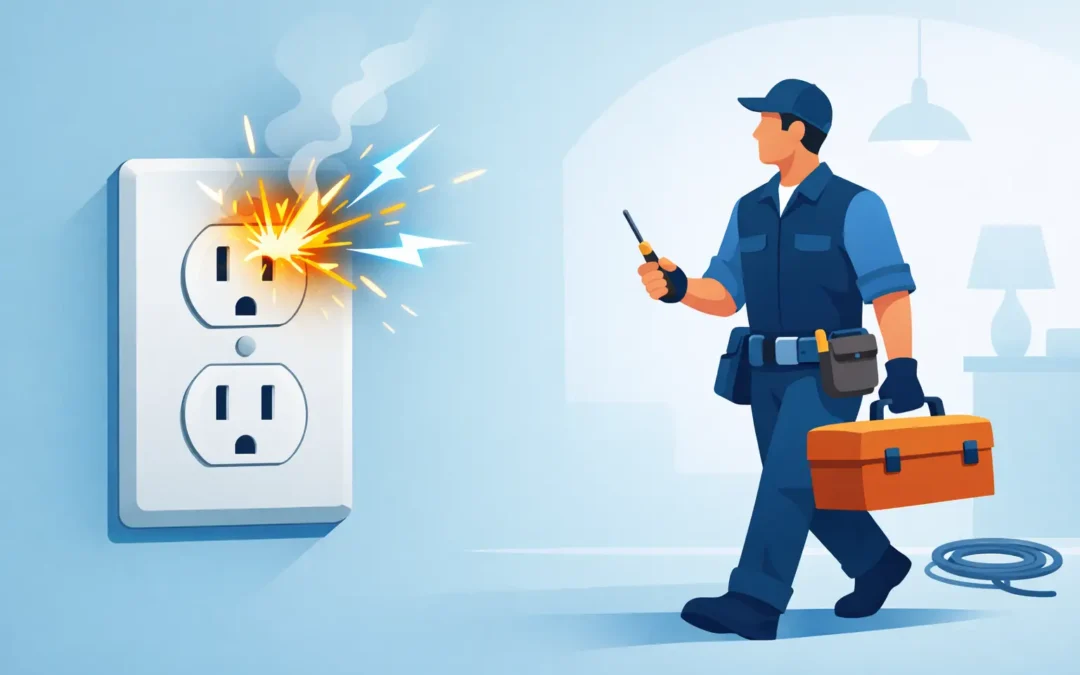
A small blue spark when you plug in a phone charger can be unsettling, but it is not always a sign of a dangerous electrical problem. Understanding why outlets spark helps you separate a brief, normal electrical arc from warning signs that require a licensed electrician. If the spark is large, repeated, accompanied by heat or odor, or happens when nothing is being plugged in, treat it as a safety issue.
Why Outlets Spark When You Plug Something In
Electricity is trying to complete a circuit the moment a plug’s metal prongs approach the energized contacts inside an outlet. For a split second, current can jump through the small air gap between the plug and the receptacle. That jump is called an electrical arc, and it may appear as a quick blue or white flash.
A tiny spark can happen more often with devices that draw a higher startup load, such as vacuum cleaners, space heaters, power tools, window air conditioners, and older appliances. The appliance is asking for power immediately, and the connection is made before the plug is fully seated.
In many cases, a small, one-time spark at the moment of plugging in is normal. It should be brief, contained inside the outlet, and not leave a smell, burn mark, buzzing sound, or loose connection behind. The outlet should not feel warm afterward.
That said, a normal-looking spark does not give an outlet a permanent pass. If it begins happening frequently, changes in size, or occurs with several devices, the outlet or circuit needs attention.
When a Sparking Outlet Is Not Normal
The concern is not simply the visible spark. It is what may be causing the arc and whether the electrical connection is generating excessive heat. Loose wiring, worn receptacle contacts, damaged plugs, overloaded circuits, and moisture can all create unsafe arcing.
Call a licensed electrician promptly if you notice any of the following:
- A spark that is large, bright, loud, or lasts longer than a quick flash
- A burning smell, smoke, discoloration, melted plastic, or scorch marks around the outlet
- An outlet that feels hot, buzzes, crackles, or has a loose-fitting plug
- Sparking when an appliance is already plugged in or when you are not touching the outlet
- A breaker that trips repeatedly when using the outlet
- Lights that flicker or power that cuts in and out on the same circuit
These symptoms can point to a loose or damaged connection. Electricity moving through a poor connection produces resistance, and resistance produces heat. That heat can damage insulation, outlet components, and wiring inside the wall long before a homeowner sees obvious fire damage.
Common Reasons Outlets Spark
Worn or loose outlet contacts
Outlets wear out, especially in high-use areas such as kitchens, offices, retail counters, workshops, and rental units. Over time, the internal contacts can lose their grip on the plug prongs. A plug that slips out easily or hangs loosely is not making a dependable connection.
Loose contacts allow small gaps where electricity can arc. Replacing the receptacle is often straightforward for a qualified electrician, but the wiring and box should also be inspected. A new outlet will not solve a problem if the wire connection behind it is loose or heat-damaged.
Damaged plugs or cords
Sometimes the outlet is not the source of the problem. Bent plug prongs, cracked plug heads, frayed cords, and damaged appliance wiring can produce sparking when connected. Do not keep using a cord that is hot, damaged, or taped together. Unplug it by gripping the plug, not pulling on the cord, and have the appliance or cord repaired or replaced.
High-demand appliances
Appliances with motors or heating elements can create a small startup arc. This can be more noticeable when plugging in a vacuum, shop tool, portable heater, or kitchen appliance. The trade-off is simple: higher-demand equipment needs more current, but that equipment also places more stress on an older outlet or an already-loaded circuit.
A dedicated circuit may be needed for certain appliances. This is especially relevant in commercial spaces, workshops, kitchen areas, and homes that have added equipment without upgrading the electrical system.
Loose wiring behind the outlet
A loose terminal screw, failing wire splice, damaged back connection, or worn aluminum wiring connection can lead to arcing behind the cover plate. This may not always create a visible spark at the plug. Instead, you may notice heat, flickering lights, intermittent power, or a faint crackling sound.
This is not a repair to attempt by removing the outlet cover and tightening wires yourself. Electrical boxes can contain energized conductors, and a connection that looks simple may have underlying damage. A licensed electrician can safely test the circuit, repair the connection, and replace any affected components.
Overloaded circuits and power strips
One outlet can physically accept several devices through a power strip or extension cord, but that does not mean the circuit can safely carry the combined load. Space heaters, microwaves, kettles, air fryers, printers, computers, and power tools can add up quickly.
Overloading may cause breakers to trip, but it can also create heat at weak outlet connections before the breaker opens. Avoid daisy-chaining power strips or using extension cords as permanent wiring. If your property routinely needs more outlets or more capacity, a proper electrical upgrade is the safer long-term answer.
Moisture and contamination
Water and electricity do not mix. Outlets near sinks, laundry areas, garages, exterior walls, basements, and outdoor spaces can be exposed to humidity, leaks, condensation, or debris. Moisture can create a path for current to travel where it should not and may lead to sparks, tripping, or shock hazards.
If an outlet is wet, do not use it or repeatedly reset the breaker. Shut off power to the circuit if you can do so safely, keep people away from the area, and arrange for professional inspection. Ground-fault circuit interrupter protection is particularly important in locations where water exposure is possible.
What to Do If an Outlet Sparks
Your response should match the severity of the issue. A single, tiny flash with no heat, odor, or damage can be monitored, particularly if it happens only as a high-demand device is plugged in. Make sure the plug is in good condition and insert it firmly without forcing it.
For any suspicious spark, stop using the outlet. Unplug the device if it is safe to do so. If you see smoke, smell burning, hear continuous crackling, or feel heat from the outlet, turn off the breaker for that circuit if you can identify it without risk. Do not touch a wet outlet, use water on an electrical fire, or continue testing the outlet with different devices.
If there is active smoke or fire, leave the area and contact emergency services. Once the immediate danger is controlled, have the circuit inspected before restoring normal use.
Why Outlet Age and Property Use Matter
Older homes and commercial properties often have outlets and wiring that were not designed for modern electrical demand. A room that once powered a lamp and radio may now supply chargers, computers, televisions, gaming equipment, portable heaters, and air-conditioning units. In a business setting, added workstations, point-of-sale equipment, refrigeration, or shop equipment can create similar strain.
The right repair depends on the cause. One loose outlet may only need replacement and wiring repair. Repeated breaker trips across several rooms may call for circuit changes, added dedicated circuits, panel work, or a broader electrical safety inspection. The goal is not to replace parts unnecessarily. It is to identify where the connection or capacity problem starts and correct it properly.
Get a Sparking Outlet Checked Before It Gets Worse
A sparking outlet is one of those problems that can stay minor or become serious without much warning. Do not ignore signs of heat, burning, looseness, damaged plugs, or repeated arcing. For homeowners and businesses in Toronto and the GTA, Eclipse Electrical Services can inspect the outlet, circuit, and connected equipment, then recommend a practical repair at a fair price.
If an outlet does not feel right, trust that instinct. Turning off the circuit and getting qualified help early is usually quicker, safer, and less costly than waiting for a small electrical fault to damage wiring inside the wall.