
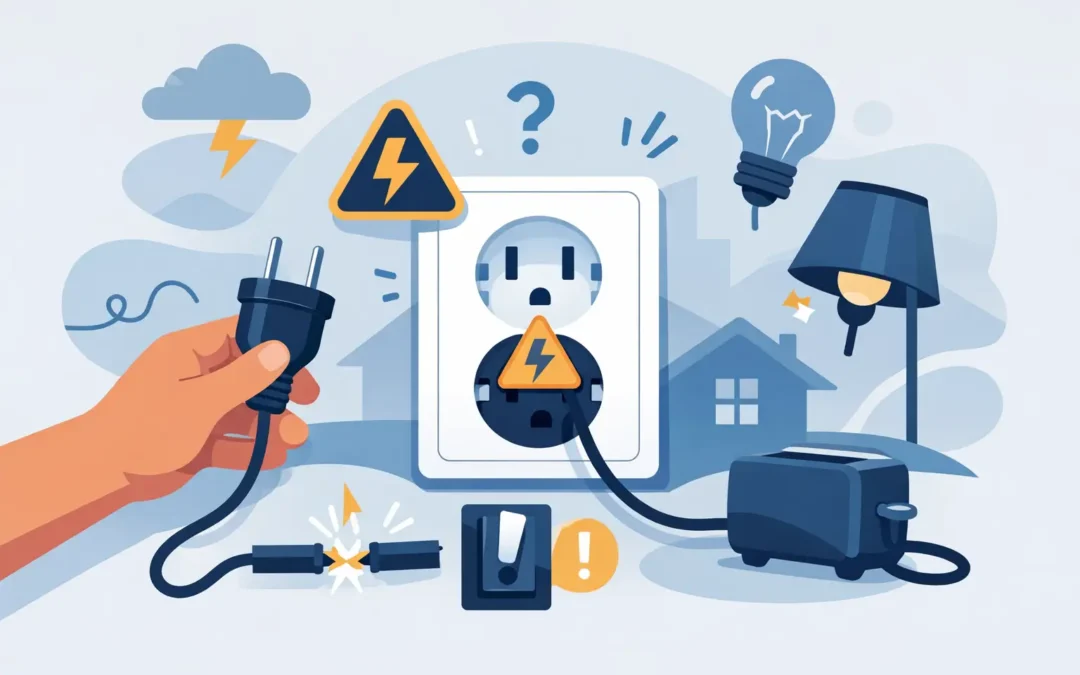
You plug in a phone charger, lamp, or printer and get nothing. No power, no warning, just a dead outlet. If you’re asking why are outlets not working, the answer can be simple, like a tripped breaker, or more serious, like a failed connection hidden in the wall. The key is knowing what you can check safely and when the problem needs a licensed electrician.
A non-working outlet is more than an inconvenience. In a home, it can point to an overloaded circuit or a worn device. In a business, it can interrupt equipment, workstations, refrigeration, or point-of-sale systems. Either way, the goal is the same – find the cause quickly and fix it safely.
Why are outlets not working in one room or area?
When several outlets stop working at once, the problem is usually tied to the circuit, not the individual receptacles. That narrows things down.
The most common cause is a tripped breaker. Your electrical panel is designed to shut off power when a circuit draws too much current or a fault is detected. This can happen after plugging in a space heater, microwave, hair dryer, or multiple devices on the same line. Sometimes the breaker handle does not look fully off, so it helps to reset it properly by switching it all the way off and then back on.
Another frequent issue is a tripped GFCI outlet. Ground fault circuit interrupter outlets are common in kitchens, bathrooms, garages, basements, utility rooms, and outdoor areas. What many property owners do not realize is that one GFCI can protect several standard outlets downstream. That means the dead outlet may not be the one with the reset button. If a bathroom outlet, garage outlet, or even an exterior outlet has tripped, it may cut power to outlets nearby.
There is also the chance of a loose connection somewhere on the circuit. This is more common in older homes, high-use commercial spaces, and anywhere outlets have seen years of wear. One failed connection can stop power from continuing to the next receptacle in line.
Why are outlets not working when the breaker looks fine?
This is where people get misled. A breaker can appear normal while the actual problem is elsewhere.
A GFCI trip is the first thing to rule out. Press test and reset on any GFCI outlets in the area. Check bathrooms, kitchens, garages, unfinished basements, and outside walls. If the reset will not hold, that usually means there is an active fault on the circuit and it should be inspected.
If the outlet still has no power, the receptacle itself may have failed. Outlets do wear out. Repeated plugging and unplugging loosens internal contacts over time. In some cases, you may notice plugs falling out easily or a faceplate that feels warm. Those are warning signs that the outlet should be replaced.
There is also the possibility of a switched outlet. In some rooms, especially bedrooms and living rooms, half or all of an outlet may be controlled by a wall switch. If the outlet seems dead, make sure a nearby switch has not been turned off. It sounds basic, but it happens often.
Then there are hidden wiring problems. Backstabbed connections, damaged wires, and failing splices inside boxes can interrupt power without tripping the breaker. This is not a do-it-yourself diagnosis unless you are qualified to work on energized electrical systems.
Common reasons an outlet stops working
Some faults are straightforward. Others point to a larger electrical issue. These are the causes electricians see most often.
Tripped breaker
Overloaded circuits are common in kitchens, offices, workshops, and older homes with limited branch circuits. One breaker trip may be a one-time overload. Repeated trips usually mean the circuit is undersized for the demand or there is a fault that needs attention.
Tripped GFCI
Moisture, appliance faults, and nuisance trips can all shut down protected outlets. If a GFCI keeps tripping, do not keep resetting it without finding the cause.
Worn or damaged outlet
Cracked faceplates, scorch marks, buzzing sounds, or loose plug fit are all signs the receptacle may be failing. A damaged outlet should be replaced promptly.
Loose wiring connection
This is a serious one because loose connections can generate heat. Sometimes the outlet simply stops working. Other times, you may notice intermittent power, flickering devices, or a faint burning smell.
Burned connection or failed splice
A poor connection inside the box can burn over time, especially under heavy load. This can cut power to one outlet or several connected downstream.
Switched or half-hot outlet confusion
Not every dead outlet is broken. Some are controlled by a switch by design. In older homes, this setup is common where ceiling lights were not originally installed.
Upstream device failure
If one outlet feeds the next in line, a failure at the first point can affect everything after it. That is why one dead outlet can sometimes knock out half a room.
What you can safely check first
There are a few practical checks you can make before calling for service.
Start by testing the device in another outlet. This confirms whether the issue is the outlet or the appliance. Then check the panel for a tripped breaker and reset it once. After that, inspect nearby GFCI outlets and press reset.
Next, look for a wall switch that may control the outlet. If the outlet is in a bathroom, kitchen, garage, exterior wall, or basement, pay extra attention to GFCI protection. In commercial units, also check whether a janitorial room, washroom, or back-of-house area has a tripped GFCI affecting other parts of the space.
Stop there if you see blackening, smell burning, hear crackling, or notice the outlet feels warm. Those are not watch-and-wait issues.
When a dead outlet is a safety issue
Not every power loss is urgent, but some signs mean you should act fast.
If the outlet is sparking, hot to the touch, discolored, or making noise, turn off the breaker if you can identify it safely and do not use the outlet. The same goes for outlets that stopped working after water exposure or storm damage. In commercial and industrial settings, any outlet serving essential equipment should be treated as time-sensitive because downtime can quickly become a bigger operational problem.
Repeated breaker trips also deserve prompt attention. The trade-off is simple: resetting may restore power temporarily, but if the root cause is a short, a failing device, or an overloaded circuit, the problem will keep coming back.
Why are outlets not working in older homes or commercial buildings?
Age changes the picture. In older properties, you may be dealing with worn receptacles, outdated wiring methods, limited circuit capacity, or previous repair work that was not done well. Aluminum wiring, ungrounded receptacles, and overcrowded boxes can all complicate what looks like a simple outlet issue.
In commercial spaces, tenant improvements and equipment changes are a common factor. A circuit that once powered a few office devices may now be feeding displays, printers, fridges, chargers, and point-of-sale equipment. That added demand can expose weak points in the system.
This is where experience matters. The fix is not always replacing the outlet. Sometimes the real solution is tracing the circuit, repairing a failed connection, separating loads, or upgrading the branch circuit to suit current use.
When to call a licensed electrician
Call a licensed electrician if the breaker will not reset, the GFCI will not hold, multiple outlets are dead without a clear cause, or there are any signs of heat or burning. You should also call if the outlet works intermittently, if only part of the outlet has power unexpectedly, or if the problem affects business operations.
A proper service call should do more than swap out a receptacle and leave. The job is to identify why the outlet lost power in the first place, verify the safety of the circuit, and make sure the repair matches the load the circuit is actually serving.
For homes and businesses, that can mean anything from replacing a failed device to repairing damaged wiring or correcting an overloaded circuit. A company like Eclipse Electrical Services handles these problems with the same approach every time – find the fault, make the repair cleanly, and restore power safely without wasting your time.
Dead outlets are easy to ignore when the extension cord seems like a quick fix, but that usually turns a repair into a bigger problem later. If an outlet has stopped working, treat it as a warning sign and get the cause checked before it affects more of your system.