
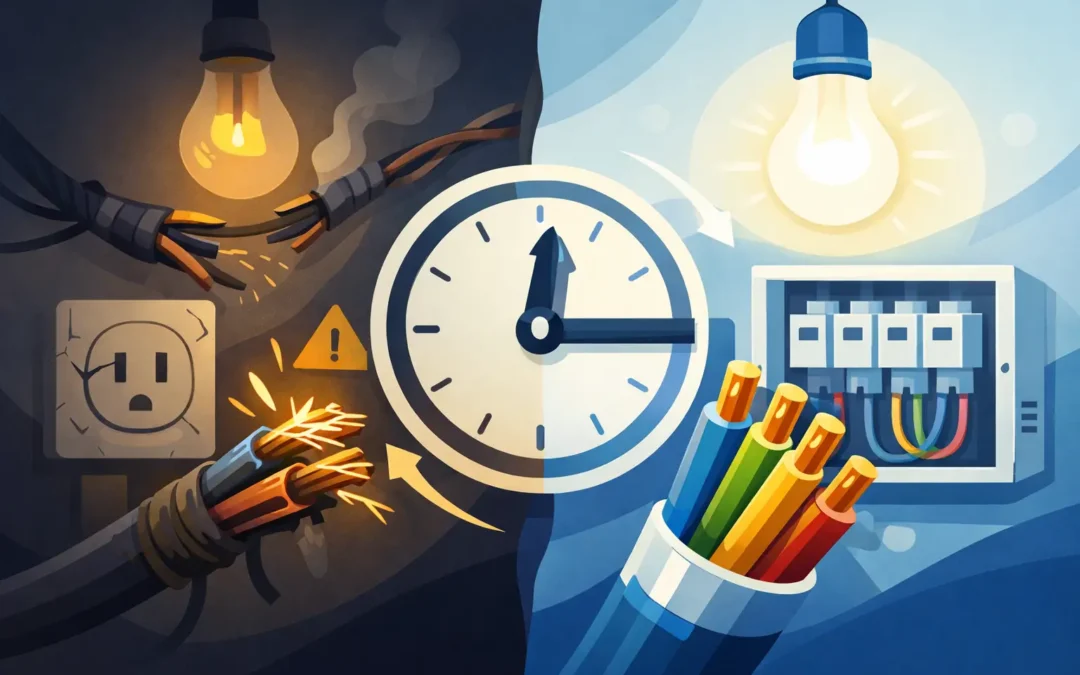
A breaker that keeps tripping, outlets that feel warm, or lights that flicker for no clear reason are not small annoyances. They are often the first signs people notice when they start asking when should wiring be replaced. In homes, shops, offices, and industrial spaces, aging or damaged wiring can turn into a safety issue fast, especially once electrical demand increases beyond what the original system was built to handle.
The hard part is that wiring does not come with a clear expiration date. Some systems last for decades if they were installed properly, protected from damage, and not overloaded. Others need partial or full replacement much sooner because of poor workmanship, outdated materials, renovations, moisture exposure, or years of added circuits and devices. The right answer depends on the age of the property, the type of wiring in place, and the problems showing up now.
When should wiring be replaced in a property?
A good rule is this: wiring should be replaced when it is unsafe, outdated, damaged, or no longer suitable for the electrical load of the building. That can happen in an older house with original branch wiring, a commercial unit that has gone through several fit-outs, or an industrial space where equipment demands changed over time.
Age matters, but age alone is not the whole story. A well-maintained system in a dry environment may still perform safely after many years. On the other hand, wiring hidden behind walls may have brittle insulation, loose terminations, improper splices, or signs of overheating long before anyone sees obvious failure. That is why an inspection matters more than a guess.
If a property is more than 30 to 40 years old and has not had a meaningful electrical upgrade, it is worth having the wiring evaluated. That does not automatically mean a full rewire is needed. It does mean the system should be checked before a renovation, service upgrade, tenant turnover, or major equipment installation puts more strain on it.
Warning signs you should not ignore
The most common sign is repeated breaker tripping. Breakers are supposed to trip when a circuit is overloaded or there is a fault. If that keeps happening, the issue may be too much demand on the circuit, but it can also point to deteriorated wiring, loose connections, or damaged conductors.
Flickering or dimming lights are another red flag, especially if it happens when appliances turn on or if it affects more than one room. A single bad bulb is one thing. Widespread inconsistent lighting can point to wiring problems, overloaded circuits, or panel issues.
Warm outlets, hot switch plates, buzzing sounds, and burning smells all need immediate attention. Wiring should never produce a burnt odor during normal use. If it does, there may already be overheating behind the wall or inside the device box.
Discolored outlets or switch covers are also worth taking seriously. Brown marks, melted plastic, or visible scorching are signs that heat has built up at some point. That may come from a loose connection, arcing, or a circuit serving more load than it should.
In commercial and industrial spaces, warning signs can show up as nuisance shutdowns, equipment faults, inconsistent power to workstations, or circuits that were clearly added in a piecemeal way over the years. Those properties often stay operational by working around problems until the system reaches a point where replacement is the safer and more cost-effective option.
Older wiring types that often need replacement
Some wiring systems are simply outdated by modern standards. Knob-and-tube wiring is a well-known example in older homes. It may still be found in parts of a building even when some areas were upgraded later. The issue is not just age. It is that this type of wiring was installed for a different era of electrical use and often lacks the grounding and protective features expected today.
Aluminum branch wiring is another case where replacement or approved remediation may be needed. Aluminum can be used safely in the right applications, but older aluminum branch circuits have a known history of connection problems when devices and terminations are not properly rated or maintained. Loose connections can lead to overheating.
Cloth-insulated wiring can also become brittle over time. Once insulation starts breaking down, conductors may be exposed or less protected against movement, heat, and contact with surrounding materials. Even if the system still functions, deteriorated insulation is a sign that the wiring is reaching the end of its reliable service life.
Renovations often reveal the real condition
A lot of replacement decisions happen during remodeling because that is when walls and ceilings are opened. What looked fine from the outside can turn out to be patched, undersized, improperly spliced, or mixed with several generations of electrical work.
This is common in older homes that had additions, finished basements, kitchen upgrades, or garage conversions completed over many years. It is just as common in commercial units that have changed tenants multiple times. New lighting, HVAC equipment, kitchen appliances, office layouts, or production equipment can expose the fact that the original wiring was never upgraded to match the current use of the space.
If you are already opening walls, partial or full rewiring may save money in the long run. It is usually more practical to replace unsafe or obsolete wiring during planned construction than to patch around it and reopen finished surfaces later.
Capacity matters as much as condition
Sometimes the wiring is not failing, but it still needs replacement because it no longer matches the load. Modern properties run more electronics, more appliances, more HVAC equipment, and more specialty systems than they did decades ago.
A house with a renovated kitchen, electric heating upgrades, a hot tub, or EV charging may be asking far more from the existing circuits than the original design allowed. In commercial settings, added refrigeration, computers, point-of-sale systems, lighting, or tenant equipment can create the same problem.
When circuits are consistently overloaded, extension cords become permanent, or power strips are doing too much work, that is a sign the system may need more than a quick fix. In some cases, adding circuits is enough. In others, the existing wiring layout, panel capacity, or conductor size makes broader replacement the smarter move.
Full rewire or partial replacement?
Not every job requires a full rewire. If a problem is limited to one area, one damaged run, or one outdated section, partial replacement can be the right choice. That is often the case after localized water damage, a renovation in one part of the building, or a targeted upgrade for a new appliance or business use.
A full rewire makes more sense when unsafe wiring is widespread, the panel and branch circuits are all outdated, or previous work has left the system inconsistent and difficult to trust. For larger properties, the decision also comes down to downtime, access, and budget. A phased approach may be possible, especially in occupied commercial and industrial spaces.
The trade-off is simple. Partial work costs less upfront, but if the rest of the system is close behind in age or condition, you may end up paying for repeated service calls and multiple rounds of wall access. Full replacement costs more at the start, but it can solve the problem properly and create a safer, cleaner electrical layout.
When should wiring be replaced right away?
Some situations should be treated as urgent. Wiring that has been exposed to fire, flooding, rodent damage, or major physical impact should be inspected immediately and often replaced. The same applies if there are signs of arcing, melted insulation, smoking outlets, or repeated loss of power on the same circuits.
If a property purchase, insurance review, or code-related inspection flags dangerous or obsolete wiring, waiting usually creates more risk than savings. The cost of replacement is easier to manage than the cost of fire damage, business interruption, or equipment loss.
For landlords, property managers, and business owners, there is also a liability issue. If known electrical defects are left in place and something goes wrong, the consequences can extend well beyond repair costs.
The best next step is a licensed inspection
The safest way to answer when should wiring be replaced is with a proper on-site assessment by a licensed electrician. That inspection should look at the panel, visible branch wiring, outlets, switches, grounding, circuit loading, signs of overheating, and any history of recurring electrical problems.
In many cases, the answer is not as dramatic as people fear. You may need a focused repair, a few dedicated circuits, or replacement in one section of the property. In other cases, the inspection confirms that the wiring has reached the point where replacement is the right call for safety, reliability, and future use.
If you own or manage an older property and the electrical system has started showing its age, it is better to deal with it before it turns into an emergency. A clear assessment, straightforward pricing, and licensed workmanship will always put you in a better position than waiting for the next breaker trip, burnt outlet, or unexpected shutdown.