
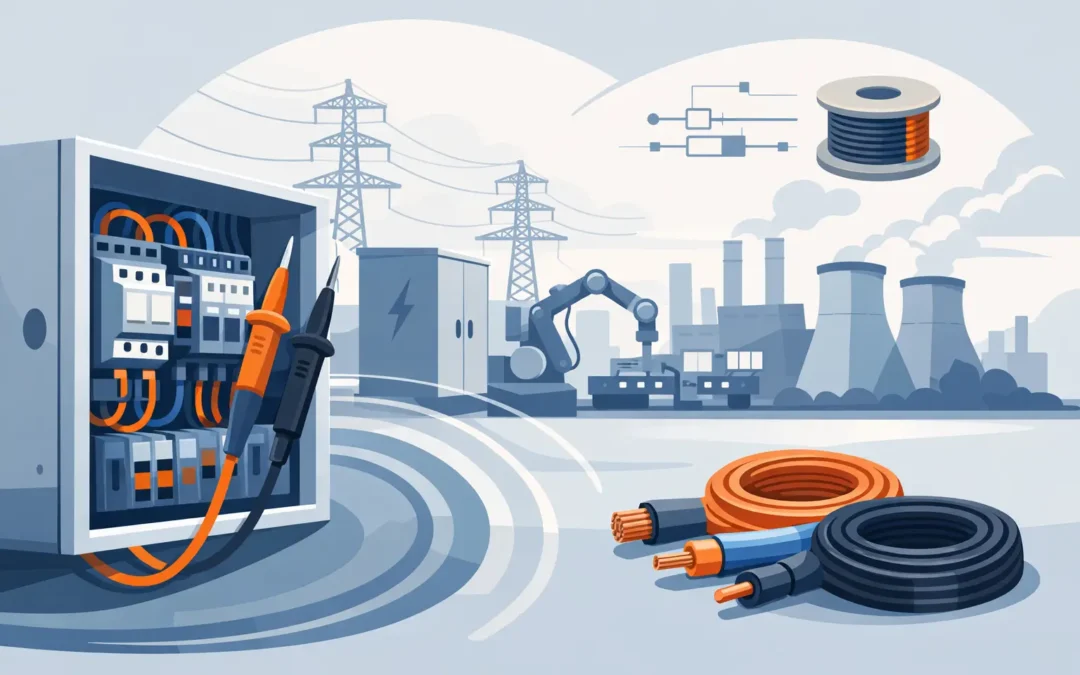
If you are asking what is industrial wiring, you are usually dealing with more than a few outlets, lights, or a small office panel. Industrial wiring is the electrical system that powers equipment, controls, production areas, warehouses, plants, and heavy-duty operations where reliability, safety, and capacity matter every day.
For a property owner, facility manager, or business operator, that distinction matters. Industrial electrical work is not just “bigger wiring.” It often involves higher voltage, more demanding loads, harsher environments, stricter shutdown planning, and tighter coordination with machinery, automation, and safety systems.
What is industrial wiring in practical terms?
Industrial wiring is the design, installation, connection, and maintenance of electrical systems used in industrial settings. That can include manufacturing facilities, processing plants, distribution centers, mechanical rooms, workshops, and large service buildings with heavy equipment.
These systems typically power motors, conveyors, pumps, compressors, control panels, breakers, transformers, disconnects, and specialized machinery. In many cases, the wiring also supports automation equipment, emergency shutoffs, monitoring systems, and backup power arrangements.
The goal is straightforward. The system has to deliver the right amount of power, safely and consistently, to equipment that often runs long hours and cannot afford avoidable downtime.
How industrial wiring differs from residential and commercial work
The biggest difference is load and complexity. Residential wiring is built around lighting, receptacles, appliances, HVAC, and general household use. Commercial wiring adds more scale and more shared systems, but industrial wiring takes another step because the electrical demand is often tied directly to operations, production, and safety.
A home may need a panel upgrade. A retail unit may need circuits for lighting and POS systems. An industrial site may need three-phase power distribution, motor control centers, dedicated equipment feeds, control wiring, cable tray systems, conduit runs in rough environments, and carefully planned shutdown windows to avoid production loss.
The environment also changes the work. Industrial areas may have dust, moisture, vibration, heat, chemical exposure, or washdown conditions. That affects the type of conduit, cable, fittings, enclosures, and protective devices that should be used.
Then there is troubleshooting. In an industrial setting, an electrical issue may not show up as a dead outlet. It may appear as nuisance tripping, motor overheating, unreliable controls, voltage drop, production stoppages, or intermittent equipment faults that cost time and money.
Core parts of an industrial wiring system
Industrial wiring is made up of several connected systems rather than one simple run of cable. The exact setup depends on the building and operation, but most sites include power distribution, equipment feeds, and controls.
Power distribution
This is the backbone of the system. It includes service entrances, switchboards, distribution panels, transformers, disconnects, and feeders that move power where it is needed. In larger facilities, distribution may be divided by process area, machinery type, or tenant use.
Equipment and machinery circuits
These circuits serve production equipment and heavy-duty electrical loads such as pumps, fans, welders, compressors, lifts, and conveyors. The wiring must match the machine’s voltage, amperage, starting characteristics, and operating conditions.
Control wiring
Not every wire in an industrial building carries heavy power. Control wiring handles signals between switches, relays, sensors, contactors, PLCs, and automated systems. This side of the system is critical because a machine can lose function even when full power is still available.
Grounding and protection
Proper grounding, bonding, overcurrent protection, and disconnecting means are essential. These are not small details. They protect workers, reduce equipment damage, and help isolate faults before they become larger failures.
Where industrial wiring is used
Industrial wiring shows up anywhere the electrical system supports process-driven work, heavy equipment, or demanding building infrastructure. That includes factories, food processing areas, warehouses, automotive facilities, fabrication shops, water treatment sites, and logistics buildings.
It can also apply in mixed-use properties where one section operates more like an industrial space than a standard commercial one. For example, a commercial unit with large mechanical systems, heavy refrigeration, or specialized machinery may need industrial-grade electrical planning even if the building itself is not a full manufacturing plant.
That is one reason proper assessment matters. The right electrical approach depends on actual load, equipment type, duty cycle, and code requirements, not just the label on the building.
What makes industrial wiring more demanding
Industrial systems are less forgiving when something is undersized, poorly installed, or incorrectly diagnosed. A small issue can affect production, inventory, refrigeration, worker safety, or scheduled operations.
Three things usually make industrial work more demanding than standard installations.
First, shutdowns have a cost. In many facilities, electrical work has to be planned around operating hours, deliveries, staff access, and machine availability. Even a routine repair may need lockout procedures and coordination with other trades or operators.
Second, future capacity matters more. It is common for businesses to add equipment over time. If the original installation does not account for growth, the result can be overloaded panels, messy add-ons, voltage issues, and repeated service calls.
Third, code compliance and safety procedures carry more weight because the risk is higher. Industrial spaces often require a more disciplined approach to labeling, disconnects, equipment clearances, environment-rated materials, and inspection readiness.
Common industrial wiring jobs
Some projects start with a failure, while others are part of expansion or preventive work. Common industrial electrical jobs include new equipment hookups, feeder installations, machine relocation, control panel wiring, switchboard upgrades, emergency repairs, lighting upgrades for warehouses and work areas, and troubleshooting recurring faults.
Older facilities also often need corrective work. That may involve replacing deteriorated conduit, cleaning up undocumented modifications, balancing loads, improving grounding, or upgrading panels that no longer suit the site’s actual demand.
In fast-moving service situations, the most valuable electrician is usually the one who can identify the real source of the problem quickly and fix it without turning a manageable issue into a long outage. That practical approach is a big part of what industrial clients look for.
Signs your site may need industrial electrical attention
Some warning signs are obvious, like breakers tripping under normal operation or machines losing power. Others are easier to miss. Flickering lights in a warehouse, motors running hotter than usual, equipment that resets randomly, buzzing panels, inconsistent startup performance, and repeated temporary fixes can all point to an underlying wiring or distribution issue.
Expansion is another trigger. If you are adding machinery, changing the floor layout, increasing production, or converting a commercial space to support heavier equipment, the existing wiring may not be enough.
This is where a proper site review helps. A licensed contractor can check load requirements, panel capacity, equipment connections, and site conditions before a problem turns into downtime.
Why industrial wiring should not be treated like general electrical work
A skilled electrician may be excellent in residential or light commercial service, but industrial wiring calls for a different level of planning and field experience. The work often involves reading detailed schematics, coordinating with machinery specifications, managing three-phase systems, and understanding how control and power wiring interact.
There is also less room for guesswork. If a circuit feeds a production line, a pump system, or critical refrigeration, the fix has to be right the first time or as close to it as possible. Speed matters, but not at the expense of safety or workmanship.
For businesses in Toronto and surrounding areas, that usually means working with a licensed electrical contractor that can handle both urgent faults and larger upgrade work without overcomplicating the job. Eclipse Electrical Services approaches industrial service the same way it handles all serious electrical work – clear communication, dependable scheduling, safe installations, and practical solutions that fit the site.
What to expect from a professional industrial wiring assessment
A good assessment should start with the actual operation, not just the panel. The electrician should look at what the equipment does, how often it runs, what the environment is like, and whether future expansion is likely.
From there, the review may cover service size, distribution layout, conductor condition, conduit systems, breaker sizing, disconnects, grounding, code concerns, and any signs of heat or wear. If there are recurring issues, troubleshooting should focus on the cause, not just the symptom.
Sometimes the answer is a straightforward repair. Sometimes it is an upgrade, a refeed, or a better way to separate loads. It depends on the age of the system, the type of equipment, and how the building is being used now compared with how it was wired originally.
Industrial wiring is really about keeping operations powered safely and predictably. When the wiring is right, equipment runs the way it should, downtime is easier to avoid, and future changes are easier to plan for. If your building is running heavy loads or specialized machinery, getting the electrical side right early saves a lot of trouble later.