
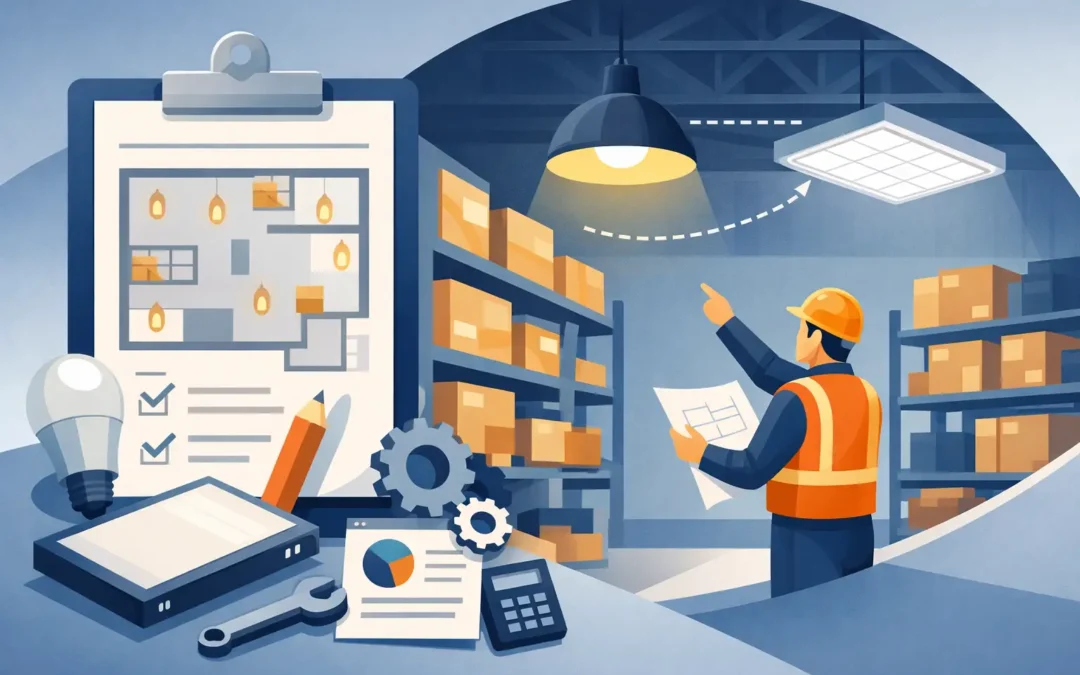
A warehouse lighting retrofit is often triggered by a familiar problem: operators are changing lamps too often, workers are dealing with dark aisles and glare, or energy costs keep climbing without a clear reason. Replacing old fixtures with LED lighting can address those issues, but the best results come from planning the electrical work around how the building actually operates.
For warehouse owners, facility managers, and commercial tenants, lighting is not just an overhead cost. It affects picking accuracy, forklift movement, employee safety, security, maintenance time, and the ability to keep the facility running without interruption. A licensed electrical contractor can assess the existing system, identify practical upgrade options, and install a solution that fits the building and budget.
Start With the Work Happening Below the Fixtures
The right fixture for a loading dock is not always the right fixture for high-rack storage, a packing station, or a maintenance area. Before selecting LED high bays or strip fixtures, look at ceiling height, rack layout, aisle width, work tasks, shift schedules, and the condition of the current electrical distribution.
A high-ceiling warehouse usually needs high-bay LED fixtures designed to direct light down to the work plane. In lower-ceiling areas, the same fixture may create uncomfortable glare or more light than the space needs. Areas with detailed labeling, quality control, or packing work may need higher light levels than general storage zones.
It also helps to identify where the current lighting is failing. Dead spots between racks, shadows around machinery, bright fixtures that make scanner screens harder to read, and uneven light near dock doors are all issues that a simple fixture-for-fixture replacement may not solve. A site assessment should focus on light where people work, walk, load, and operate equipment, not only on how bright the ceiling appears.
What a Warehouse Lighting Retrofit Should Include
A proper warehouse lighting retrofit is more than swapping metal halide or fluorescent fixtures for LEDs. It should consider fixture layout, controls, circuit capacity, emergency lighting, and safe installation access.
Fixture Selection and Layout
LED high-bay fixtures are a common choice for large open warehouse areas because they provide strong output, long service life, and lower power consumption than many older systems. However, wattage alone is not a reliable way to compare fixtures. Light output, beam angle, fixture spacing, color temperature, glare control, and product quality all matter.
For example, wider beam angles can work well in open floor areas, while narrower distributions may be better for taller ceilings or aisle-focused lighting. A layout that works in an empty building may perform differently once tall racking is installed. Photometric planning can show where light will land and help avoid dark work zones or unnecessary overlighting.
Color temperature is another practical decision. Many warehouses use neutral to cool white lighting because it supports visibility and a clean working environment. The right choice depends on the type of work, the colors being handled, and employee comfort. Brighter-looking light is not automatically better if it creates glare or visual fatigue during long shifts.
Lighting Controls That Match Operating Hours
Controls can increase the savings from LED fixtures, but they need to fit the facility’s daily routine. Occupancy sensors are useful in rarely used storage aisles, washrooms, utility rooms, and offices. Daylight sensors can reduce output near skylights, windows, or dock doors when natural light is available.
In busy areas with constant forklift traffic, sensors need the right placement and time delay. Poorly configured sensors can turn lights off too quickly, frustrate employees, and create a safety concern. In some cases, scheduled controls or zoned switching are more dependable than occupancy sensing alone.
Controls should also be easy for authorized staff to understand and override when necessary. The goal is to reduce wasted energy without making everyday work more complicated.
Electrical Capacity and Existing Conditions
LED fixtures typically reduce lighting load, which can free capacity on existing circuits. Still, a contractor should inspect the wiring, branch circuits, disconnects, panels, and mounting conditions before work begins. Older buildings may have damaged conduits, outdated fixtures, poor connections, or circuits that have been modified over time.
A retrofit is a good opportunity to correct these issues rather than conceal them behind new equipment. If a panel is crowded, mislabeled, or showing signs of wear, the lighting project may need to include electrical upgrades. The scope depends on the building’s condition, but identifying the work early prevents costly surprises once installation is underway.
Safety and Code Requirements Cannot Be an Afterthought
Warehouse lighting affects more than energy consumption. Clear visibility supports safe forklift routes, pedestrian walkways, stairs, exits, loading areas, and emergency response. Lighting upgrades should preserve or improve emergency illumination and exit signage, especially when fixtures or circuits are being changed.
A licensed electrician can ensure new equipment is properly mounted, wired, grounded, and protected. This is particularly important in warehouses with dust, moisture, temperature swings, vibration, or high ceilings that require lifts and specialized access equipment. Fixtures may need a suitable environmental rating for the location, and mounting hardware needs to withstand the building conditions.
Installation planning also matters. Replacing fixtures above active racking or shipping lanes may require temporary closures, equipment relocation, and a clear work zone below. A contractor should coordinate the sequence around operations so the project does not create avoidable downtime or hazards.
Build the Business Case Around Total Cost, Not Fixture Price
The lowest fixture price does not always produce the lowest long-term cost. Cheap products can have inconsistent output, premature driver failures, limited warranty support, or poor light distribution. If a warehouse needs lifts and labor to replace failed units a few years later, the initial savings can disappear quickly.
When comparing retrofit proposals, look beyond the fixture count and total price. Ask what equipment is being installed, how the layout was determined, whether controls are included, how emergency lighting will be handled, and whether any electrical repairs or panel work are expected. A clear scope helps facility managers compare proposals fairly and plan for the real cost of the project.
Energy savings should be based on current operating hours and actual fixture loads. A warehouse running multiple shifts will usually see a faster return than a building used only part-time. Maintenance savings can also be significant when old lamps, ballasts, and difficult-to-access fixtures are eliminated, but those savings vary by building and maintenance practices.
Available utility incentives may improve the financial case, depending on the location, equipment, and program requirements. Requirements can change, so confirm eligibility before ordering fixtures or starting work. In some cases, pre-approval or specific documentation is needed.
Plan Installation Around Warehouse Operations
Most lighting retrofits can be phased to keep a warehouse active. The best approach depends on the facility’s layout, working hours, inventory levels, and safety requirements. Some projects are completed aisle by aisle, while others are scheduled during evenings, weekends, or planned shutdown periods.
Before work starts, establish access routes for lifts, identify areas that need to be cleared, protect inventory, and communicate the schedule to supervisors and staff. It is also wise to test a small section first when the project includes a new fixture type or control strategy. A pilot area gives the operations team a chance to assess light levels, glare, and sensor performance before the full installation proceeds.
After installation, fixtures and controls should be tested under normal operating conditions. Walk the aisles, check loading areas, confirm that emergency systems work as intended, and make sure controls respond properly. Small adjustments to aiming, sensor settings, or control zones can make a noticeable difference.
Choose a Contractor Who Can Handle the Electrical Scope
A warehouse retrofit may look like a lighting job, but it often involves more: circuit modifications, panel capacity checks, emergency systems, controls, high-access work, and coordination with an active operation. Choosing a licensed contractor with commercial and industrial experience helps keep the work organized and code-compliant.
Eclipse Electrical Services provides practical electrical support for warehouse and commercial facilities across Toronto and the GTA, from lighting upgrades and controls to repairs, panels, and ongoing building maintenance. The focus should be a clear scope, dependable scheduling, and workmanship that supports the way the facility runs.
A well-planned lighting upgrade should make the warehouse easier and safer to operate from the first shift onward. Start with a site assessment, confirm the operating needs of each area, and make decisions based on light quality, reliability, and the real cost of ownership.