
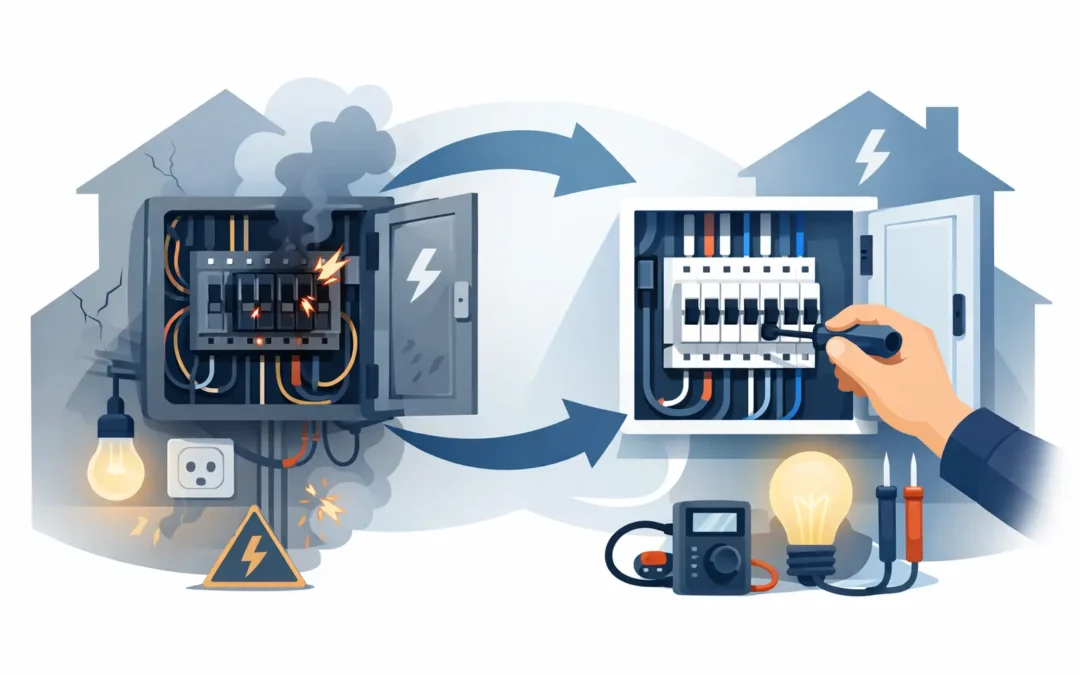
A panel problem usually does not announce itself politely. It shows up as breakers that keep tripping during normal use, lights that flicker when equipment starts, or a faint burning smell near the panel that makes you stop and pay attention. If you are searching for the top signs electrical panel replacement may be necessary, the goal is not to guess – it is to spot warning signs early and get a licensed electrician involved before a minor issue turns into a safety problem.
Why electrical panel condition matters
Your electrical panel is the control point for the entire property. It distributes power, protects circuits from overload, and helps reduce the risk of overheating and electrical fires. When the panel is outdated, damaged, undersized, or simply worn out, the rest of the system suffers with it.
For homeowners, that can mean unreliable power and a real safety concern. For business owners and property managers, it can also mean downtime, tenant complaints, equipment issues, and trouble keeping up with current electrical demands. Modern buildings use more power than older panels were designed to handle, especially once you add HVAC equipment, kitchen appliances, office technology, EV chargers, or production equipment.
Top signs electrical panel replacement should be considered
Breakers trip again and again
An occasional breaker trip is not unusual. That is the breaker doing its job when a circuit is overloaded or a fault occurs. The problem is when breakers start tripping regularly under normal conditions.
If a microwave and toaster running together knock out power every morning, or an office circuit drops every time basic equipment is in use, the issue may be bigger than one overloaded branch circuit. Repeated tripping can point to a panel that is no longer handling demand properly, aging breakers that are no longer reliable, or a service that needs upgrading.
You notice burning smells or heat near the panel
This is one of the clearest red flags. A burning odor, warm panel cover, scorch marks, or discoloration around breakers can indicate overheating, loose connections, or internal damage. These are not wait-and-see issues.
A panel should never smell like hot plastic or burnt insulation. If it does, shut off power if it is safe to do so and call a licensed electrician right away. In some cases, repair may be possible, but if the heat damage is significant, panel replacement is often the safer path.
Lights flicker or dim without a clear reason
Lights can flicker for simple reasons, including a failing bulb or fixture issue. But if lights dim when the air conditioner starts, flicker in multiple rooms, or fluctuate along with appliance use, that may point to a problem with load handling or unstable distribution at the panel.
This matters even more in commercial spaces and facilities where voltage fluctuations can affect electronics, point-of-sale systems, computers, and other sensitive equipment. Flickering alone does not automatically mean a full replacement is needed, but it should not be ignored.
The panel is old or has outdated components
Age by itself does not always mean failure, but older panels deserve close attention. Many properties still have panels installed decades ago, and they were not built for current power demands. If the panel has outdated breakers, limited capacity, visible corrosion, or a history of repairs, replacement may be more practical than continuing to patch problems.
This is especially true during renovations, tenant improvements, service upgrades, or when adding major loads. If a property still relies on an older fuse box or an obsolete panel design, replacement is often the best long-term decision for safety, performance, and code compliance.
You hear buzzing or crackling sounds
Electrical systems should be quiet. A low hum from certain equipment can be normal, but buzzing, crackling, or popping from the panel is not. Those sounds can point to loose connections, arcing, failing breakers, or internal wear.
Arcing is particularly serious because it creates heat and can increase fire risk. If the panel is making noise, have it inspected promptly. Sometimes the issue is isolated to a breaker or connection. Other times, the panel itself has reached the point where replacement is the safer and more cost-effective fix.
There is rust, corrosion, or moisture around the panel
Water and electricity do not mix, and even minor moisture exposure can cause long-term panel damage. Rust on the cabinet, corrosion on breakers, or signs of water entry around the panel should always be taken seriously.
In basements, utility rooms, and some commercial settings, this can happen gradually and go unnoticed until performance problems begin. Corrosion affects connections and can lead to unreliable operation. If moisture has compromised the interior components, replacement may be necessary, along with correcting the source of the water.
You are adding major electrical loads
Sometimes the panel is not failing – it is simply too small for what the property now requires. If you are adding an EV charger, finishing a basement, upgrading kitchen equipment, installing HVAC, expanding a commercial space, or bringing in heavier industrial loads, the existing panel may not have enough capacity.
This is one of the most common situations where replacement makes sense before problems show up. An electrician can assess amperage, panel space, service capacity, and future load needs so you are not making upgrades on a system that is already at its limit.
When repair might be enough and when replacement makes more sense
Not every panel issue calls for a full replacement. A single faulty breaker, one damaged connection, or an isolated circuit issue may be repairable. That is why proper diagnosis matters. Replacing an entire panel when a targeted repair would solve the problem is unnecessary. On the other hand, repeated repairs on an aging or undersized panel can cost more over time and still leave you with a system that is unreliable.
The right answer depends on the panel’s age, condition, capacity, brand, service history, and the electrical demands of the building. For some properties, a panel upgrade is mainly about adding room for future use. For others, it is a direct safety issue that should be handled quickly.
What a licensed electrician will look for
Capacity, condition, and code concerns
A proper inspection goes beyond checking whether the lights come on. A licensed electrician will look at service size, breaker condition, wiring terminations, panel labeling, signs of overheating, moisture damage, grounding and bonding, and whether the panel is appropriate for the building’s present use.
If the property has had additions, renovations, or equipment changes over the years, the panel may no longer match the actual demand. In commercial and industrial settings, that review can also include load balance, operational impact, and whether the system supports current equipment safely.
Safety first, then practical recommendations
Good electrical advice should be clear and realistic. If replacement is needed, you should understand why. If repair is enough for now, that should be explained too. At Eclipse Electrical Services, that practical approach matters because customers are not looking for pressure – they want reliable work, honest guidance, and a fast response when something is wrong.
Do not wait for a complete failure
One of the biggest mistakes property owners make is waiting until the panel fails outright. By then, the issue may involve lost power, damaged equipment, emergency downtime, or a more serious hazard. Electrical panels usually give warning signs before they quit completely. The key is recognizing those signs and acting before the situation becomes urgent.
If breakers are tripping, the panel is running hot, lights are flickering, or the system simply cannot keep up with the property anymore, get it inspected. That is the safest way to protect the building, the people using it, and the equipment connected to it.
A dependable panel should not be something you have to think about every day. If it has started getting your attention for the wrong reasons, that is usually a sign it is time to have a licensed electrician take a serious look.