
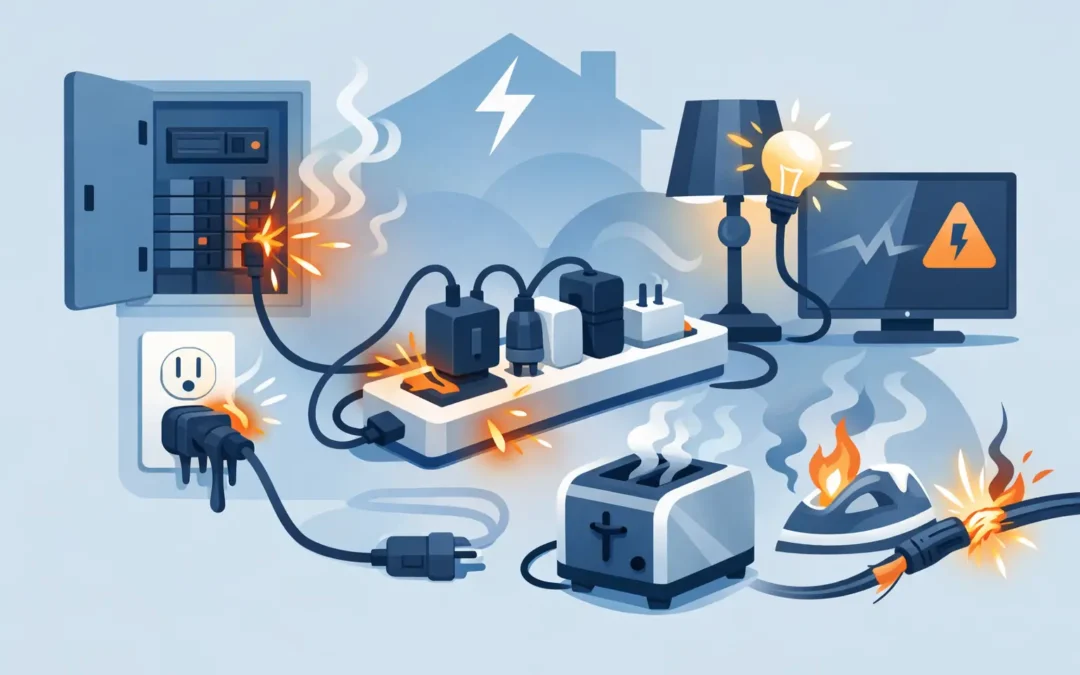
You usually notice overloaded circuits when something small starts happening over and over – a breaker trips during dinner, lights dim when the microwave runs, or an outlet feels warmer than it should. Those are often the top signs of overloaded circuits, and they should not be brushed off as a normal quirk of an older home or busy workplace. In many cases, they are early warnings that the electrical system is carrying more demand than the circuit was designed to handle.
An overloaded circuit is not the same as a one-time power issue. It happens when too many devices, appliances, or systems pull electricity from the same circuit at the same time. Sometimes the fix is simple, like redistributing what is plugged in. Other times, it points to a bigger issue such as outdated wiring, not enough dedicated circuits, or a panel that no longer matches the property’s electrical load.
Top signs of overloaded circuits in a property
Breakers that trip repeatedly
A breaker that trips once after an unusual spike in use is not always a major problem. A breaker that trips often is different. If the same breaker keeps shutting off when you use a toaster, space heater, hair dryer, microwave, server rack, or office equipment, that is one of the clearest signs the circuit is overloaded.
The breaker is doing its job by cutting power before wires overheat. The problem is that repeated tripping means the circuit is regularly being pushed beyond safe capacity. Resetting it again and again does not solve the underlying issue.
In commercial spaces, this can look slightly different. You may notice one area losing power when copiers, printers, coffee machines, and workstations are all active at once. In a retail or light industrial setting, it may happen when equipment starts up under peak demand.
Flickering or dimming lights
If lights dim when a large appliance turns on, the circuit may be under strain. This often shows up in kitchens, laundry areas, garages, workshops, and offices with several devices sharing one line. A brief dip can happen in some properties, but frequent or noticeable dimming is worth attention.
The key is pattern. If the lights flicker every time the vacuum starts, or dim whenever the AC unit kicks in, that is not random. It suggests the circuit is struggling to supply all connected loads consistently.
This does not always mean the entire electrical system is failing. Sometimes it is localized to one branch circuit. Sometimes it points to a poor connection or another fault. That is why proper diagnosis matters instead of guessing.
Warm outlets or switch plates
Outlets and switches should not feel hot. Slight warmth from a device charger can happen, but the faceplate itself should not become warm during ordinary use. If it does, the circuit may be overloaded, the wiring connection may be loose, or the device may be damaged.
Heat is one of the most serious warning signs because it means electrical resistance is building somewhere it should not. That can damage insulation, wear out devices faster, and increase fire risk.
If you notice warmth, discoloration, or a faint melting smell near an outlet, stop using it and have it checked. This is not something to monitor for a few more weeks.
Buzzing sounds or burning odors
Electricity should be quiet. A faint hum from certain commercial equipment can be normal, but buzzing from an outlet, switch, breaker panel, or power strip is not. Neither is a burning smell, especially one that comes and goes when certain appliances are running.
These signs can mean overloaded wiring, loose terminations, arcing, or failing components. The exact cause depends on the setup, but the takeaway is the same: turn off the affected circuit if you can do so safely and get a licensed electrician involved.
For property managers and business owners, this matters even more because a small electrical fault can interrupt operations fast. What starts as an occasional odor near a panel room can turn into a shutdown or emergency callout if ignored.
What overloaded circuits often look like day to day
You rely on extension cords and power strips too much
If a room only works because multiple power strips are chained together, there is a good chance the original circuit layout no longer fits how the space is being used. This is common in older homes, renovated basements, offices with added equipment, and commercial units that changed purpose over time.
Power strips are not a long-term substitute for proper electrical distribution. They make it easier to connect more devices, but they do not increase the actual capacity of the circuit feeding them.
This is one of those situations where convenience can hide the problem. Everything may appear to work until one more load gets added, and then the breaker starts tripping or an outlet begins to overheat.
Appliances do not run properly
Another one of the top signs of overloaded circuits is equipment that underperforms when other devices are running. You may notice a microwave taking longer than usual, a refrigerator compressor struggling, tools losing power, or office electronics acting inconsistently.
Low or unstable voltage on an overloaded line can affect how devices operate. Not every performance issue is electrical, but when several appliances seem affected at the same time, the circuit should be evaluated.
This matters for more than convenience. Motors and sensitive electronics can wear out faster when power delivery is inconsistent.
Fuses blow or older panels show strain
In older properties, overloaded circuits may show up as blown fuses rather than tripped breakers. If that is happening regularly, it is a strong sign the system needs attention. The same goes for older electrical panels that were installed long before modern kitchens, home offices, EV chargers, or added HVAC loads became common.
An older panel is not automatically unsafe, but age plus increased demand is where problems start. A house that once powered basic lighting and a few appliances may now be supporting far more equipment than originally intended. The same is true for small businesses that have added technology, refrigeration, or specialized machinery without updating the electrical infrastructure.
Why these warning signs should not be ignored
Overloaded circuits are not just annoying. They can damage appliances, shorten the life of wiring, create nuisance downtime, and raise the risk of overheating or fire. In commercial and industrial settings, they can also disrupt staff productivity, tenant operations, or customer service.
There is also a cost angle. Many people keep resetting breakers or replacing strips instead of fixing the actual issue. That usually leads to more service calls later, and often at a worse time – after hours, during bad weather, or in the middle of business operations.
The right solution depends on the property. In some cases, circuits simply need to be redistributed. In others, the better fix is adding dedicated circuits, replacing worn devices, upgrading the panel, or inspecting for hidden wiring defects.
When to call a licensed electrician
If breakers trip regularly, outlets feel warm, lights dim under load, or you smell burning near electrical equipment, it is time to stop troubleshooting by trial and error. A licensed electrician can test the load, inspect the panel, identify whether the issue is overloading or another fault, and recommend a fix that actually matches the space.
For homeowners, that may mean adding kitchen, laundry, garage, or basement circuits where demand has grown. For business owners and facility teams, it may involve reworking branch circuits, upgrading service capacity, or planning electrical changes around current equipment use.
If you are in Toronto or the GTA and your property is showing these warning signs, Eclipse Electrical Services handles overload problems, panel upgrades, repairs, and emergency electrical issues for homes and businesses. Fast diagnosis matters because overloaded circuits tend to get worse under pressure, not better with time.
A good rule is simple: if your electrical system is forcing you to work around it every day, it is already asking for attention.