
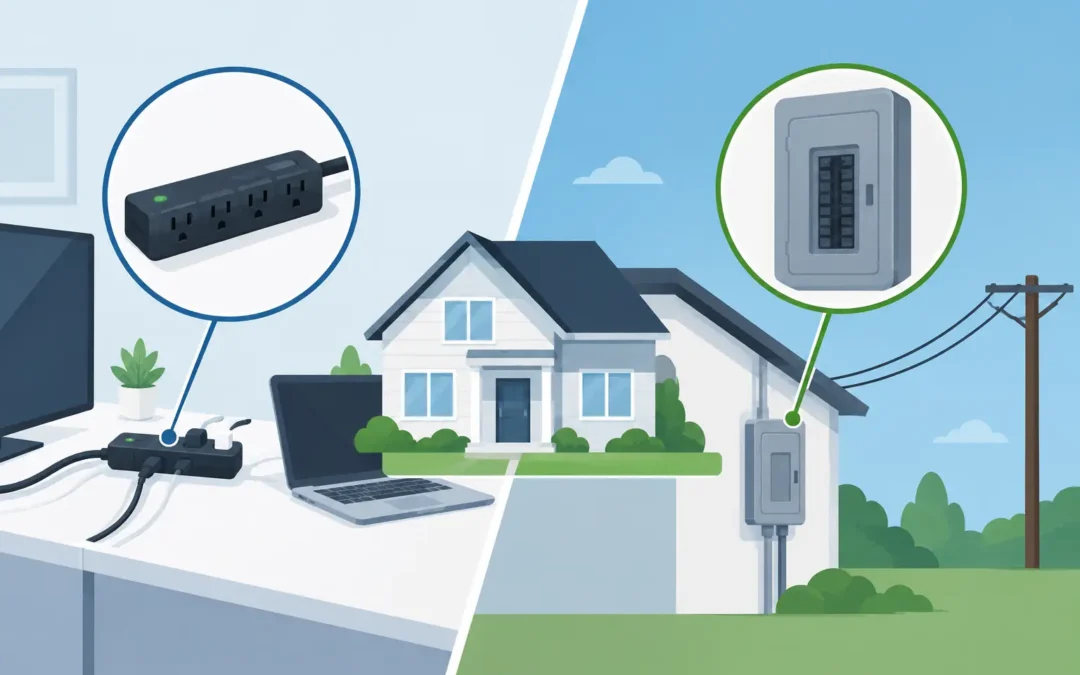
A power bar can protect the television, computer, or router plugged into it. It cannot protect the furnace, air conditioner, garage door opener, dishwasher, or the wiring behind your walls. That is the real difference in the surge protector vs whole house protection decision: one protects selected devices at the outlet, while the other protects the electrical system where power enters the property.
For many homes and businesses, the right answer is not choosing one over the other. It is using the right level of protection in the right place. A licensed electrician can assess your panel, electrical loads, and sensitive equipment before recommending an installation that fits the property and budget.
Surge Protector vs Whole House Protection: The Core Difference
A plug-in surge protector is designed to limit a voltage spike before it reaches the electronics connected directly to it. It is commonly used for televisions, desktop computers, gaming systems, network equipment, point-of-sale terminals, and similar plug-in equipment. Not every power strip is a surge protector, though. A basic power strip only adds outlets. It may offer no surge protection at all.
Whole-house surge protection is installed at or near the main electrical panel. Its job is to reduce surges traveling in from the utility line before they spread through branch circuits. A properly selected unit can help protect hardwired equipment as well as receptacle circuits throughout the building.
Neither option makes a property immune to every electrical event. Lightning strikes, wiring faults, utility problems, and internal switching loads can create conditions that exceed the capacity of protective equipment. The goal is practical risk reduction, not an unrealistic promise that nothing can ever fail.
Where Electrical Surges Come From
People often associate surges only with lightning. A nearby lightning event can certainly cause a powerful voltage spike, but it is not the only concern. Many smaller surges occur during ordinary operation and can gradually wear down electronics over time.
Common sources include utility switching, power restoration after an outage, downed or damaged utility equipment, and large equipment turning on or off. Inside a property, compressors, pumps, motors, HVAC equipment, elevators, and industrial machinery can create switching transients. Commercial properties with refrigeration, office equipment, LED lighting, and control systems may have many sensitive loads operating at once.
A single major surge can cause immediate damage. More often, repeated lower-level surges shorten the service life of circuit boards, chargers, routers, appliances, and building controls. When a device fails without an obvious cause, accumulated electrical stress is one possibility worth considering.
What a Plug-In Surge Protector Does Well
A quality point-of-use surge protector is useful for concentrated groups of sensitive electronics. It is inexpensive compared with replacing a computer, television, modem, or office workstation, and it is easy to place where protection is needed.
For a home office, entertainment center, or retail checkout area, plug-in protection adds a final layer close to the equipment. This proximity matters because some voltage can still be present downstream after a surge enters the electrical system. A good unit can clamp that remaining surge before it reaches connected electronics.
Look for a product clearly labeled as a surge protective device rather than a basic power strip. It should have a visible status indicator so you can tell whether protection is still active. Surge protectors do not last forever. After absorbing enough surge energy, their protective components can degrade, sometimes without affecting the outlets themselves.
Plug-in protectors also have limits. They do not protect hardwired appliances, they do not solve loose connections or faulty wiring, and they should never be used to overload a receptacle. Avoid daisy-chaining power bars or extension cords. If a work area does not have enough outlets, the proper fix may be additional circuits or receptacles installed by a licensed electrician.
How Whole-House Surge Protection Works
Whole-house protection is a panel-mounted surge protective device. It is connected to the electrical system by an electrician and provides a first line of defense for circuits throughout the property. When an overvoltage event occurs, the device redirects excess voltage away from the protected system as designed.
Because it sits at the panel, whole-house protection can help cover equipment that cannot be plugged into a power bar. That may include HVAC equipment, furnaces, ranges, dishwashers, washers and dryers, built-in lighting systems, garage door openers, pumps, and smart-home controls. In a commercial setting, it may help protect lighting controls, equipment circuits, access-control systems, communications equipment, and building automation components.
Installation quality matters. The electrician must select a device suited to the service and panel configuration, follow manufacturer requirements, and make correct connections. Lead length, panel capacity, grounding and bonding conditions, and the overall condition of the electrical system all affect results. A surge protector cannot compensate for an unsafe, outdated, or improperly grounded electrical installation.
Do You Need Both Types of Protection?
In many cases, yes. Layered protection is the sensible approach when a property has valuable electronics, newer appliances with electronic controls, home-office equipment, or business systems that cannot afford unexpected downtime.
Start with whole-house protection to address surges at the electrical service. Then use quality plug-in surge protectors for particularly sensitive or valuable equipment. This combination gives protection at the panel and another level at the outlet.
A homeowner with a few basic appliances may decide panel protection alone is the best value. A homeowner with a finished basement office, smart thermostats, gaming equipment, and a high-efficiency HVAC system will usually benefit from both. For a small business, downtime may cost more than the equipment itself. A failed router, payment terminal, security system, or refrigeration control can interrupt operations quickly.
Choosing the Right Protection for Your Property
The best device is not always the most expensive one. It needs to suit the electrical service, the equipment being protected, and the risks present at the property. When comparing whole-house units, an electrician will consider the surge current rating, voltage protection rating, installation location, panel compatibility, warranty terms, and whether the unit provides visual or remote status notification.
It is also worth asking what the device does not cover. Some manufacturer warranties have conditions, exclusions, and documentation requirements. Protection devices reduce risk, but they are not a substitute for proper insurance or regular electrical maintenance.
For older properties, the first step may be an electrical inspection rather than immediate surge-protector installation. Corroded panel components, insufficient grounding, overloaded circuits, aluminum wiring concerns, or outdated service equipment need to be addressed on their own merits. Installing protection on a panel with existing safety issues is not a complete solution.
Signs It Is Time to Consider Whole-House Protection
Whole-house protection is worth discussing during a panel upgrade, service upgrade, renovation, or new equipment installation. These projects often provide an efficient opportunity to add protection while electrical work is already being completed.
It also makes sense after a power event has damaged equipment, if electronics fail more frequently than expected, or if a property has recently added high-value appliances and controls. EV chargers, heat pumps, smart-home systems, networked security cameras, modern kitchen appliances, and commercial control equipment all increase the number of electronic components that may be exposed to transient voltage.
For facilities with critical operations, surge protection should be part of a broader electrical reliability plan. That can include preventive maintenance, panel inspections, backup power planning, dedicated circuits, and correcting issues before they cause outages.
Professional Installation Protects More Than Equipment
Panel work is not a DIY project. Even with the main breaker off, parts of many electrical panels can remain energized. Incorrect installation can create shock, fire, equipment-damage, and code-compliance risks.
A licensed electrician can inspect the panel, confirm the grounding and bonding arrangement, determine whether there is room for the device, and install an appropriate whole-house surge protector safely. Eclipse Electrical Services provides practical electrical assessments and surge-protection installation for homeowners and businesses that want a clear recommendation without unnecessary work.
If your property relies on electronics that would be costly or disruptive to replace, schedule an electrical assessment before the next outage or voltage event puts them to the test.