
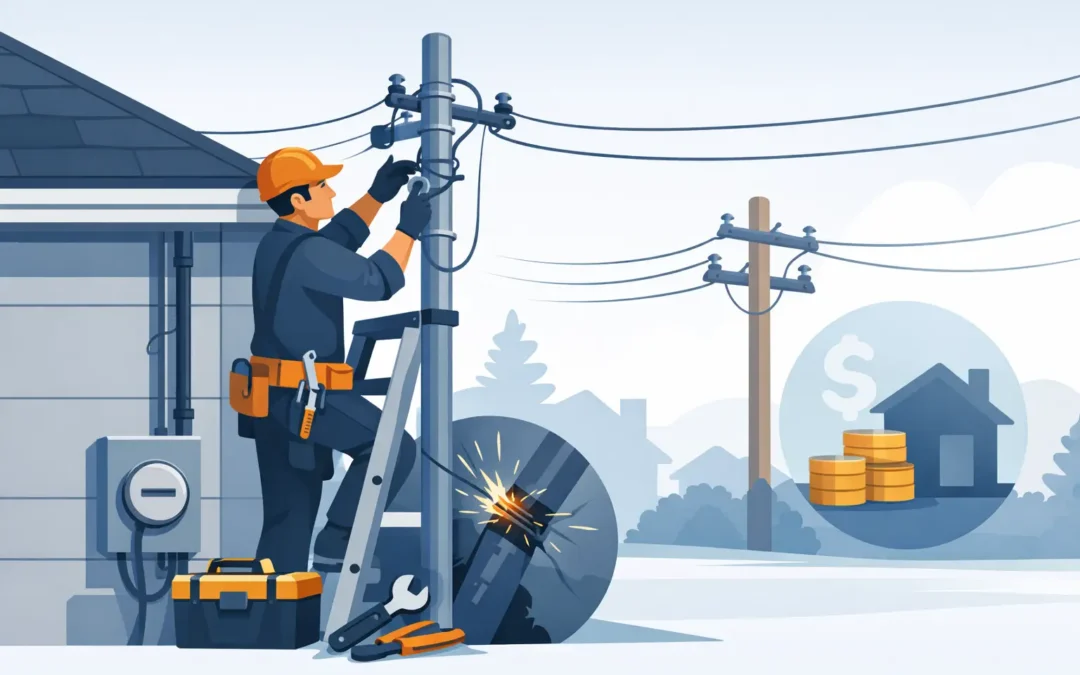
A service mast is easy to overlook until it starts leaning away from the house, the cables appear loose, or the power goes out after a storm. Service entrance mast repair is not a cosmetic exterior fix. The mast supports the overhead electrical service conductors that bring power from the utility line to your meter and main electrical system. When it is damaged, loose, corroded, or incorrectly installed, the result can be a serious electrical and structural hazard.
For homeowners and property managers, the right response is quick assessment by a licensed electrician. The repair may be straightforward, but it often involves coordination with the utility, permits, inspections, and safe disconnection of power. Delaying the work can turn a minor mounting issue into damaged siding, a broken weatherhead, or a complete service failure.
What Is a Service Entrance Mast?
A service entrance mast is the vertical metal conduit mounted to the outside of a building, usually extending above the roofline. It carries and supports the service entrance conductors running from the utility connection point to the meter base or electrical panel. At the top of the mast is a weatherhead, which helps prevent rain from entering the conduit.
Not every property has a mast. Underground electrical services use a different arrangement. But on many older homes and smaller commercial buildings with overhead service, the mast is a critical part of the electrical system.
The mast must be securely fastened to the structure and sized to handle the mechanical pull of the overhead wires. That is why a bent pipe, failed bracket, or loose connection is more than an appearance issue. The service conductors can place significant tension on the mast, especially during high winds, ice buildup, or falling branches.
Signs You Need Service Entrance Mast Repair
A visual check from the ground can reveal problems, but do not touch the mast, overhead wires, meter equipment, or attachments near the service point. Even a seemingly small defect can be close to energized conductors.
Common warning signs include a mast that is visibly leaning, separating from the wall, or pulling away from the roofline. Rust streaks, severe corrosion, cracked conduit, and loose or missing mounting hardware also need attention. If the weatherhead is damaged or tilted, water may enter the conduit and affect the conductors inside.
You may also notice that the service cable has become unusually low, loose, or pulled to one side. This is often seen after windstorms, ice storms, vehicle contact, or tree damage. A branch resting on the service line should be treated as an urgent issue, not a weekend repair project.
Inside the property, flickering lights, intermittent power, tripped main breakers, a burning smell near the panel, or visible water around electrical equipment can point to a service issue. These symptoms do not always mean the mast is at fault, but they justify a prompt professional inspection.
When It Becomes an Emergency
Call for emergency electrical service immediately if the mast is hanging, the meter base has pulled away from the wall, wires are down or sparking, or the building has lost power following visible damage to the service equipment. Keep people, pets, ladders, and vehicles away from the area.
If a wire is on the ground or in contact with a fence, tree, vehicle, or metal structure, contact the utility emergency line as well. Do not assume a wire is safe because it is quiet or does not appear damaged. Treat every downed or low-hanging electrical line as energized.
What Causes Service Masts to Fail?
Weather is a frequent cause. Toronto and the GTA experience strong wind, freezing rain, snow loads, and fast temperature changes that can stress outdoor electrical equipment year after year. Ice accumulation can add considerable weight to overhead conductors, while wind can move the service line and work loose old fasteners.
Age and corrosion are another common issue. Older galvanized conduit can rust, especially where water collects at joints or passes through the roof. Once corrosion weakens the mast or its straps, the overhead service load can bend or pull the assembly out of position.
Poor previous work can also create trouble. A mast may have inadequate supports, improperly sealed roof penetrations, undersized conduit, or attachments fastened only to siding rather than solid framing. Renovations can expose related problems when new siding, roofing, or exterior insulation changes how the mast is supported.
Accidental impact matters too. A truck, ladder, falling limb, or heavy equipment can damage the mast without immediately cutting off power. If an impact occurs near your service equipment, arrange an inspection even if the lights remain on.
Who Is Responsible for the Repair?
Responsibility depends on where the damage is located and on the utility’s service rules. In many cases, the utility is responsible for its distribution lines and connections, while the property owner is responsible for the service mast, meter base, service entrance conductors, and related building-side equipment.
The dividing point is not always obvious. A licensed electrician can inspect the condition of the mast and explain which work falls to the property owner. If the repair requires the utility to disconnect and reconnect the service, the electrician can coordinate the required steps so the work is completed safely and in the proper sequence.
This is one reason it is risky to hire an unqualified handyman for service entrance work. The job can involve live utility equipment, service clearances, building attachment requirements, permits, and inspection approval before power is restored.
What a Proper Service Entrance Mast Repair Involves
The scope of a repair depends on the damage. A minor job may involve replacing corroded straps, securing a loose mounting point, or correcting a damaged weatherhead. If the mast is bent, cracked, undersized, or severely rusted, replacement is generally the safer option.
A licensed electrician will first assess the mast, service conductors, meter base, panel connection, grounding and bonding, and the structure supporting the equipment. They will determine whether the conductors were damaged by water, strain, or abrasion and whether the meter base or panel requires repair as well.
When a full replacement is needed, the process may include a planned utility disconnect, removal of the failed mast, installation of correctly sized conduit and supports, replacement or reconnection of service conductors, and verification that the weatherhead and service attachment meet required clearances. Roof and wall penetrations should be properly sealed to prevent water damage after the electrical work is complete.
For commercial properties, service mast concerns can affect operations well beyond the electrical repair itself. A planned outage may be needed to protect equipment, tenants, refrigeration, security systems, or point-of-sale operations. Clear scheduling and coordination can reduce downtime.
What Affects Service Entrance Mast Repair Cost?
There is no responsible one-price answer without an on-site assessment. Costs vary based on whether the mast can be repaired or must be replaced, the height and accessibility of the work, the condition of the conductors and meter base, and whether utility coordination, permits, or inspection are required.
A simple hardware repair is typically less involved than replacing a mast that has pulled away from the building. Costs can also rise when roofing, siding, framing, or the main service equipment has been damaged. If the existing electrical service is outdated or undersized, a repair may reveal that an upgrade is worth considering, but an upgrade is not automatically necessary.
The best approach is to ask for a clear scope of work. You should understand what is damaged, whether the utility must be involved, what work is included, and whether any additional issues were found during inspection. A good electrician will explain the practical options rather than recommending work that does not address the actual problem.
Why This Is Not a DIY Repair
Service entrance equipment sits at the point where utility power enters your property. Even after a main breaker is turned off, parts of the service equipment may remain energized. Working near overhead conductors also introduces fall hazards and the risk of accidental contact.
DIY repairs can create dangerous clearance problems, loose mechanical connections, water entry, and failed inspections. They can also delay power restoration if the utility finds the installation does not meet its requirements. A licensed electrical contractor has the training and equipment to assess the full system, complete the repair correctly, and coordinate with the utility when needed.
Eclipse Electrical Services provides responsive service mast inspections and repairs for homes and businesses in Toronto and the GTA. If your mast is leaning, corroded, storm-damaged, or showing signs of a loose service connection, arrange an assessment before the issue becomes a power outage or safety emergency.
A service mast rarely fails without warning. If something looks off from the ground, trust that observation and have a licensed electrician check it promptly. Early service entrance mast repair is usually safer, less disruptive, and easier to manage than waiting for the next storm to make the decision for you.