
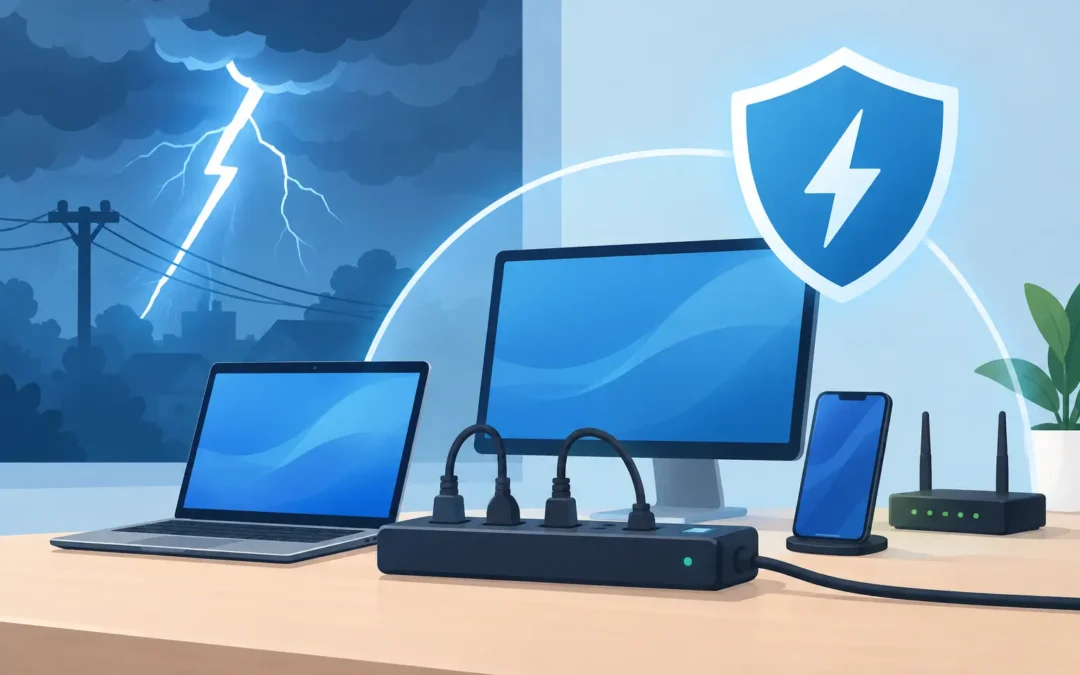
A power surge can happen in a fraction of a second, but the damage can be expensive and disruptive. Computers, televisions, smart appliances, security systems, point-of-sale equipment, and industrial controls can all be affected. Understanding the most common power surge causes helps property owners protect equipment, recognize warning signs, and know when an electrical issue needs a licensed electrician.
A surge is a brief increase in voltage above the level your electrical system and connected devices are designed to handle. Most surges are small and cause no obvious problem at the time. Repeated minor surges, however, can wear down sensitive electronics over months or years. Larger surges can burn out circuit boards, trip breakers, damage wiring, or create a serious safety concern.
Common Power Surge Causes in Homes and Businesses
Power surges can come from outside the property or start within the building itself. The source matters because the right repair may be as simple as protecting a few circuits, or it may involve correcting a fault in the electrical panel, wiring, or service equipment.
Lightning and utility-side disturbances
A nearby lightning strike can send an extreme voltage spike through power lines, cable lines, phone lines, or grounding paths. A direct strike is uncommon, but even lightning several blocks away can affect connected systems. Lightning-related surges are more likely to damage multiple devices at once, especially if they are plugged into different rooms or connected to data cables.
Utility switching is another outside cause. Power companies switch circuits, restore service after an outage, and manage demand across the grid. These normal operations can occasionally create a short voltage spike. A transformer fault, damaged overhead line, vehicle collision, or downed tree can also cause unstable power before service is interrupted or restored.
You cannot control what happens on the utility side, but you can reduce the risk with properly installed whole-home or whole-building surge protection. This equipment is installed at the electrical panel and works alongside point-of-use surge protectors for sensitive devices.
Large appliances and motor-driven equipment
Many of the most frequent power surge causes are inside the property. Equipment with motors and compressors draws a high amount of current when it starts and stops. Air conditioners, furnaces, refrigerators, freezers, sump pumps, washing machines, elevators, garage door openers, and shop equipment can all create small switching surges.
In a home, these events may not be noticeable. In a commercial space, several motors cycling on the same electrical system can create more demand and more opportunities for voltage fluctuations. Older wiring, undersized circuits, loose connections, or an overloaded panel can make the effects worse.
A properly designed electrical system separates heavy loads where needed and uses correctly sized circuits, breakers, conductors, and equipment. If lights dim every time an appliance starts, do not assume it is normal. It may be a sign that a circuit or service should be assessed.
Power outages and restoration
A blackout does not automatically mean your equipment has been damaged. The higher-risk moment is often when power returns. As the utility restores service, voltage can rise and settle quickly. Appliances and electronic devices may all attempt to restart at once, adding stress to the electrical system.
For this reason, unplugging sensitive electronics during an extended outage can be sensible when it is safe to do so. A battery backup unit can also protect computers, networking equipment, security devices, and point-of-sale systems by providing short-term power and voltage regulation. The right choice depends on the equipment involved and how much downtime a property can tolerate.
Faulty wiring and loose electrical connections
Loose connections are a serious concern because they can create resistance, heat, arcing, and inconsistent voltage. They may occur at an outlet, switch, junction box, electrical panel, meter base, or within damaged cable. Corrosion, age, poor past workmanship, physical damage, and improper connections can all contribute.
A loose neutral connection deserves immediate attention. It can cause unusual voltage changes across circuits, leading to lights that become unusually bright or dim, electronics that reset, and appliances that behave unpredictably. In some cases, this issue can damage equipment quickly.
Do not remove panel covers or attempt to tighten electrical connections yourself. A licensed electrician can safely test the system, identify the affected circuit or connection, and make repairs that meet electrical code requirements.
Overloaded circuits and outdated electrical panels
An overloaded circuit does not always create a classic voltage surge, but it can lead to overheating, nuisance tripping, and unstable performance. This is common in older homes and commercial units where power needs have grown without corresponding electrical upgrades.
Extension cords, power bars, added office equipment, space heaters, kitchen appliances, and EV chargers can all place more demand on a system than it was designed to carry. A panel that is full, damaged, obsolete, or showing signs of heat may need a professional evaluation. Adding more outlets or breakers is not a safe fix unless the panel capacity and wiring can support the load.
Signs You May Have a Surge or Electrical Problem
A single failed device does not prove a power surge occurred. Electronics can fail for many reasons. Still, patterns matter. If several devices stop working after a storm or outage, a surge is likely. If problems continue without a clear outside event, the electrical system should be inspected.
Watch for these signs:
- Electronics that reset, shut down, or lose settings without explanation
- Lights that flicker, dim, or become noticeably brighter
- Burn marks, discoloration, buzzing, or warmth at outlets and switches
- Breakers that trip repeatedly or will not stay reset
- A burning odor, sparks, or crackling from an outlet, panel, or appliance
- Multiple damaged chargers, power supplies, or circuit boards
A burning smell, visible sparking, a hot panel, or active arcing is an emergency. Turn off power only if it can be done safely, keep clear of the affected area, and contact an emergency electrician. Do not continue using a damaged outlet or repeatedly reset a tripped breaker.
How to Protect Equipment From Surges
The strongest approach uses layers of protection. A plug-in surge protector can help protect a television, computer, or office workstation, but it cannot correct faulty wiring or replace panel-level protection. Likewise, a whole-building surge protective device helps reduce incoming spikes but does not make overloaded or damaged circuits safe.
Start with the electrical panel. A licensed electrician can determine whether a surge protective device is compatible with the panel and whether the grounding and bonding system is in good condition. Grounding does not stop every surge, but proper grounding is essential for electrical safety and for surge protection equipment to perform as intended.
Then protect sensitive electronics close to where they are used. Use quality surge protectors for computers, televisions, networking equipment, and entertainment systems. Replace units that have taken a major surge, show damage, or have an expired protection indicator. A basic power strip only adds outlets. It may not provide meaningful surge protection.
For businesses, consider equipment-specific protection where downtime is costly. Servers, security systems, point-of-sale terminals, refrigeration controls, automated gates, and industrial machinery may require a combination of panel protection, dedicated circuits, battery backup, and manufacturer-recommended safeguards. There is a cost trade-off, but protecting critical equipment is often far less expensive than lost operating time, spoiled inventory, or replacement electronics.
When to Call a Licensed Electrician
Call an electrician after a major surge if equipment has failed, breakers are tripping, lights are behaving abnormally, or outlets show heat or damage. It is also worth arranging an inspection before problems start if your property has an older panel, frequent flickering lights, recent renovations, new high-demand equipment, or a history of storm-related electrical issues.
For homeowners and property managers in Toronto and the GTA, Eclipse Electrical Services can inspect electrical panels, troubleshoot faults, upgrade outdated equipment, and install surge protection suited to the property. The goal is not to sell unnecessary work. It is to find the cause, correct the safety issue, and protect the equipment you rely on.
Electrical problems rarely improve by being ignored. If your system is giving you warning signs, getting a qualified assessment early can protect your property, your equipment, and the people using the space.