
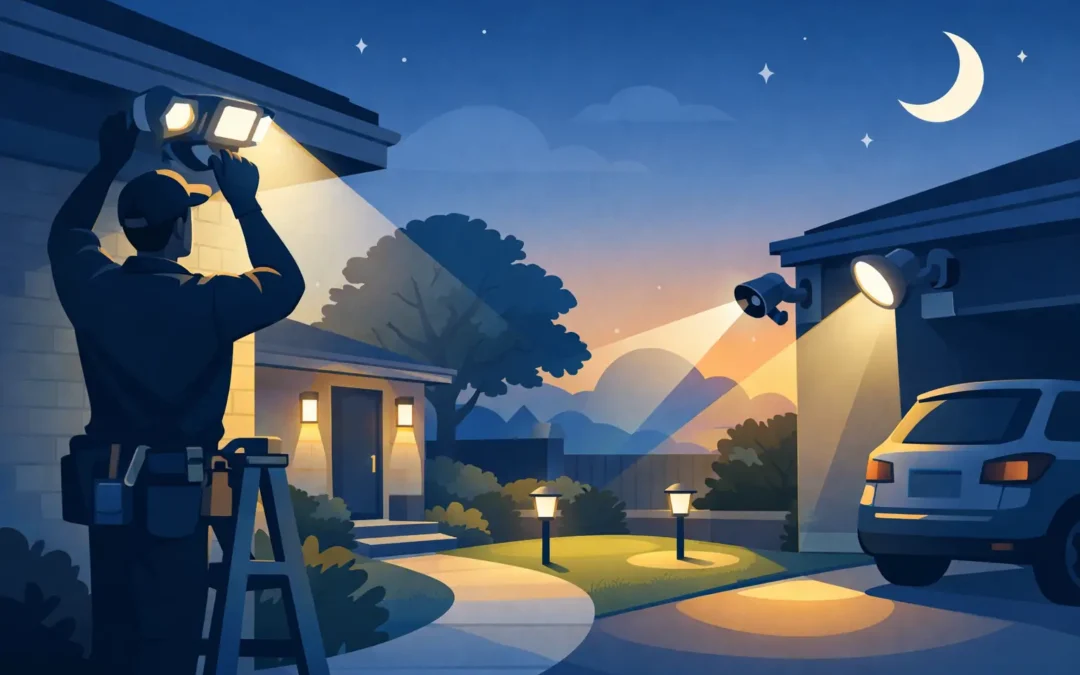
A dark side yard, poorly lit loading area, or shadowed front entrance does not just feel inconvenient. It creates easy cover for trespassing, missed hazards, and after-hours safety problems. Outdoor security lighting installation is one of the most practical upgrades you can make to a home, storefront, warehouse, or multi-tenant property because it improves visibility fast and supports the way people actually use the space.
The key is getting more than just brightness. Good security lighting needs the right fixture, the right placement, and wiring that is safe, code-compliant, and built for weather. Too much light in the wrong spot can create glare, blind cameras, bother neighbors, and still leave the real problem areas dark.
What outdoor security lighting installation should solve
Security lighting works best when it is planned around risk, not guesswork. For a house, that often means entry doors, garages, walkways, gates, and rear yards. For a business, the priorities may shift to customer entrances, dumpster areas, service lanes, parking lots, loading doors, and perimeter access points.
The goal is usually a mix of deterrence and usability. You want enough illumination to make movement visible, remove deep shadows, and help occupants move safely. At the same time, the lighting should support cameras, not wash them out, and it should be dependable in bad weather and through seasonal temperature swings.
This is where many DIY setups fall short. A few store-bought floodlights may brighten a wall, but they do not always cover the path of travel, blind spots, or vulnerable access points. Wiring shortcuts are another common issue, especially when older exterior circuits, damaged junction boxes, or overloaded lines are part of the picture.
Choosing the right type of security light
Not every outdoor fixture is built for security use. Motion lights are popular because they conserve energy and draw attention when activity is detected. They are a strong fit for side yards, driveways, detached garages, and back doors. The trade-off is sensitivity. If the sensor is aimed poorly, it may trigger constantly from traffic, animals, or wind movement.
Dusk-to-dawn fixtures are better when a property needs consistent overnight visibility. These are common for commercial entrances, shared pathways, and areas where people may be arriving before sunrise or leaving late. They cost more to run than motion-only fixtures, but LED models keep that operating cost reasonable.
Floodlights provide broad coverage, while wall packs and directional fixtures offer more controlled light distribution. Bollard or pathway lighting can improve safety at ground level, but it usually works best as a supplement, not the main layer of security lighting. In some cases, the right approach is a combination – for example, steady perimeter lighting with motion-activated fixtures at access points.
Where placement matters most
Placement is what separates a useful lighting system from one that just looks bright from the street. The most important principle is to light the approach, not just the building surface. If a fixture throws all its output onto siding or brick, the surrounding area can still stay dark.
Front doors, side entrances, garage doors, and backyard gates are the obvious starting points. After that, look at transition zones where people move from one area to another, such as walkways, steps, alleys, and fence openings. These are the spots where falls happen and where unwanted activity can go unnoticed.
For commercial and industrial properties, the layout needs a wider view. Service entrances, rear exits, shipping areas, parking edges, and utility access zones often need better illumination than the main storefront. A property can have a brightly lit sign and still have major blind spots where damage, theft, or unauthorized access occurs.
Height matters too. Mounting fixtures too low can create hot spots and harsh glare. Mounting them too high without the right beam spread can leave weak coverage below. A licensed electrician can assess the structure, power source, and intended coverage so the light lands where it should.
Outdoor security lighting installation and electrical safety
Exterior electrical work is not the place for shortcuts. Every fixture, box, conduit run, switch, and connection needs to be rated and installed for outdoor exposure. Moisture intrusion, poor sealing, undersized wiring, and improper splices can all lead to nuisance failures or real safety hazards.
In older homes and buildings, outdoor security lighting installation may also uncover problems that were already there. Circuits may be overloaded, grounding may be inadequate, or previous additions may not have been done properly. That does not always mean the job becomes large or expensive, but it does mean the installation should be evaluated professionally before new fixtures are added.
This matters even more when lighting is tied into photocells, timers, motion sensors, smart controls, or camera systems. The more components involved, the more important it is to have clean wiring and dependable power. A system that trips breakers, flickers, or fails during bad weather is not doing its job.
LED is usually the right choice, but not always the same choice
Most modern security lighting uses LED fixtures for good reason. They use less power, last longer, and provide strong output with less maintenance. For many property owners, that means lower replacement costs and less hassle reaching high fixtures later.
But LED selection is not one-size-fits-all. Color temperature affects how the space looks and how cameras capture images. A very cool, blue-white light may feel harsh in a residential setting, while a warmer light may be more comfortable near entrances and patios. For commercial use, brighter and cooler output may make more sense in service areas and parking zones.
Beam angle also matters. A narrow beam can miss the wider area you meant to cover, while an overly broad beam may spill light where you do not want it. The best fixture is the one matched to the layout, not just the one with the highest lumen rating on the box.
Smart controls, timers, and motion sensors
Controls can make a security lighting system more effective and more efficient. Motion sensors are useful when you want an immediate response to movement. Timers help keep lighting consistent around business hours, while photocells turn fixtures on automatically as daylight fades.
Smart controls can be worth it for some properties, especially where schedules vary or multiple zones need separate operation. That said, more technology is not automatically better. If a client just needs dependable lighting at two entrances and a rear lane, a simple, hardwired setup may be the better long-term option.
The right setup depends on how the property is used. A homeowner may want motion lighting around side access points and steady lighting at the front steps. A facility manager may need parking lot lights on a schedule, loading area lighting tied to occupancy, and perimeter lighting that supports overnight monitoring.
When to upgrade instead of patching the old system
If fixtures are rusted, lenses are yellowed, seals are failing, or bulbs keep burning out, replacing the whole setup often makes more sense than repeated repairs. The same goes for outdated halogen systems that run hot, consume more power, and still do a mediocre job covering the area.
An upgrade is also worth considering if your property use has changed. A home office with more evening visitors, a retail unit with later hours, or a warehouse with increased after-dark traffic may need a different lighting plan than it did a few years ago. Security lighting should reflect current use, not yesterday’s layout.
For larger properties, phased improvements can make sense. You do not always need to replace every exterior fixture at once. Sometimes the best first step is addressing the darkest access points and highest-risk areas, then expanding from there as budget allows.
Why professional installation saves time and trouble
A proper installation is not just about getting the lights on. It is about load assessment, fixture selection, weather-rated materials, secure mounting, control setup, and clean routing that stands up over time. It is also about avoiding the common problems that lead to callbacks – false triggers, poor coverage, glare, water intrusion, and unreliable switching.
For property owners who need the job done quickly and correctly, working with a licensed electrician keeps the process straightforward. You get advice based on the building, the use case, and the available electrical capacity, not a generic setup copied from somewhere else. That is especially valuable when you are dealing with mixed-use spaces, commercial exteriors, detached structures, or older electrical systems.
At Eclipse Electrical Services, that practical approach is the point. The best security lighting plan is the one that fits the property, works reliably, and does not create new problems in the process.
If you are thinking about new exterior lighting, start by looking at where visibility actually breaks down after dark. The problem areas usually show themselves quickly, and fixing them well is often simpler than living with them for another season.