
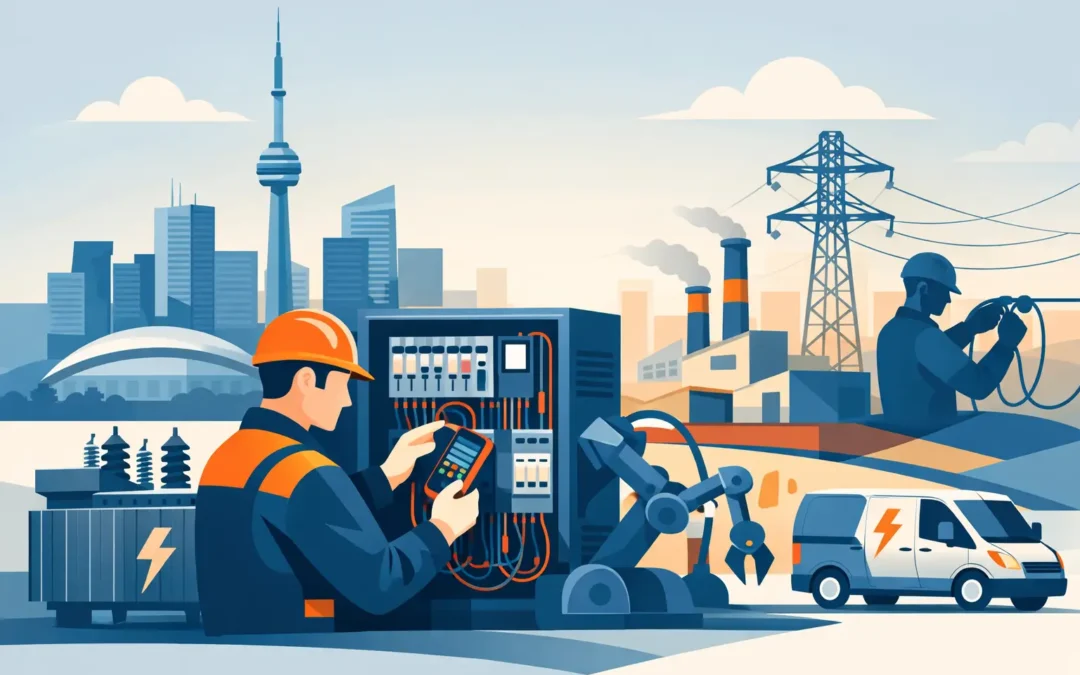
When a production line stops, a panel starts overheating, or a facility keeps tripping breakers under load, the problem is not just electrical. It affects output, safety, scheduling, and cost. That is why industrial electrical services Toronto businesses rely on need to be fast, licensed, and practical from the first call.
Industrial sites do not have much room for guesswork. A warehouse, manufacturing plant, distribution center, or processing facility usually runs on tight timelines and coordinated systems. If one electrical issue is handled poorly, it can create downtime in multiple areas at once. The right contractor is not there to make the job sound complicated. They are there to find the fault, explain the fix clearly, and get the work done properly.
What industrial electrical services in Toronto usually involve
Industrial electrical work is broader than many people expect. It can include power distribution upgrades, equipment connections, switchboard work, lighting improvements, troubleshooting recurring faults, and scheduled electrical maintenance. In some facilities, the work is tied directly to machinery and operational reliability. In others, it is more about code compliance, safety, and keeping the building infrastructure dependable.
A common example is a facility that has expanded over time. New machinery gets added, temporary fixes become permanent, and old panels end up carrying more demand than they were designed for. The system may still be running, but not efficiently or safely. That is often when a facility manager starts looking for industrial electrical services Toronto contractors that can assess the full picture instead of just replacing one part.
The same applies to lighting, emergency circuits, breaker coordination, and distribution planning. A repair might solve the immediate problem, but if the load demand has changed or the panel layout no longer suits the operation, the issue can return. Good electrical work in an industrial setting starts with diagnosis, not assumptions.
Why speed matters in industrial electrical service
In an industrial environment, delays cost money quickly. A fault during operating hours can interrupt shipping, slow production, affect refrigeration, or leave parts of the site unsafe to use. Even smaller issues, like flickering high-bay lighting or nuisance tripping on a dedicated circuit, can become larger operational problems if they are left too long.
That is why response time matters, but so does the quality of the response. Fast service is only useful if the electrician can work efficiently, identify the real cause, and complete repairs that hold up under actual site conditions. Temporary patches have their place during urgent breakdowns, but most industrial clients want a contractor who can stabilize the problem first and then deliver the right long-term fix.
For many properties, emergency support is part of the decision as well. A contractor that can handle both routine industrial maintenance and after-hours electrical faults gives site managers one less problem to juggle. There is real value in calling one team that already understands the building, the equipment layout, and the history of previous work.
Choosing industrial electrical services Toronto operators can depend on
Not every electrician is set up for industrial work. Industrial sites bring higher loads, more complex distribution systems, stricter safety concerns, and tighter coordination with operations staff. The contractor needs to be licensed, experienced, and comfortable working in active environments where downtime, access, and safety procedures all need to be managed properly.
The best choice is usually a contractor that communicates plainly. If a panel upgrade is needed, they should explain why. If a repair can hold for now but a replacement should be planned, they should say that too. Industrial clients do not need inflated language or vague estimates. They need clear recommendations, realistic scheduling, and work that matches the facility’s actual needs.
It also helps to work with a company that can scale. Some jobs are straightforward service calls. Others grow into larger projects involving fit-outs, electrical upgrades, maintenance planning, or power distribution changes. A contractor with broad service capability can support that progression without forcing the client to start over with a new vendor every time the scope changes.
Common industrial electrical problems that should not wait
Some electrical issues are obviously urgent, like burning smells, visible arcing, dead equipment, or repeated breaker trips. Others build slowly and are easier to ignore until they disrupt operations. Persistent voltage drops, hot panels, unreliable lighting, equipment that struggles to start, or circuits that seem overloaded only at certain times are all signs that the system should be checked.
There is also the compliance side. Older facilities sometimes have electrical infrastructure that still functions but no longer suits the building’s current use. Additions, tenant changes, machinery upgrades, and production changes can all affect what the system is expected to handle. What worked five years ago may not be enough now.
In these cases, waiting tends to make the job more expensive. A manageable upgrade can become an emergency callout if a panel fails under pressure or if equipment damage starts to spread. Industrial electrical service is often about catching those problems before they affect operations in a bigger way.
Maintenance, upgrades, and the balance between cost and risk
Every facility has budget limits, and not every issue requires a full replacement. Sometimes a targeted repair is the right call. Sometimes the smarter move is upgrading aging electrical infrastructure before it starts causing repeated service interruptions. The right answer depends on the condition of the system, the criticality of the load, and how much downtime the business can tolerate.
That is where practical advice matters. A dependable contractor should be able to say, this needs immediate repair, this should be scheduled soon, and this can be monitored for now. That kind of prioritization helps owners and managers make better decisions instead of treating every issue like a crisis.
Planned maintenance can also reduce avoidable outages. Electrical inspections, switchboard checks, testing of suspect circuits, and reviewing load capacity after equipment changes can all help catch weakness early. For a facility with tight production schedules, preventive work is usually cheaper than unplanned downtime.
Industrial electrical services in Toronto for active facilities
Working in an active industrial space requires more than technical skill. The contractor also needs to coordinate around operations, safety procedures, and access restrictions. Some work can be completed during regular hours. Some needs to be staged after-hours or during shutdown windows. A good industrial electrician understands that the job is not finished when the repair is done. It is finished when the site can return to normal use safely and with minimal disruption.
That practical approach is what many businesses are really looking for when they search for industrial electrical services in Toronto. They need someone who shows up on time, works cleanly, communicates with site contacts, and respects the pace of the operation. Whether the project is a fault repair, a service upgrade, or an electrical fit-out, reliability matters just as much as technical ability.
For industrial clients managing multiple property needs, it also helps when the same contractor can support related commercial and building electrical work. That flexibility makes ongoing maintenance easier and keeps service consistent across different spaces.
What to expect from a reliable contractor
A professional industrial electrical contractor should start with a proper assessment, not a rushed quote based on guesswork. They should ask the right questions about the fault, the equipment involved, the age of the system, and any recent changes to the facility. From there, the scope should be clear, the pricing should be straightforward, and the next steps should make sense.
This is where a local, service-focused company has an advantage. Firms like Eclipse Electrical Services understand that most clients are not looking for a long sales process. They want responsive service, licensed workmanship, fair pricing, and a team that treats the job seriously from the start.
Industrial electrical work is rarely convenient. Problems show up when production is busy, when deadlines are tight, or when a facility is already juggling other issues. The best time to find a dependable electrical contractor is before a small fault turns into a shutdown. If your site is showing signs of electrical strain, recurring faults, or aging infrastructure, getting it checked now is often the most cost-effective move you can make.
A good contractor will not promise that every fix is simple. They will make sure you understand the problem, the options, and the safest path forward so your facility can keep running with fewer surprises.