
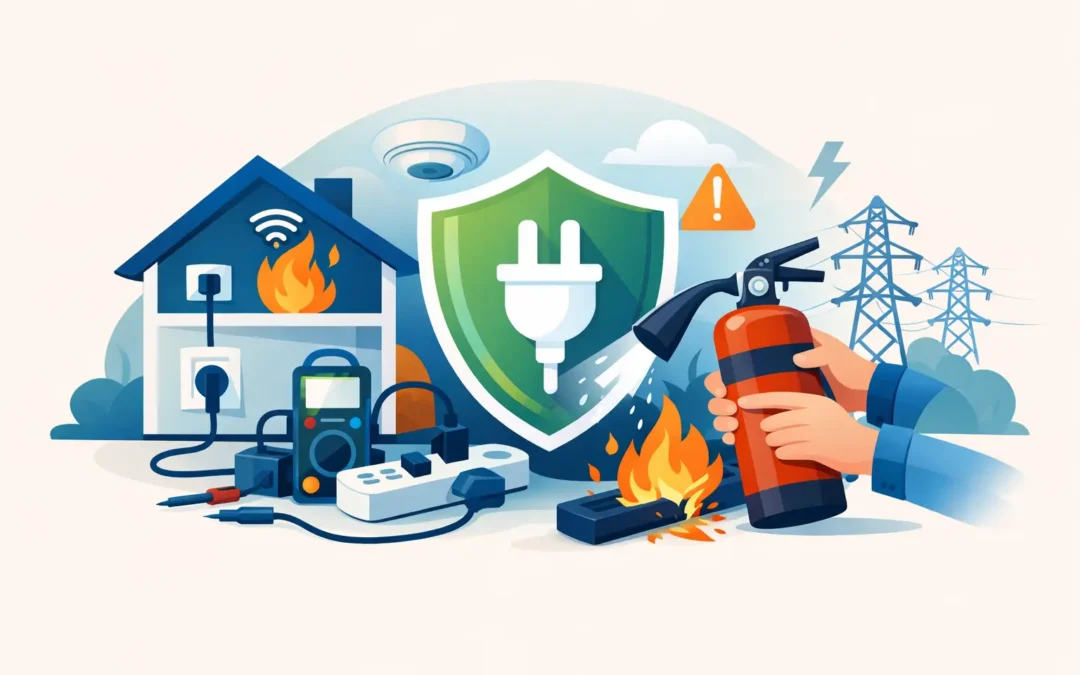
That warm, slightly burnt smell near an outlet is easy to ignore for a day or two. So is a breaker that trips once in a while, or a power bar stuffed behind a desk. But if you are asking how to prevent electrical fires, the best answer is simple: pay attention early, fix problems properly, and do not push a system past what it was designed to handle.
Electrical fires rarely start out looking dramatic. More often, they begin with heat building inside a loose connection, an overloaded circuit, a damaged cord, or aging equipment hidden behind walls and ceilings. In homes, that can mean an outlet, panel, appliance connection, or extension cord. In commercial spaces, it may be a busy circuit, outdated lighting, equipment loads, or neglected maintenance. The common thread is that the warning signs usually show up before the fire does.
How to prevent electrical fires starts with load and wiring
One of the biggest causes of electrical fire risk is overloading. Modern homes and businesses run more devices than many older electrical systems were built for. Space heaters, microwaves, portable AC units, servers, kitchen equipment, and EV chargers all draw serious power. When too many high-demand items are forced onto the same circuit, wires and connections can overheat.
This is where habits matter. Plugging a heater into a power strip, running multiple appliances from one outlet, or relying on extension cords as a permanent setup creates unnecessary heat. A power bar may make the room more convenient, but it does not increase the capacity of the circuit behind the wall.
If breakers trip repeatedly, lights dim when equipment starts up, or outlets feel warm, do not treat that as normal. It may mean the circuit is overloaded, the wiring is loose, or the panel is no longer keeping up with the building’s demand. Resetting the breaker without finding the cause only gives the problem more chances to come back.
Older properties need extra attention here. Aluminum wiring, aging panels, brittle insulation, and older receptacles can still function for years, but the margin for error gets smaller as components age. That does not mean every older system is unsafe. It does mean regular inspection and targeted upgrades are worth taking seriously.
The warning signs people miss
Electrical systems often give notice before they fail. The problem is that many of those signs seem minor at first.
A buzzing switch, a flickering light, or a breaker that trips during heavy use may be written off as an annoyance. Black marks around an outlet might get painted over. A plug that falls out loosely may be ignored because it still works. These are exactly the kinds of details that deserve a closer look.
Watch for warm outlets, scorch marks, buzzing sounds, a burning odor, frequent breaker trips, flickering or dimming lights, and cords with cracked insulation. In commercial or industrial spaces, add overheated equipment connections, nuisance shutdowns, and inconsistent power to that list. None of these automatically means a fire is about to start, but they do mean there is a fault, and faults should be corrected before they become emergencies.
There is also a difference between a one-time issue and a pattern. A single breaker trip after plugging in too much equipment may be straightforward. Repeated trips on the same circuit point to a deeper issue that should be diagnosed properly.
Outlets, cords, and power strips are common trouble spots
Most people focus on the panel, but a lot of preventable fire risk happens much closer to where power is being used.
Damaged cords are a major example. If a cord is pinched under furniture, run under a rug, twisted repeatedly, or patched with tape, it is no longer something to trust. Heat builds up fast when insulation is compromised. Extension cords should be temporary, not part of the permanent wiring plan for a room, office, or shop.
Power strips deserve the same common-sense approach. They are useful for electronics and low-draw devices, but they are not meant for high-load appliances. Space heaters, microwaves, fridges, toasters, and similar equipment should generally be plugged directly into a properly rated wall outlet. Daisy-chaining power strips together is another bad habit that raises fire risk quickly.
Loose outlets are another small issue that can turn into a serious one. If a plug slips out easily or the receptacle has visible discoloration, the internal contacts may be worn or damaged. That creates arcing, and arcing creates heat.
How to prevent electrical fires with inspections and upgrades
If you want the practical answer to how to prevent electrical fires, routine inspection is where the value is. Not every problem is visible, and not every risky connection gives off an obvious smell or sound. A licensed electrician can test circuits, inspect panels, identify overloaded runs, spot code and safety issues, and recommend repairs before damage happens.
For homeowners, that may mean replacing worn receptacles, correcting unsafe DIY wiring, upgrading a panel, adding dedicated circuits, or installing proper protection devices. For business owners and property managers, it may involve maintenance checks, tenant fit-out review, panel and switchboard work, emergency lighting checks, or confirming that added equipment has not outgrown the original design.
Upgrades are not all-or-nothing. Sometimes a targeted repair is enough. In other cases, an older panel or service needs to be replaced because the building is carrying loads it was never designed to support. The right answer depends on the age of the system, the current electrical demand, and whether there are recurring signs of stress.
Protection devices matter too. AFCI and GFCI protection can reduce risk in the right locations, but they are not a substitute for sound wiring and proper installation. If the underlying connection is poor or the circuit design is wrong, a device alone will not solve the problem.
Fire prevention at home vs. in a business
The basics are the same, but the risk profile changes depending on the property.
At home, kitchens, basements, garages, laundry areas, and older additions tend to deserve the most attention. These are places where moisture, portable heaters, heavy appliances, or makeshift wiring setups often show up. Renovations can also create problems if circuits are extended casually or devices are added without checking capacity.
In commercial buildings, electrical fire prevention is often tied to uptime as much as safety. Equipment loads change, layouts get reworked, and temporary setups become permanent faster than they should. Retail spaces, offices, restaurants, and light industrial sites can all end up with overloaded circuits if electrical planning does not keep pace with business operations.
Facility managers already know this trade-off well. Putting off maintenance may save money this quarter, but it increases the chance of equipment damage, downtime, code issues, and emergency repairs later. In many cases, prevention is cheaper than disruption.
What you should never do yourself
There is basic prevention you can handle in-house. You can stop using damaged cords, avoid overloading outlets, test smoke alarms, and pay attention to warning signs. But once the issue involves a panel, wiring fault, hot outlet, repeated breaker trips, or signs of arcing, it is time to bring in a licensed electrician.
DIY electrical work often creates the exact conditions that lead to fire risk later – loose terminations, undersized wire, poor splices, overfused circuits, and hidden junctions. The dangerous part is that bad work can appear to function normally until heat builds up over time.
If you smell burning, see smoke, or notice sparking, shut off power if it is safe to do so and get help right away. If there is an active fire risk, call emergency services first.
A practical standard to follow
The safest way to think about electrical fire prevention is not to ask whether something still works. Ask whether it is working safely.
A panel that is always full, an outlet that feels warm, a breaker that trips every few weeks, or a business space running on too many temporary power solutions is already telling you something. The fix may be small, or it may point to a larger upgrade. Either way, the cheapest time to deal with an electrical issue is usually before heat, smoke, or damage enters the picture.
If you are responsible for a home, storefront, office, rental property, or industrial space, electrical fire prevention comes down to paying attention, not delaying repairs, and having the system checked when something feels off. A good electrical system should not leave you guessing whether it is safe.