
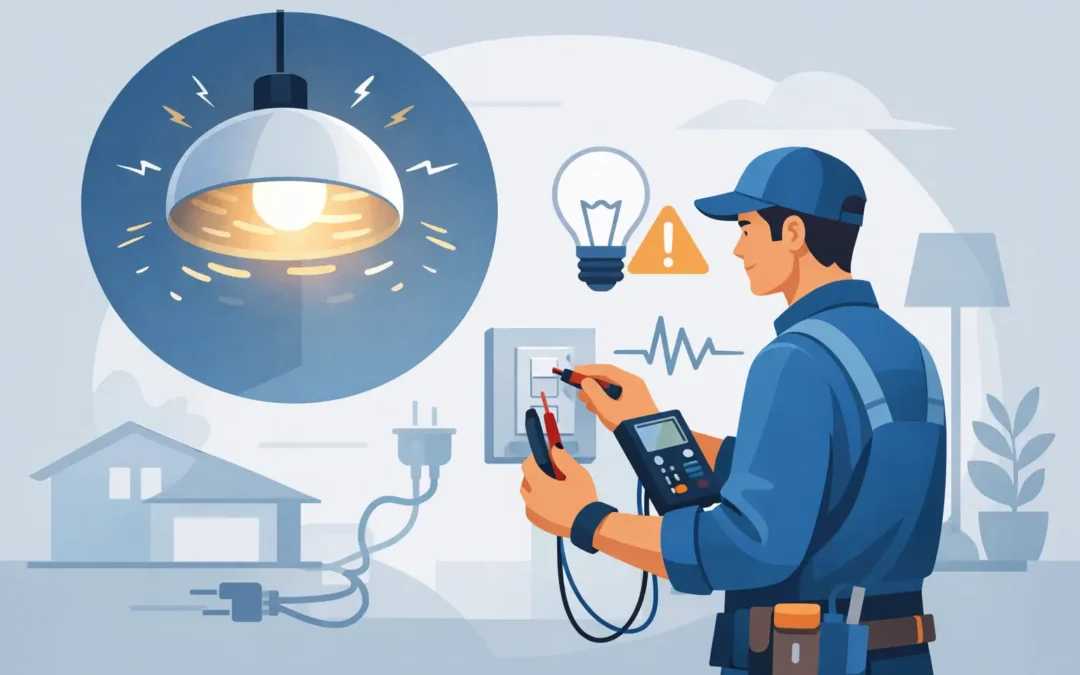
A light that flickers once might be annoying. A light that keeps flickering is a warning. If you are searching for how to fix flickering lights, the first step is figuring out whether you are dealing with a simple bulb issue or a wiring problem that needs a licensed electrician.
Flickering lights can show up in a single room, across one circuit, or throughout an entire property. In homes, that often points to a loose bulb, a failing dimmer, or a bad connection somewhere in the line. In commercial or industrial spaces, it can also affect productivity, equipment performance, and safety. The cause matters, because the fix depends on what is actually happening behind the switch and fixture.
How to fix flickering lights: start with the obvious
The safest place to begin is with the simplest possibility. If only one light is flickering, turn the switch off and let the bulb cool down. Then check whether the bulb is screwed in properly. A loose bulb can interrupt contact just enough to create an inconsistent glow.
If tightening the bulb does not solve it, try a new one. LED bulbs are efficient, but not all of them play nicely with older dimmer switches or lower-quality fixtures. A failing bulb can also flicker near the end of its life, even if it has not fully burned out.
This is also where fixture type matters. Recessed lights, pendant fixtures, exterior lights, and commercial panel lighting can all behave differently. If the flicker follows the bulb, the bulb is likely the problem. If a new bulb still flickers in the same socket, the issue is probably in the fixture, switch, or wiring.
When the switch or dimmer is the problem
A lot of people focus on the light itself and forget the switch controlling it. Standard switches can wear out over time, especially in high-use areas like kitchens, hallways, offices, or retail spaces. A worn switch may feel loose, crackle, or cause the light to blink when touched.
Dimmer switches are another common source of trouble. Many older dimmers were designed for incandescent bulbs, not LEDs. If you have changed to LED lighting and the flickering started afterward, the dimmer may simply be incompatible. In that case, replacing the dimmer with an LED-compatible model usually solves the problem.
The trade-off is that not every dimming issue is a bad dimmer. Sometimes the problem is poor bulb quality, mixed bulb types on the same fixture, or a wiring connection inside the switch box. If the switch feels warm, makes noise, or the flicker gets worse over time, it is time to stop troubleshooting and have it checked properly.
If multiple lights are flickering, look at the circuit
When several lights flicker together, the problem is usually bigger than a single bulb or fixture. You may be dealing with an overloaded circuit, a loose connection, voltage fluctuations, or an issue at the electrical panel.
Start by noticing when the flicker happens. Do the lights dim or flicker when the air conditioner starts up, when a microwave runs, or when commercial equipment powers on? Brief dimming during startup can happen with larger appliances because they draw a high inrush of current. That does not always mean something is failing, but frequent or severe flickering is not normal.
If lights in one area flicker whenever a major appliance starts, that circuit may be struggling with load demand. In a business setting, this can point to poor circuit planning, aging infrastructure, or the need for dedicated circuits for certain equipment. In a home, it may mean an older panel or branch circuit is no longer keeping up with how the space is being used.
What flickering lights can say about your electrical panel
A flicker that affects large sections of the building should never be brushed off. If lights throughout the property brighten and dim, or if the issue seems random and widespread, the source may be in the service connection, main panel, or neutral conductor.
This is where DIY should stop. Loose panel connections and neutral issues can lead to overheating, damaged electronics, and fire risk. In commercial and industrial properties, they can also cause nuisance shutdowns and expensive equipment problems.
Panels do not always fail in obvious ways. Sometimes the first clue is inconsistent lighting. Other times you may notice tripped breakers, buzzing, warm breaker faces, or outlets that stop working intermittently. If flickering lights are showing up with any of those symptoms, you need a licensed electrician to inspect the panel and circuit connections.
How to fix flickering lights without taking unsafe risks
There are a few things property owners can check safely, and a few things they should leave alone.
You can safely replace a bulb, test a different lamp in the same outlet, or note whether the issue happens on one switch, one room, or the whole building. You can also pay attention to patterns, such as flickering tied to weather, HVAC startup, or business equipment cycling on.
What you should not do is open up switch boxes, remove fixtures, or work inside an electrical panel unless you are qualified to do it. A loose connection is one of the most common causes of flickering, and it is also one of the most dangerous. Connections that arc or overheat may work intermittently before they fail.
In other words, learning how to fix flickering lights is partly about knowing when the fix is simple and when the safest move is to call for service.
Warning signs that mean call an electrician now
Some flickering is a nuisance. Some flickering is an urgent service call.
If you smell burning, hear buzzing or crackling, see scorch marks around a switch or fixture, or notice lights flickering across multiple areas at once, do not wait. The same applies if breakers trip repeatedly or if lights cut out completely before coming back on. Those are not minor maintenance issues.
For businesses, speed matters even more. Flickering lighting in offices, restaurants, shops, warehouses, or multi-unit buildings can affect staff, customers, and operations. If the issue is tied to a panel fault, damaged wiring, or unstable voltage, waiting can turn a small repair into a shutdown.
A licensed contractor like Eclipse Electrical Services can test the circuit, inspect connections, assess panel condition, and identify whether the problem is local to one fixture or part of a wider electrical fault.
Common causes by property type
In homes, the usual causes are loose bulbs, worn switches, bad dimmer compatibility, aging wiring, and overloaded circuits. In older houses, aluminum wiring, outdated panels, or previous DIY work can add another layer of risk.
In commercial properties, flickering often comes from lighting control issues, failing ballasts or drivers, heavy equipment loads, shared circuits, or panel deficiencies. In industrial settings, motor loads, voltage drop, and service distribution problems can also play a part.
That is why there is no single answer to how to fix flickering lights. The right repair depends on what kind of property you have, what else is on the circuit, and whether the problem is isolated or system-wide.
A practical way to handle the problem
If one bulb flickers, replace it and see if the problem goes away. If one fixture keeps flickering, the fixture, socket, or switch may need repair. If a dimmer is involved, make sure it is compatible with the bulbs you are using.
If several lights flicker, especially when equipment starts or loads shift, have the circuit and panel checked. If the flickering is widespread, unpredictable, or paired with other warning signs, treat it as a safety issue, not an inconvenience.
Electrical problems rarely improve on their own. They usually become more expensive, more disruptive, or more dangerous with time. A quick inspection now can prevent damaged devices, repeated outages, and emergency repairs later.
When lights flicker, the goal is not just to stop the annoyance. It is to make sure the wiring, devices, and panel behind that light are safe to trust tomorrow.