
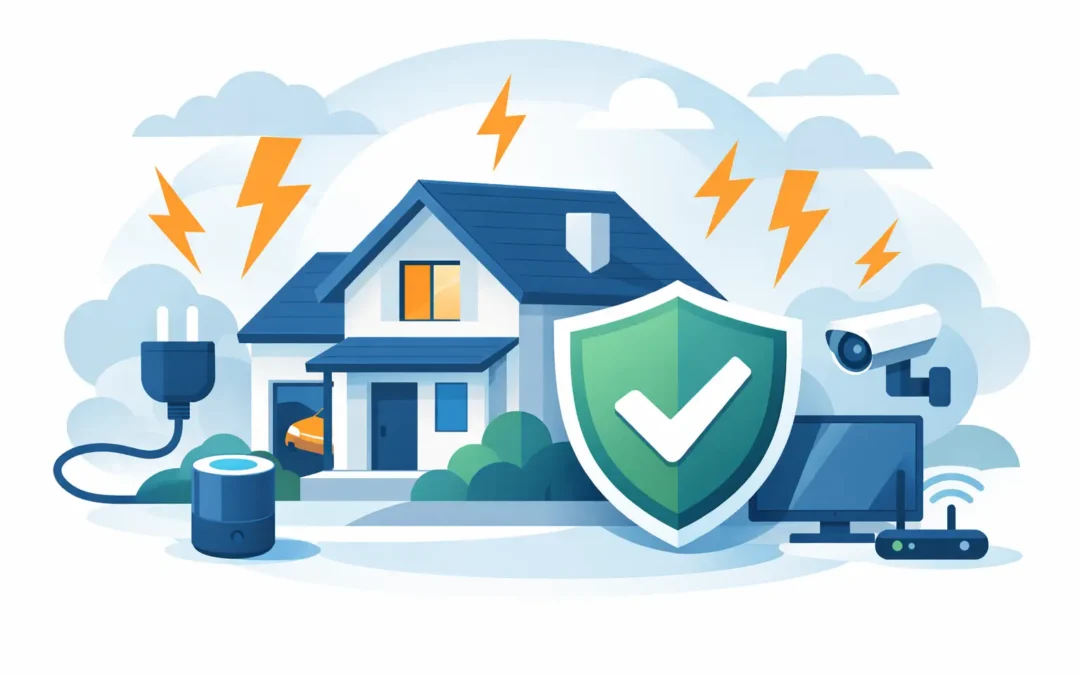
A refrigerator control board fails after a storm. A TV will not turn back on after a brief outage. A garage-door opener starts acting erratically for no obvious reason. These are common examples of the home surge protection benefits homeowners often think about only after expensive equipment has been damaged.
A power surge is a short, sharp increase in voltage moving through your electrical system. Some surges come from outside the home, including lightning activity, utility switching, or an issue on the power line. Others begin inside the home when large equipment such as an air conditioner, heat pump, refrigerator, or power tool turns on and off. The surge may last only a fraction of a second, but that can be enough to weaken or damage sensitive electronics.
Whole-home surge protection gives that excess voltage a safer path to ground before it reaches the circuits serving your appliances, devices, and equipment. It is a practical upgrade for many homes, especially those with newer electronics, major appliances, EV chargers, smart-home devices, or an aging electrical panel.
1. It Helps Protect Expensive Appliances and Electronics
Modern homes contain more electronic components than most people realize. Televisions, computers, gaming systems, routers, kitchen appliances, washers, dryers, furnaces, and HVAC systems all rely on circuit boards. Even a basic refrigerator may have electronic controls that are costly to replace.
A whole-home surge protective device, commonly called an SPD, is installed at or near the electrical panel. When a voltage spike occurs, it reduces the amount of excess energy that continues into the home wiring. It does not make equipment indestructible, but it can significantly reduce the exposure of connected equipment to damaging surges.
This matters because surge damage is not always immediate. A severe event can destroy a circuit board at once, but smaller repeated surges can slowly wear down components. The device may keep working for months or years before failing prematurely, leaving the homeowner with a repair bill and little explanation for why the equipment died.
2. It Covers More Than One Outlet or Room
A plug-in surge strip can be useful for a computer, television, or entertainment center. It only protects the devices plugged into it, however. It does not protect hardwired equipment, outlets elsewhere in the house, or devices connected through another path.
Whole-home protection works at the electrical system level. That means it can help protect circuits serving items such as your dishwasher, range, washing machine, furnace, central air conditioner, garage-door opener, and permanently installed lighting. It also provides a first line of defense for outlets throughout the house.
For the best result, whole-home protection and quality point-of-use surge protectors can work together. The panel-mounted SPD handles much of the incoming surge energy, while a properly rated plug-in device adds protection close to sensitive electronics. One is not necessarily a replacement for the other.
3. It Can Reduce the Risk From Everyday Internal Surges
Lightning gets most of the attention, but many voltage spikes are created inside the home. Motors and compressors draw significant power when starting and stopping. HVAC equipment, pumps, refrigerators, freezers, and workshop tools can all create electrical disturbances on the circuits they use.
These events are usually smaller than a direct lightning-related surge, yet they happen more often. Over time, that repeated stress can affect electronics throughout the home. A whole-home surge protector is designed to respond quickly to these spikes and limit the voltage that passes farther into the electrical system.
Homes with central air conditioning, heat pumps, sump pumps, well pumps, or a growing number of smart devices have a stronger case for panel-level protection. The more connected equipment you have, the more there is to protect.
4. It Supports Smart-Home and Connected Equipment
Doorbell cameras, smart thermostats, security systems, Wi-Fi equipment, connected appliances, and EV charging equipment have made home electrical systems more dependent on electronics. These devices provide convenience, but their control boards can be sensitive to voltage fluctuations.
A surge can also travel through data, telephone, cable, or exterior low-voltage lines, depending on how equipment is installed. Whole-home electrical surge protection does not automatically protect every pathway into a device. A licensed electrician can assess the panel, grounding system, and connected equipment to identify where additional protection may be appropriate.
This is one of the key home surge protection benefits for homeowners planning renovations or upgrades. Adding protection while updating a panel, installing an EV charger, finishing a basement, or replacing HVAC equipment is often simpler than addressing it after a problem occurs.
5. It Adds Value to an Electrical Panel Upgrade
Older panels were not designed around the number of electronic devices found in a typical home now. If your panel is crowded, outdated, damaged, or unable to support new loads safely, an upgrade may be necessary. Adding a surge protective device during that work is usually a sensible step.
The device must be compatible with the panel and installed according to applicable electrical requirements. Its placement, breaker arrangement, wire length, grounding, and rating all affect performance. A surge protector is not a do-it-yourself add-on inside a live electrical panel.
A licensed electrician can determine whether a Type 1 or Type 2 SPD is appropriate for the property. The right choice depends on the electrical service configuration, panel condition, available space, and the type of protection being added. The goal is not to install the most expensive device by default. It is to install a properly rated unit that fits the home and the electrical system.
6. It May Help Avoid Disruptive Repairs
Replacing an electronic control board can involve more than the cost of the part. You may lose refrigeration, heating, cooling, internet access, security monitoring, or use of a major appliance until service is complete. If multiple devices are affected, the disruption grows quickly.
Surge protection cannot guarantee that a utility event or lightning strike will cause no damage. A direct lightning strike is an extreme event, and no ordinary residential system should be presented as complete protection against every possible scenario. Still, reducing the voltage that reaches equipment can lower the likelihood of damage from many common surge events.
That is the practical value: fewer avoidable failures, less downtime, and better protection for equipment you already own.
7. It Gives You a Clear Maintenance Checkpoint
A quality surge protective device typically includes a status indicator. That light tells you whether the device is still operating as intended. It should be checked periodically, particularly after a major storm, a power outage, or a suspected electrical event.
Surge protectors do not last forever. Each time they absorb excess energy, their protective components can degrade. Eventually, replacement may be needed even if the home has never had a dramatic outage. The exact service life depends on the device, the electrical environment, and the number and severity of surges it has handled.
When an electrician performs a panel inspection, service upgrade, or troubleshooting visit, asking them to check the SPD status is a straightforward way to keep the protection plan current.
When Whole-Home Surge Protection Makes Sense
For many homeowners, the decision comes down to the value of the equipment connected to the home. Surge protection is especially worth considering if you have recently installed a new HVAC system, purchased premium appliances, work from home, rely on smart security equipment, or charge an electric vehicle at home.
It is also a practical consideration for homes with frequent outages or visible storm exposure. That said, it depends on the condition of the electrical panel and grounding system. If the panel has safety issues, damaged components, or insufficient capacity, those concerns should be addressed first or as part of the same project.
A properly installed whole-home SPD is a relatively small electrical upgrade compared with the cost of replacing major appliances or repairing damaged circuit boards. Eclipse Electrical Services can assess your panel, explain the available options clearly, and install surge protection that suits your home’s electrical setup. A quick professional assessment before the next electrical event is usually better than troubleshooting a failed appliance afterward.