
When the power goes out, the wrong setup creates two problems fast: unsafe backfeeding and a lot of frustration trying to power what matters. If you are comparing generator transfer switch vs interlock options, the real question is not which one is better on paper. It is which one fits your panel, your generator, your loads, and your budget without cutting corners on safety.
For most property owners, both options can be valid. Both are used to connect a portable generator to a building safely when installed correctly by a licensed electrician. But they work differently, and that difference affects convenience, cost, flexibility, and how much power you can actually manage during an outage.
Generator transfer switch vs interlock: the basic difference
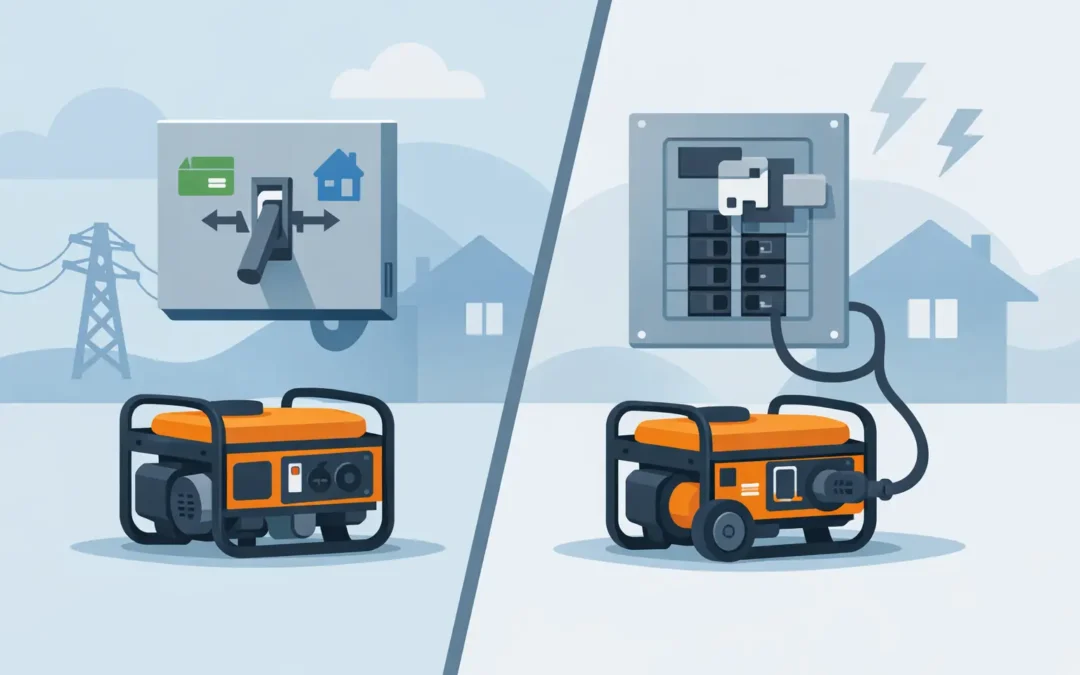
A transfer switch is a dedicated switching device installed near your main panel or integrated into a subpanel. It lets you move selected circuits from utility power to generator power. In plain terms, your electrician chooses the circuits you want during an outage – maybe the refrigerator, furnace, sump pump, lights, garage door, or a few receptacles – and those circuits are wired into the transfer switch.
An interlock is a mechanical device installed on the main electrical panel. It physically prevents the main breaker and the generator breaker from being on at the same time. That matters because it stops generator power from feeding back into the utility lines, which is a serious safety hazard. With an interlock setup, you use the existing panel and manually decide which branch circuits to turn on while the generator is running.
Both systems are meant to do the same core job: isolate utility power from generator power and give you a legal, safer way to run backup power. The best choice depends on how much control you want, how your panel is configured, and whether you prefer a simpler lower-cost setup or a more organized dedicated arrangement.
When a transfer switch makes more sense
A transfer switch is often the better fit when you want a cleaner, more predictable backup power plan. It is especially useful for homeowners or small business operators who do not want to think through panel load management every time the power drops.
Because the selected circuits are predetermined, operation is straightforward. During an outage, you start the generator, switch over, and the chosen circuits are ready to go. That simplicity is valuable in stressful situations, especially at night, during winter weather, or in a commercial setting where downtime costs money.
A transfer switch also helps if the people using the building may not be comfortable working through a panel strategy. If you want backup power for critical loads only and do not need the whole panel available, this approach keeps things organized.
There is a trade-off. Transfer switches are typically more limited in flexibility because only the circuits wired into them are available. If you later decide you want to power something else, changes may require rewiring or upgrading the transfer equipment. Installation can also cost more depending on the number of circuits and the layout of the electrical system.
When an interlock is the better option
An interlock is often the practical choice for property owners who want flexibility and lower installation cost. Instead of preselecting a fixed set of circuits in a separate transfer device, you can use your existing main panel and choose what to power as needed.
That can be a big advantage if your needs change from one outage to the next. One day you may care most about refrigeration, some lighting, and a boiler. Another day you may want well equipment, office receptacles, or a few different HVAC-related loads. An interlock lets you manage those priorities from the main panel, as long as you stay within the generator’s capacity.
This setup works well for people who understand they cannot run everything at once and are comfortable turning circuits on and off deliberately. It can also be a smart option when panel space, budget, and existing equipment line up properly.
The trade-off is that interlocks require more involvement from the user. You need to know what loads your generator can handle and avoid overloading it. If you want a highly guided, simplified outage setup, a transfer switch may still feel easier.
Safety is not optional with either system
This is where a lot of bad advice starts. Some people assume an interlock is a shortcut or a transfer switch is the only safe option. That is not accurate.
A properly installed, code-compliant interlock can be safe. A properly installed transfer switch can be safe. An unsafe setup happens when someone tries to power a panel without proper isolation from the utility, uses the wrong breaker arrangement, installs unapproved hardware, or skips permit and code requirements.
Backfeeding is the major risk. Without a proper transfer mechanism, generator power can energize utility lines and put lineworkers, neighbors, and your own electrical system in danger. There is also the risk of equipment damage, panel issues, overloaded conductors, and carbon monoxide danger if the generator itself is placed incorrectly.
That is why this is licensed electrical work, not a DIY weekend project. The panel, breaker compatibility, generator inlet, wire sizing, grounding and bonding considerations, and local code requirements all matter.
Cost differences and what affects them
If you are choosing based on budget, interlocks often come in lower on installation cost. They usually use the existing main panel rather than adding a separate transfer subpanel for selected circuits. That can reduce labor and material costs.
But cost is not just about the device. The final price depends on the panel brand and model, whether an approved interlock kit exists for that panel, available breaker space, the amperage of the generator inlet, wire runs, and whether any service upgrades or corrections are needed first.
Transfer switch installations can cost more because there is more dedicated equipment and often more circuit-specific wiring involved. On the other hand, some owners prefer paying more upfront for a setup that is easier to operate and easier for family members or staff to understand.
The better value depends on how you use backup power. If you want flexibility and lower upfront cost, interlock systems often win. If you want simplicity and clearly defined emergency circuits, a transfer switch can be worth the extra investment.
Panel compatibility matters more than most people expect
Not every panel can take every interlock. That point gets missed all the time.
Interlocks must be approved for the exact panel configuration they are being installed on. If the panel is older, discontinued, damaged, overcrowded, or not suitable for the needed generator breaker arrangement, the interlock option may not be available or may not be the best path. In that case, a transfer switch or a panel upgrade may make more sense.
Transfer switches have their own installation considerations, but they can sometimes offer a cleaner solution when the main panel is already full or when the existing equipment is not ideal for an interlock-based setup.
A site visit usually answers this quickly. A licensed electrician can tell you whether your current panel supports an approved interlock, whether the generator size matches your intended loads, and whether there are any code or safety issues that need to be addressed first.
Which is better for homes and small businesses?
For a typical home, either option can work well. If the goal is to keep essentials running during outages and the household wants a straightforward process, a transfer switch is a strong choice. If the homeowner wants more control over which circuits are used and is trying to keep installation cost down, an interlock is often the more practical pick.
For small businesses, it depends on what must stay on. If there are critical loads that always matter – network equipment, security systems, refrigeration, POS equipment, select lighting, or a furnace – a transfer switch can make operations more predictable. If the business has varying outage priorities and someone on site understands load management, an interlock can be efficient and cost-effective.
In either case, the generator itself needs to be sized realistically. Many disappointment stories come from systems that were installed safely but paired with a generator too small for what the owner expected it to do.
The right answer usually comes down to how you want to use backup power
If you want a simple outage routine with selected circuits ready to go, a transfer switch is often the better fit. If you want lower upfront cost and the freedom to choose different circuits depending on the situation, an interlock may be the smarter option.
The safest move is to have the panel, the generator plan, and the priority loads reviewed together before any installation starts. A good electrician will not push one option blindly. They will look at your building, your equipment, and how you actually plan to use backup power.
If you want a setup that works when the lights go out, practical planning beats guesswork every time.