
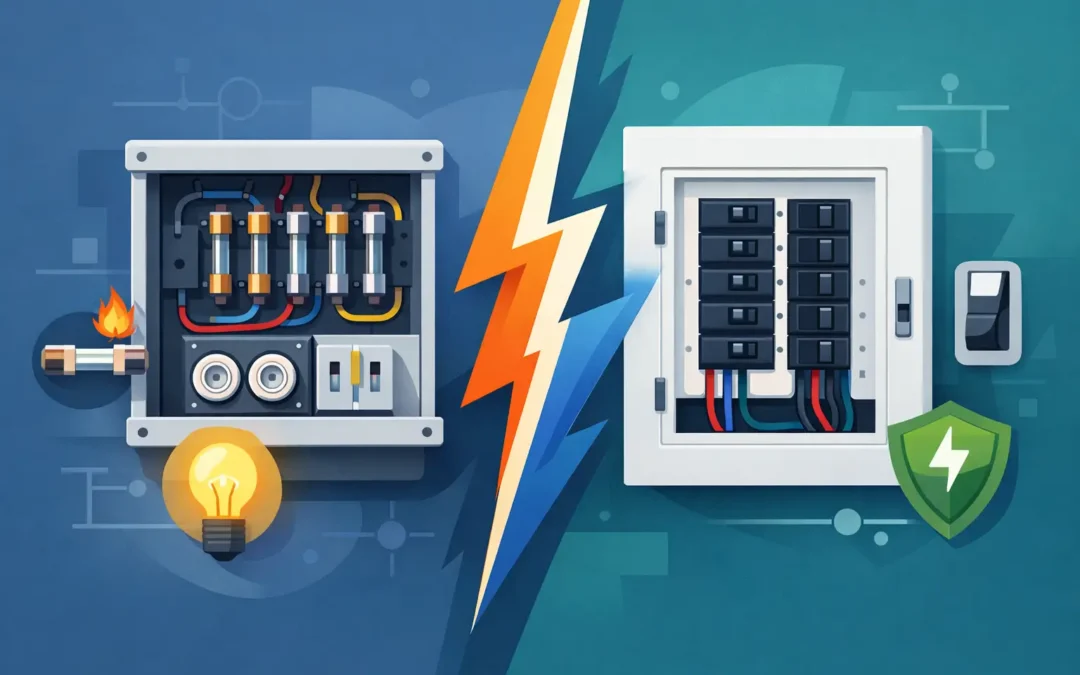
If you have ever opened an older electrical cabinet and seen round screw-in parts instead of switches, you are looking at the heart of the fuse box vs breaker panel question. For homeowners and property managers, the difference is not just about age. It affects safety, convenience, insurance, renovation planning, and how well your electrical system handles modern demand.
A lot of older homes and small buildings still have fuse boxes. Many work fine for basic loads, but that does not automatically mean they are the best fit for today’s appliances, HVAC equipment, EV chargers, office equipment, or tenant improvements. A breaker panel is usually the more practical setup for modern use, but the right answer depends on the condition of the existing system, the size of the service, and what the building needs to support.
Fuse box vs breaker panel: what is the difference?
A fuse box protects circuits with fuses. Each fuse contains a metal strip designed to melt if too much current flows through it. When that happens, the circuit stops carrying power, which helps prevent overheating and fire risk. Once a fuse blows, it has to be replaced.
A breaker panel does the same basic job in a different way. Instead of a one-time fuse, it uses circuit breakers that trip when they detect an overload or fault. After the issue is fixed, the breaker can usually be reset by switching it back on.
That is the core difference, but in real-world service calls, the bigger issue is how each system performs under modern electrical demand. A fuse box can still provide protection, but it is less convenient, often older overall, and more likely to be part of a system that needs broader upgrades.
Why older fuse boxes can become a problem
The problem is not simply that fuse boxes are old. The problem is that age often comes with wear, outdated service capacity, and unsafe modifications made over the years.
In older properties, it is common to find signs of patchwork electrical work. People sometimes install the wrong size fuse to stop nuisance blowing. That defeats the safety purpose of the fuse and allows wiring to overheat. In some cases, adapters or other makeshift fixes are used so larger fuses can fit where they should not. That is where a system that once worked as designed starts becoming a real hazard.
Another issue is capacity. Many fuse boxes were installed when homes had far fewer circuits and much lighter loads. Window AC units, microwaves, dishwashers, home offices, sump pumps, commercial refrigeration, and EV charging were not part of the original plan. Even if the fuse box itself still functions, the overall system may be undersized for the building today.
For commercial spaces and multi-use properties, that gap shows up quickly during renovations, tenant improvements, or equipment changes. If the panel cannot safely support the load, the project stalls until the electrical service is brought up to current needs.
When a breaker panel makes more sense
A breaker panel is generally the better fit for modern residential and commercial properties because it is easier to manage, easier to expand, and better suited for newer electrical standards.
If a circuit trips, the reset process is straightforward. That may sound minor, but it matters in homes, offices, retail spaces, and facilities where downtime is frustrating or expensive. Breaker panels also make troubleshooting simpler for electricians because circuit labeling, breaker condition, and panel layout are usually easier to inspect than a mix of aging fuse components.
More importantly, breaker panels are often part of a broader service upgrade path. If you are adding a major appliance, finishing a basement, upgrading HVAC, installing commercial equipment, or planning an EV charger, a breaker panel gives a much better foundation for that work.
That does not mean every breaker panel is automatically good. Some older breaker panels have their own reliability issues depending on brand, age, and condition. The real question is whether the equipment is safe, properly rated, and appropriate for the load.
Safety is about more than the panel itself
When people compare a fuse box vs breaker panel, they often focus only on the box on the wall. A licensed electrician looks at the whole system.
The service size matters. The condition of branch wiring matters. Grounding and bonding matter. So do signs of overheating, moisture exposure, corrosion, loose connections, and unapproved additions. A newer breaker panel installed onto a poorly maintained system will not solve every problem on its own.
On the other hand, a fuse box in a well-maintained older property may not be an emergency just because it exists. If the wiring is in good condition and the load is still appropriate, there may be situations where immediate replacement is not required. That said, many owners choose to upgrade before problems appear, especially if insurance concerns, renovation plans, or recurring electrical issues are already in play.
Signs it may be time to upgrade
There are some clear warning signs that should not be ignored. If fuses blow often, circuits overload regularly, lights dim under load, or you notice heat marks, buzzing, or a burning smell near the panel, you need a licensed electrician to inspect the system promptly.
Other signs are less dramatic but still important. If you are relying on extension cords because there are not enough circuits, adding high-demand equipment to an older service, or planning construction work that will increase electrical usage, an upgrade may be the smart move before you run into interruptions.
For landlords, business owners, and facility managers, panel upgrades are also about reducing headaches. A system that is already near capacity leaves very little room for change. That becomes a problem the minute a new tenant, new appliance, or new code requirement enters the picture.
Cost, convenience, and long-term value
A lot of property owners ask the same question: if the fuse box still works, why spend money replacing it?
That is a fair question, and the answer depends on your goals. If the property is stable, loads are low, and the system is in sound condition, replacement may not be urgent. But if you are planning upgrades, dealing with repeated electrical issues, or concerned about insurability and resale, waiting may only delay a job that is eventually necessary.
A breaker panel upgrade usually brings practical value. It can improve reliability, make future additions easier, reduce the chance of unsafe fuse substitutions, and put the system in a better position for inspection, renovation, or sale. In many cases, it also gives owners peace of mind because they know the electrical system is built for current use rather than yesterday’s demand.
The exact cost varies based on service size, panel location, permit requirements, wiring condition, and whether other upgrades are needed at the same time. That is why a site inspection matters. The panel may be only one part of the scope.
Fuse box vs breaker panel for homes and businesses
For homeowners, the decision often comes down to safety, convenience, and future plans. If you are remodeling a kitchen, adding central air, or installing an EV charger, a breaker panel is usually the right move.
For commercial and industrial properties, the stakes are often higher. Electrical downtime affects operations, staff, customers, and equipment. Older fuse-based systems can also complicate maintenance and expansion. In those settings, panel upgrades are less about convenience and more about keeping the property functional and compliant.
In fast-moving service environments, having a dependable electrical system is not optional. It supports everything else in the building.
What to do before making a decision
The best first step is not guessing based on age alone. It is having the system inspected by a licensed electrician who can assess the panel, the service capacity, the wiring condition, and the actual load requirements of the property.
That inspection should answer a few basic questions. Is the current setup safe? Is it adequate for present use? Can it support planned additions? Are there signs of overheating, improper repairs, or outdated components that need attention now?
Those answers matter more than a blanket rule. Some buildings need a full service upgrade. Others only need targeted electrical work. A professional assessment keeps you from overspending on one hand or missing a serious issue on the other.
If you are weighing a fuse box vs breaker panel, the practical view is simple. A fuse box can still function, but a breaker panel is usually the safer, more flexible choice for modern properties. If your building is showing its age, your power needs are growing, or you want fewer surprises when the next project comes along, getting the system checked now is usually the smartest move.