
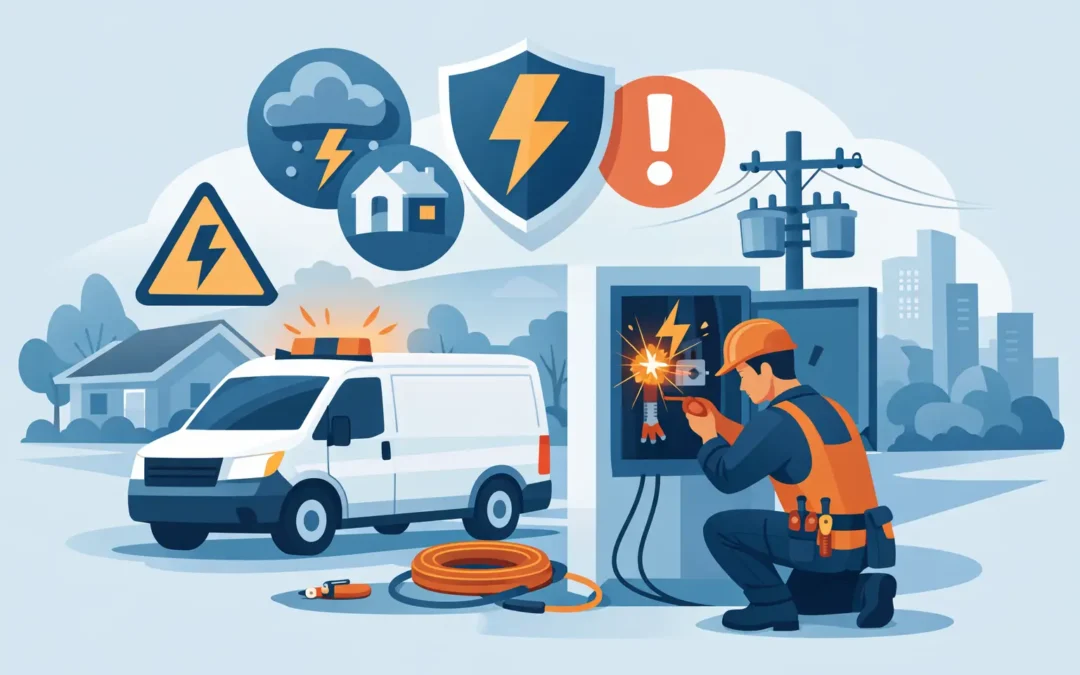
A burning smell from an outlet, a breaker that will not stay on, or sudden loss of power in part of a building is not a problem to watch overnight. Emergency electrical repair Etobicoke services are for situations where a fault may put people, property, or business operations at risk. The right response is simple: protect people first, avoid making the problem worse, and have a licensed electrician identify the cause before power is restored.
Electrical emergencies can look different from one property to the next. A homeowner may notice a hot receptacle after plugging in a space heater. A restaurant manager may lose power to refrigeration equipment. A facility manager may find that a critical panel is tripping repeatedly. In each case, speed matters, but safe diagnosis matters just as much.
When to Call for Emergency Electrical Repair in Etobicoke
Not every electrical issue requires a late-night service call. A light fixture that has stopped working, for example, may be a routine repair if there is no heat, smoke, damage, or power loss elsewhere. But certain warning signs should be treated as urgent because they can indicate overheating, damaged wiring, water exposure, or a failing electrical component.
Call for emergency help if you notice smoke, sparks, arcing sounds, a burning or fishy odor, scorched outlets, melted plugs, or an electrical panel that feels hot. Frequent breaker trips are also a concern, especially when the breaker trips again immediately after being reset. A breaker is designed to interrupt power when it detects a fault or overload. Repeatedly forcing it back on can allow heat to build up in damaged wiring or equipment.
A partial or total power outage may also need urgent attention. First, check whether neighboring properties are affected. If they are, the issue may be with the utility supply rather than your building. If the outage is limited to your home, unit, store, or facility, a failed main breaker, damaged service equipment, overloaded circuit, or internal electrical fault may be involved.
For commercial and industrial properties, emergency service is often necessary when electrical trouble stops essential operations. Loss of lighting in a public area, power failure affecting security systems, tripped equipment circuits, damaged distribution panels, and electrical faults around machinery should be assessed promptly. The trade-off is clear: waiting may avoid an after-hours callout, but it can increase downtime, product loss, safety exposure, and repair costs.
What to Do Before the Electrician Arrives
The safest action depends on what you see and where the problem is located. Do not touch exposed wires, damaged electrical equipment, or outlets that are wet, smoking, or hot. Keep children, customers, staff, and pets away from the affected area.
If you can safely reach the electrical panel and there is no sign of fire, water, or damage at the panel itself, turn off the affected circuit breaker. If you cannot identify the circuit, or if the panel is hot, buzzing, wet, or giving off an odor, leave it alone. Turning off the main power may be appropriate in some situations, but only if it can be done safely and without approaching damaged equipment.
If there is an active fire, smoke that is increasing, or a person has been shocked, call emergency services first. Never use water on an electrical fire. If someone is in contact with a live electrical source, do not touch them until power has been disconnected or emergency responders have taken control.
Downed outdoor power lines are a separate and serious hazard. Stay well away, keep others away, and contact the utility provider and emergency services. Assume every fallen line is energized, even if it appears inactive. Do not attempt to move it with a tool, vehicle, branch, or other object.
It helps to make a few notes before the electrician arrives. Record what happened just before the fault, which appliances or equipment were operating, whether there was a storm or water leak, and which circuits are affected. For a business, identify any equipment that must remain off until it is inspected. This information can shorten the diagnostic process without requiring anyone to investigate an unsafe area.
Common Electrical Emergencies and What They May Mean
Burning outlets, switches, or plugs
Discoloration, heat, or a burning odor at an outlet can result from a loose connection, overloaded receptacle, damaged device, worn wiring, or a plug that is not making proper contact. Stop using the outlet immediately. Unplug equipment only if it is safe to do so and the outlet is not hot or sparking. A licensed electrician can inspect the receptacle, connections, circuit load, and wiring behind the wall.
Breakers that keep tripping
A single trip after a heavy load may point to an overloaded circuit. A trip that repeats with little or nothing plugged in may indicate a short circuit, ground fault, damaged appliance, moisture intrusion, or failing breaker. It depends on the circuit and the symptoms, but a breaker that will not remain on should not be treated as an inconvenience. Leave it off until the fault is properly tested.
Water near electrical equipment
Water and electricity are never a do-it-yourself combination. Flooding, a burst pipe, roof leak, or condensation near an electrical panel, outlet, junction box, or equipment connection requires caution. Do not step into standing water if electrical equipment may be energized. An electrician may need to isolate circuits, inspect for contamination and corrosion, and determine whether components can be safely dried, repaired, or replaced.
Flickering lights and sudden voltage changes
Lights that flicker throughout a property, bulbs that become unusually bright or dim, and electronics that reset without explanation can signal a loose connection, service issue, neutral problem, or overloaded system. These symptoms deserve quick attention because unstable voltage can damage sensitive equipment and may point to a connection that is overheating.
Why Licensed Diagnosis Matters
Emergency electrical work is not just about getting the lights back on. A temporary reset without finding the underlying fault can leave a damaged connection, overloaded circuit, or unsafe component in service. The visible symptom may be minor while the actual issue is located in a panel, junction box, service connection, or concealed wiring run.
A qualified electrician begins by making the area safe, then tests the circuit methodically. Depending on the problem, this may involve inspecting breakers, checking voltage, isolating connected loads, testing outlets and switches, examining panel connections, and looking for heat damage or moisture. Once the cause is confirmed, the repair can be scoped accurately rather than guessed at.
This approach also protects your budget. Replacing parts without testing can waste money and fail to solve the issue. In older homes, renovated commercial units, and buildings with added equipment, the emergency may reveal a broader capacity issue. A repair may be enough, or the property may benefit from a dedicated circuit, panel upgrade, improved distribution, or corrected wiring installation. The right answer depends on the condition of the system and the electrical demand on it.
Protecting Your Property After the Immediate Repair
Once power is safely restored, ask what caused the failure and whether any follow-up work is recommended. A damaged outlet may be an isolated problem. On the other hand, repeated overloaded circuits may mean a room, suite, or workspace does not have enough dedicated capacity for the equipment being used.
Property owners can reduce future emergencies by avoiding overloaded power bars, replacing damaged cords, keeping electrical panels accessible, and arranging inspections when a building has aging wiring, recurring breaker trips, or upcoming renovations. Businesses should also review changes in equipment load before adding new refrigeration, computers, machinery, lighting, or EV charging equipment.
For urgent faults in Etobicoke, Eclipse Electrical Services provides responsive, licensed electrical support for homes, commercial properties, and facilities. A clear description of the symptoms and any immediate safety concerns helps the electrician arrive prepared to assess the situation efficiently.
When something electrical feels wrong, trust that instinct. Shut down what can be safely shut down, keep clear of the hazard, and get qualified help before a small warning sign becomes property damage or an injury.