
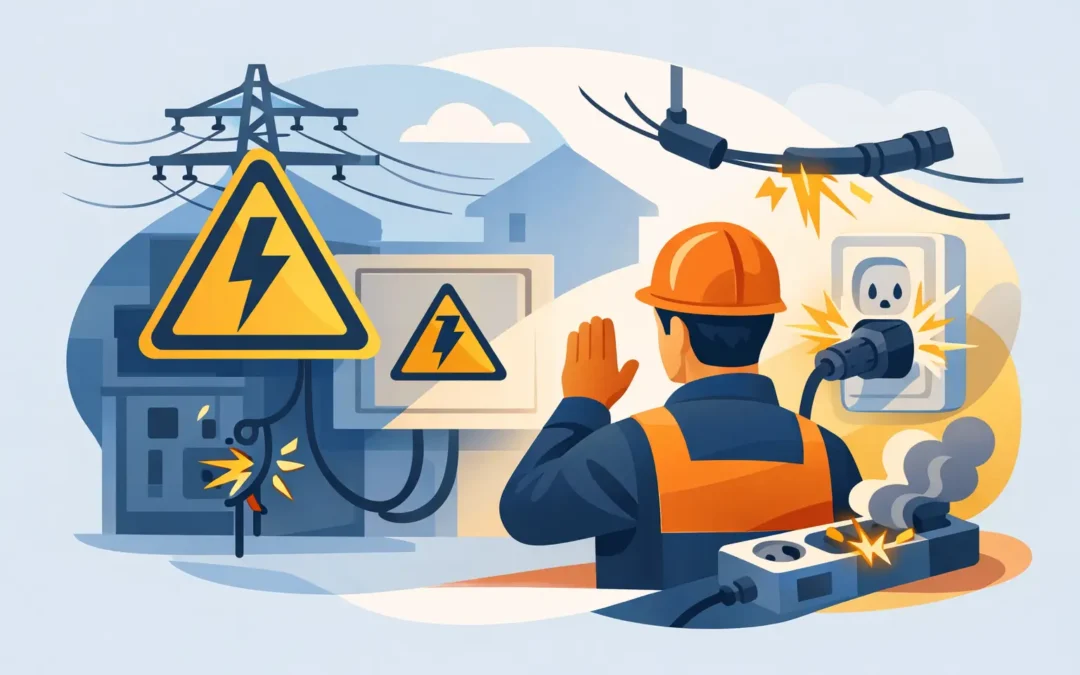
A warm outlet, a breaker that trips every week, or lights that flicker when an appliance starts may seem like small annoyances. They can also be early warnings of an overloaded circuit, failing connection, or damaged equipment. Electrical safety is about taking those warnings seriously before they become a fire risk, a costly shutdown, or an emergency call.
For homeowners, business owners, and property managers, the goal is not to troubleshoot live electrical equipment. It is to recognize when something is not right, reduce immediate risk, and get qualified help before the problem grows.
Electrical Safety Starts With the Warning Signs
Electrical systems usually give clues before they fail completely. The problem is that many of those clues are easy to dismiss, especially in older homes, busy commercial spaces, and facilities where equipment runs all day.
Call a licensed electrician if you notice any of the following:
- Breakers that trip repeatedly or fuses that blow more than once
- Outlets, switches, plugs, or electrical panels that feel warm to the touch
- Burning smells, discoloration, buzzing, crackling, or visible sparking
- Lights that dim or flicker when HVAC equipment, appliances, or machinery starts
- Shocks or tingling sensations when touching an appliance, switch, or metal fixture
- Extension cords being used as a long-term solution for permanent power needs
A single tripped breaker is not always an emergency. A circuit can trip because too many high-demand devices are running at once. But resetting the breaker without identifying the cause is not a repair. If it trips again, leave it off and have the circuit checked.
Burning odors, smoke, sparks, or a hot electrical panel require a faster response. If it is safe to do so, turn off power at the main disconnect without touching damaged equipment. Keep people away from the area and contact an emergency electrician. If there is fire or immediate danger, call emergency services first.
Do Not Overload Circuits
Modern properties rely on more electricity than many older systems were designed to handle. Space heaters, portable air conditioners, microwaves, hair tools, computers, chargers, kitchen appliances, and workshop tools can place a heavy load on a circuit quickly.
The most common mistake is plugging several high-wattage items into the same outlet or power bar. Power bars are useful for low-load electronics, but they do not create more circuit capacity. They can also be unsafe when connected to another power bar or extension cord.
In a home, a dedicated circuit may be needed for equipment such as a dishwasher, electric range, laundry appliance, sump pump, EV charger, or major HVAC component. In a business, dedicated circuits are often needed for refrigeration, office equipment, commercial kitchen equipment, servers, tools, and specialized machinery. The right solution depends on the equipment load, existing panel capacity, and applicable electrical requirements.
If your breakers trip when you use normal equipment, do not keep rearranging plugs to work around the issue. An electrician can assess the load, inspect the wiring, and determine whether a circuit upgrade, panel upgrade, or dedicated circuit is the practical fix.
Keep Water and Electricity Apart
Bathrooms, kitchens, laundry rooms, basements, garages, outdoor areas, and commercial wash areas need extra attention because water increases the risk of shock. Outlets near sinks, tubs, exterior doors, and wet locations should have the appropriate ground-fault protection where required.
Ground-fault circuit interrupter outlets, often called GFCI outlets, are designed to shut off power quickly when they detect an imbalance that could indicate electricity is traveling through an unintended path. They are not a substitute for safe behavior. Never use damaged cords near water, operate electrical equipment with wet hands, or run extension cords through wet areas.
GFCI devices should be tested according to the manufacturer’s instructions. If the test button does not trip the device, if it will not reset, or if it trips repeatedly, arrange an inspection. A failed GFCI may be a device issue, but repeated tripping can also point to moisture, damaged wiring, or a fault in connected equipment.
Treat Cords, Plugs, and Outlets as Safety Equipment
Electrical cords take more abuse than most people realize. They get pinched under furniture, pulled from the wall by the cord instead of the plug, run under rugs, and used outdoors when they are only rated for indoor use. Those shortcuts can damage insulation and expose live conductors.
Replace cords with cracked jackets, bent prongs, loose plug connections, or visible wire. Do not cover damaged areas with tape. Avoid running cords under carpets or across walkways, where foot traffic can damage them and create a trip hazard.
Outlets deserve the same attention. Loose plugs, cracked faceplates, scorch marks, or a receptacle that moves when you insert a plug should be inspected. In properties with young children, use properly installed tamper-resistant receptacles or outlet covers. Never insert objects into an outlet or remove a cover plate without confirming the circuit is safely de-energized.
Make Renovations and Equipment Upgrades Safe From the Start
Many electrical hazards begin during renovations, tenant improvements, and equipment upgrades. A new appliance may need more power than the existing circuit can safely supply. A finished basement may need additional outlets, lighting, smoke alarms, and properly planned circuits. A retail fit-out can add displays, signage, point-of-sale equipment, and HVAC demands that change the building’s electrical load.
Electrical work should be planned before walls are closed or equipment is installed. This avoids exposed wiring, overloaded circuits, inaccessible junction boxes, and expensive rework later. It also helps ensure the panel has enough capacity for current needs and reasonable future expansion.
Do not assume that an outlet is safe simply because it works. Older wiring, improper past repairs, and hidden damage can remain unnoticed until a load increases. A licensed electrician can inspect the existing installation, identify limitations, and complete the work with the proper permits and inspections when they apply.
Electrical Panel Safety Matters More Than Most People Think
The electrical panel is the control center for the property. It should be accessible, clearly labeled, dry, and free of storage or obstructions. In a commercial or industrial setting, clear working space around electrical equipment is especially important for safe servicing and emergency access.
Do not remove a panel cover to investigate a problem. Even with individual breakers switched off, energized components may still be present inside. A buzzing panel, corrosion, overheating, water staining, or breakers that will not stay on are reasons to arrange professional service.
Panel upgrades are not automatically necessary because a panel is old. Some older panels remain serviceable, while others may not support current electrical demand or may have safety concerns. The decision should be based on an inspection, the property’s load requirements, the condition of the equipment, and planned additions such as a renovation, heat pump, or EV charger.
Protect Employees, Tenants, and Visitors
For businesses and multi-unit properties, electrical safety is part of day-to-day operations. Damaged cords in an office, overloaded power strips behind a reception desk, blocked electrical rooms, or temporary wiring left in place after an event can create preventable risks.
Set clear expectations for staff and contractors. Temporary power should stay temporary. Electrical rooms should remain secure and unobstructed. Workers should report damaged equipment, flickering lights, hot outlets, or nuisance breaker trips promptly rather than trying to fix them themselves.
Facility managers should also schedule periodic inspections, particularly after water leaks, storm damage, major renovations, equipment changes, or repeated electrical issues. Regular maintenance is usually less disruptive and less expensive than responding after a failure shuts down part of the operation.
Know When It Is an Electrical Emergency
Some issues can wait for a scheduled appointment. Others should not. Smoke, fire, sparking, exposed energized wires, a damaged service mast, water entering electrical equipment, or a complete loss of power affecting critical systems need urgent attention.
If you smell burning insulation or see smoke from an outlet, panel, or appliance, do not pour water on it. Move away from the area, shut off power only if it can be done safely, and call emergency services if there is any sign of fire. Once the immediate danger is controlled, a qualified electrician can identify the cause and make the repair.
For property owners across Toronto and the GTA, Eclipse Electrical Services can help with inspections, repairs, upgrades, and urgent electrical faults. The safest choice is rarely the quickest DIY workaround. When an electrical issue keeps returning or does not look right, stop using the affected equipment and have it checked before it becomes a larger problem.