
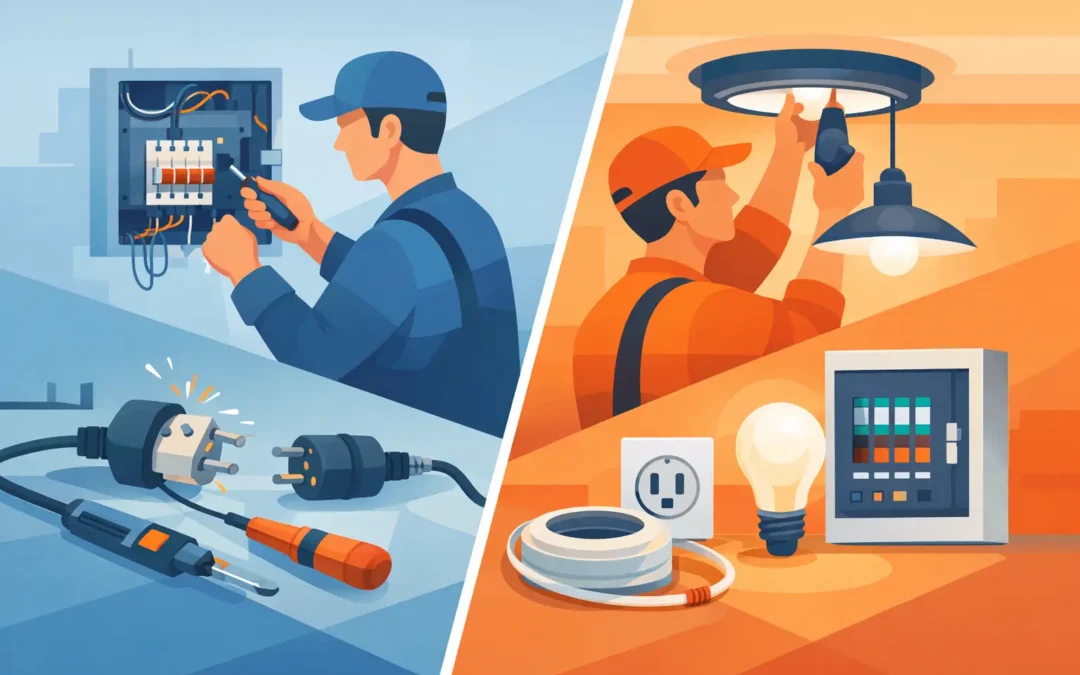
A breaker that trips once may need a simple repair. A breaker that trips every time the microwave, space heater, or production equipment starts is telling you something different. Electrical repair versus replacement is not just a cost question. It is a safety, reliability, and long-term value decision for your home, business, or facility.
The right answer depends on the condition of the equipment, the age and capacity of the electrical system, the cause of the problem, and what the property needs now. A licensed electrician should inspect the issue before recommending a fix or an upgrade. Replacing equipment that can be safely repaired wastes money. Repairing equipment that is outdated, damaged, or overloaded can create repeat failures and unnecessary risk.
When Electrical Repair Is the Right Call
Repair is often the practical choice when the fault is isolated and the surrounding electrical system is in good working condition. A loose connection, worn receptacle, failed switch, damaged light fixture, or faulty breaker can frequently be corrected without replacing major equipment.
For example, a single outlet that no longer works may have a failed receptacle, a loose wire connection, or a tripped GFCI outlet elsewhere on the circuit. If the circuit wiring is sound and properly sized, replacing the defective device and correcting the connection may restore safe operation at a reasonable cost.
The same applies to many lighting issues. A flickering fixture may need a compatible dimmer, a new driver, tightened connections, or replacement bulbs rather than a complete rewiring project. In commercial settings, a damaged section of conduit or a failed contactor may be repaired if the rest of the system remains compliant and reliable.
Repair makes sense when these conditions are present: the issue has a clear cause, the equipment is not obsolete, replacement parts are available, and the repair will provide dependable service rather than a short-term patch. A proper diagnosis matters because the visible problem is not always the real problem.
Signs Replacement Is the Safer Investment
Replacement becomes the better option when an electrical component has reached the end of its service life, no longer meets the building’s demand, or cannot be repaired to a safe standard. The upfront cost may be higher, but it can prevent recurring service calls, downtime, equipment damage, and fire hazards.
An electrical panel is a common example. If a panel is corroded, overheated, repeatedly tripping under normal loads, or full with no room for new circuits, repairs alone may not solve the issue. A panel upgrade can provide the capacity needed for a renovation, air conditioning equipment, an EV charger, added office loads, or modern appliances.
Old wiring also deserves close attention. Brittle insulation, aluminum branch wiring, visible damage, improper splices, or wiring that cannot support present-day demand may require partial or full replacement. Adding more outlets or larger breakers without addressing undersized or deteriorated wiring is not a safe solution.
For property managers and business owners, replacement may be necessary when aging equipment affects operations. A switchboard, disconnect, or distribution panel that causes repeated shutdowns can cost far more in lost productivity than a planned upgrade. Replacing critical equipment during scheduled maintenance is usually easier than responding to an unexpected failure after hours.
Electrical Repair Versus Replacement: Questions to Ask
Before approving any recommendation, ask what caused the issue and whether the proposed work addresses that cause. A good electrician should explain whether the problem is isolated or part of a wider system concern.
Ask how long the repair is reasonably expected to last. A repair that restores years of safe service can be an excellent value. A repair that may fail again because the equipment is outdated or heavily worn should be weighed against replacement.
It also helps to ask whether the existing system can support planned changes. Many electrical systems work adequately until a homeowner adds a basement suite, induction range, hot tub, heat pump, or EV charger. Commercial spaces face similar changes when adding equipment, workstations, refrigeration, or tenant improvements. Planning for expected demand can avoid paying twice for electrical work.
Finally, ask whether permits, inspections, or code updates apply. Electrical work must meet applicable safety requirements, particularly when major equipment, service capacity, or branch circuits are being changed. Licensed work protects occupants and helps prevent trouble during a sale, lease, inspection, or insurance claim.
Common Situations and the Best Approach
A burned outlet should never be treated as a cosmetic problem. If the outlet itself overheated because of wear or a loose connection, replacing it may be enough after the circuit is inspected. If the wiring behind it is heat-damaged or the circuit is overloaded, further repair or replacement may be required.
Frequent breaker trips should not be solved by installing a larger breaker. Breakers are designed to protect the wiring. The correct fix could be redistributing loads, repairing a damaged appliance circuit, replacing a weak breaker, or installing a new dedicated circuit. The decision follows the diagnosis.
A flickering light can be minor, but it can also indicate a loose neutral connection or a service issue. If lights dim throughout the property when major equipment starts, an electrician should investigate promptly. This may point to a larger connection or capacity concern that requires more than replacing a fixture.
For an older fuse panel, replacement is often the practical path when capacity is limited or the system does not suit the property’s present needs. Fuses are not automatically unsafe, but older equipment should be assessed carefully before adding new loads or undertaking renovations.
In industrial and commercial properties, a single failed component may be repairable, while aging distribution equipment with discontinued parts may justify replacement. Availability matters. Waiting for hard-to-source components can extend downtime and make a temporary repair more expensive than a planned upgrade.
Cost Is More Than the Initial Invoice
The least expensive option today is not always the lowest-cost option over time. A repair may be the clear winner when it corrects an isolated fault. It can also be the wrong choice if it leads to repeated callouts, equipment damage, tenant complaints, or operational interruptions.
Replacement costs should be viewed against the expected life of the new equipment, improved safety, lower maintenance needs, and added capacity. For a homeowner, this may mean a panel upgrade that supports an EV charger and future renovation plans. For a business, it may mean a new distribution setup that reduces shutdown risk and supports growth.
There is also a middle ground. Not every property needs a complete electrical overhaul. Targeted replacement of unsafe wiring sections, overloaded circuits, worn devices, or a crowded subpanel can solve the immediate problem while leaving sound portions of the system in place.
Why a Licensed Inspection Matters
Electrical symptoms can be misleading. A dead outlet may trace back to a tripped protection device. A warm panel cover may signal a loose connection. A breaker that appears faulty may be responding correctly to an overloaded circuit.
A licensed electrician uses testing and inspection to identify the source of the issue before work begins. That process helps separate a straightforward repair from a condition that calls for replacement or an upgrade. It also gives you a clearer scope of work, realistic options, and a better understanding of what you are paying for.
For Toronto and GTA property owners, fast service is especially valuable when an electrical issue affects heat, security systems, refrigeration, essential equipment, or normal business operations. Eclipse Electrical Services can assess faults, explain practical repair and replacement options, and complete licensed work with safety and budget in mind.
If you are seeing repeated breaker trips, burning smells, buzzing, hot outlets, visible damage, or sudden power loss, do not wait for the problem to worsen. Turn off power to the affected area if it is safe to do so, avoid using damaged equipment, and arrange a professional assessment. The best decision is the one that restores safe, dependable power without paying for work your property does not need.