
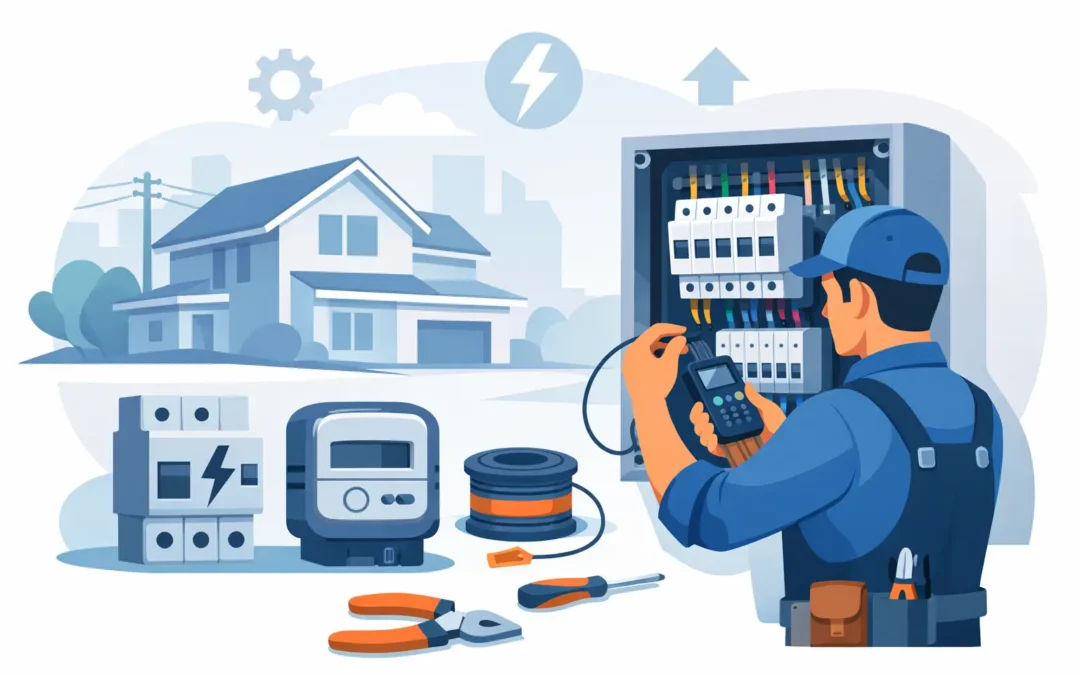
A panel that trips every time the microwave, space heater, and dishwasher run together is not just an inconvenience. It is a sign your electrical system may be working beyond the load it was designed to handle. This electrical panel upgrade review explains what a licensed electrician looks for, when an upgrade is justified, and how to plan the work without paying for capacity you do not need.
What an Electrical Panel Upgrade Review Should Cover
Your electrical panel is the control center for every circuit in the building. It routes power to lighting, receptacles, appliances, HVAC equipment, and newer loads such as EV chargers. A proper review is not simply a quick look at the number printed on the main breaker. It should assess the panel’s condition, available capacity, circuit layout, grounding and bonding, and the total demand created by the property.
For homes, the question is often whether the existing service can safely support a renovation, heat pump, induction range, hot tub, finished basement, or electric vehicle charger. For commercial properties, the review may focus on tenant equipment, added lighting, kitchen loads, computers, machinery, or a planned fit-out. Industrial sites may need a closer examination of distribution equipment, three-phase loads, disconnects, and operational downtime.
The right solution depends on the property. Some buildings need a full service upgrade from 100 amps to 200 amps. Others have adequate service capacity but need a larger panel, additional circuits, a subpanel, or repairs to unsafe components. An experienced electrician should explain that difference clearly before recommending major work.
Signs It Is Time to Review Your Panel
A breaker trip does not automatically mean the panel has failed. A single overloaded circuit, a faulty appliance, or a damaged receptacle can cause a trip. Repeated issues, however, deserve a professional inspection.
Common warning signs include breakers that trip regularly, lights that dim when larger appliances start, a panel that feels warm, buzzing sounds, corrosion, burning smells, or visible damage around breakers and wiring. Older fuse panels and panels with limited space for new breakers should also be reviewed before a renovation or equipment installation.
Another concern is the use of extension cords and power bars as permanent solutions. They often indicate that a room does not have enough properly supplied circuits. Adding safe, dedicated circuits may solve the immediate problem, but the electrician still needs to confirm the panel can handle the new load.
Do not ignore a breaker that will not reset, a hot electrical panel, or an odor of overheated insulation. Shut off affected equipment if it is safe to do so and call a licensed electrician. Electrical faults can worsen quickly, particularly in older buildings where wiring and service equipment have been modified over many years.
Capacity Is More Than the Panel’s Amp Rating
A common mistake is adding up the ratings of all breakers and comparing that number with the main breaker. That does not provide an accurate picture of demand. Not every appliance runs at full load at the same time, and electrical capacity must be calculated based on the equipment installed and how the building is used.
During an electrical panel upgrade review, the electrician should identify major loads such as electric heating, air conditioning, dryers, ranges, water heaters, heat pumps, EV chargers, shop equipment, and commercial kitchen equipment. They also review general lighting and receptacle demand, then apply the applicable load-calculation requirements.
This matters because a 100-amp panel may be sufficient for a smaller home with gas heating and limited high-demand appliances. The same service may be inadequate once the owner adds an EV charger, electric range, heat pump, and basement suite. Likewise, a 200-amp service is not automatically the right answer for every property. If the issue is poor circuit organization or no physical room for expansion, a subpanel or replacement distribution panel may be more practical.
Panel Replacement, Service Upgrade, or Subpanel?
These terms are often used interchangeably, but they describe different scopes of work.
A panel replacement involves installing a new panelboard while keeping the same service capacity. This can make sense when an existing panel is damaged, obsolete, crowded, or difficult to service, but the load calculation confirms adequate capacity.
A service upgrade increases the electrical supply entering the building. It may involve work at the meter base, service conductors, main disconnect, grounding system, panel, and utility connection. This is the more extensive option and is common when a property is moving from an older 60- or 100-amp service to 200 amps.
A subpanel is fed from the main panel and provides additional circuit space in another area. It can be useful for garages, additions, basements, detached buildings, or commercial areas where circuits are concentrated away from the main electrical room. A subpanel does not create more service capacity, so it is only appropriate when the main service can support the added load.
What Affects the Cost of an Upgrade
There is no reliable one-price answer for electrical panel upgrades. The equipment itself is only part of the cost. Access to the panel, the age of the building, service location, utility coordination, permit requirements, grounding improvements, and the number of circuits all affect the final quote.
A straightforward panel replacement in an accessible location is typically less involved than a full service upgrade. Costs rise when the service entrance needs replacement, the meter location must be changed, existing wiring must be extended, drywall or masonry access is difficult, or a commercial facility requires after-hours work to limit downtime.
For business owners and facility managers, downtime can be as important as the installation price. A qualified contractor should discuss outage planning before work begins. That may include scheduling the shutdown outside business hours, identifying equipment that needs a controlled shutdown, and coordinating with building management or the utility where required.
Be cautious of a quote that promises a major upgrade without a site visit or clear scope. A dependable estimate identifies what is included, what assumptions were made, and what conditions could require additional work once the existing installation is opened up.
Permits, Inspections, and Safe Work Practices
Panel work is not a do-it-yourself project. The panel can contain energized components even when individual breakers are off, and improper installation can create fire, shock, and equipment-damage risks.
Licensed electrical work should include the required permit and inspection process for the scope of the project. Requirements vary by location and building type, especially for service changes, multi-unit properties, commercial spaces, and industrial facilities. The contractor should also confirm whether utility coordination is needed before the job is booked.
Good workmanship is visible in the details: correctly sized conductors and breakers, secure connections, proper grounding and bonding, clear circuit labeling, appropriate panel clearance, and a clean, organized installation. These details make future troubleshooting safer and faster. They also matter when selling a home, completing an insurance review, or preparing a property for a tenant improvement.
Questions to Ask Before Approving the Work
Before choosing a contractor, ask whether a load calculation will be completed and whether the proposed work is a panel replacement, service upgrade, or subpanel installation. Ask how long the power will be off, whether permits and inspections are included, and whether the quote accounts for future needs such as EV charging or planned renovations.
It is also reasonable to ask how the electrician will handle existing circuits that are poorly labeled, too short, or found to be damaged. Older properties can reveal surprises once the panel cover is removed. Clear communication about these possibilities helps prevent misunderstandings and keeps the project moving.
For Toronto and GTA property owners, Eclipse Electrical Services can assess residential, commercial, and industrial electrical panels, explain the practical options, and provide licensed upgrade work based on the actual condition of the system. The goal is not to sell the largest panel. It is to leave you with safe capacity, properly installed equipment, and room for the way you plan to use the property.
If your panel is showing warning signs or your next project adds major electrical load, arrange a review before the work starts. A short inspection now can prevent repeated outages, unsafe shortcuts, and expensive changes later.