
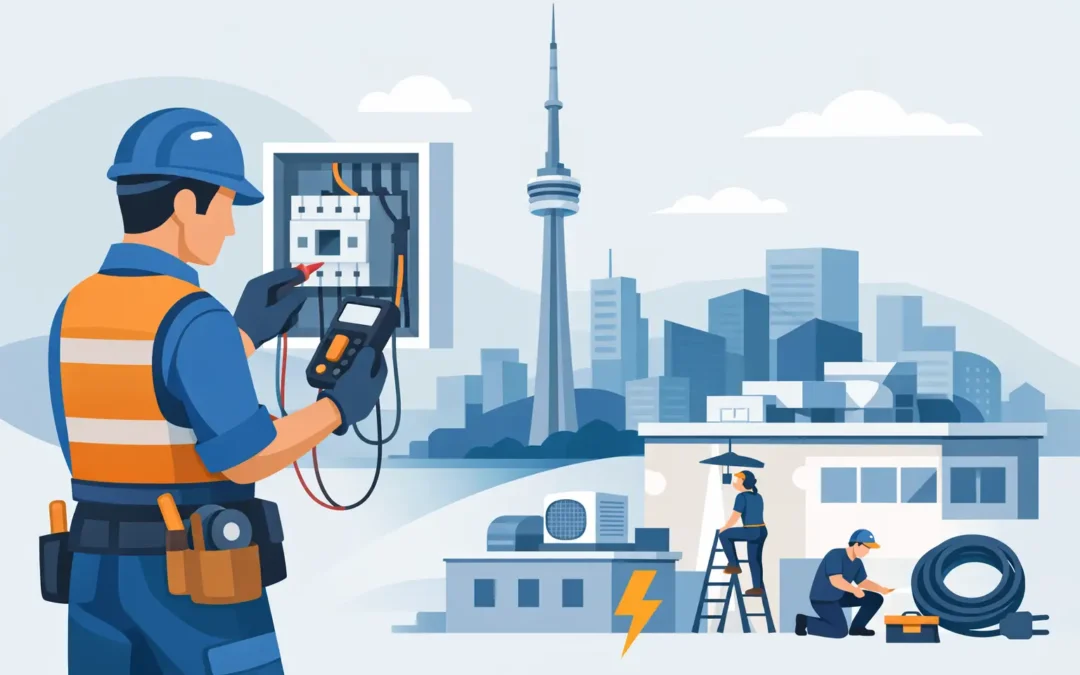
A flickering corridor light, a breaker that keeps tripping, or an outlet that suddenly stops working can look minor at first. In practice, these are often the early signs that electrical building maintenance Toronto property owners rely on cannot be treated as an afterthought. Small faults have a way of turning into safety issues, tenant complaints, downtime, or expensive emergency calls if they are left too long.
For building owners, facility managers, landlords, and business operators, the goal is not just to fix problems when they happen. It is to keep systems safe, stable, and ready for daily use. That means regular inspections, timely repairs, planned upgrades, and a licensed electrician who can respond quickly when something changes on site.
Why electrical maintenance matters in Toronto buildings
Toronto properties deal with constant wear. Older wiring, heavier electrical loads, tenant turnover, equipment changes, renovations, and seasonal demand all put pressure on a building’s electrical system. A panel that worked fine years ago may now be supporting more lighting, more devices, more HVAC equipment, and more specialty loads than it was designed for.
That is where ongoing maintenance becomes practical, not optional. Electrical issues rarely stay isolated. A loose connection can create heat. An overloaded circuit can interrupt operations. Failing exterior lighting can create a security concern. Emergency lighting that is not functioning properly can become a serious liability during an outage.
Routine maintenance helps reduce those risks before they affect residents, staff, customers, or day-to-day operations. It also gives property decision-makers a clearer picture of what needs attention now, what can be scheduled later, and where upgrades will make the biggest difference.
What electrical building maintenance in Toronto usually includes
Electrical building maintenance in Toronto can cover a wide range of work depending on the type of property. In a residential building, the focus may be on common area lighting, panel checks, smoke alarm power issues, parking garage lighting, suite electrical repairs, and code-related concerns. In a commercial building, maintenance often includes breaker testing, switchgear checks, lighting repairs, tenant improvements, signage power, dedicated circuits, and emergency service calls.
Industrial sites usually need a more technical approach. Equipment loads, control systems, distribution, and production continuity all matter. In those environments, a maintenance electrician needs to think beyond simple repair work and consider how downtime, power quality, and system reliability affect operations.
Most buildings benefit from a maintenance scope that includes inspections, troubleshooting, replacement of worn components, lighting service, panel and breaker assessment, safety checks, and recommendations for upgrades where needed. The right plan depends on the age of the building, the type of occupancy, and how heavily the electrical system is being used.
The difference between reactive and planned service
Some property owners only call an electrician when something stops working. That approach can seem cost-effective in the short term, especially in smaller buildings or older properties with tight budgets. The problem is that reactive service usually costs more over time because issues are found late, repairs become urgent, and the work often needs to happen under pressure.
Planned maintenance gives you more control. Instead of waiting for a tenant complaint or a business interruption, you schedule inspections and repairs before the failure becomes disruptive. That can mean changing damaged devices before they fail, correcting overloaded circuits before they trip repeatedly, or identifying panel issues before they affect a larger section of the building.
There is a trade-off, of course. Not every building needs the same maintenance frequency, and not every owner wants a formal service schedule. But even a modest preventative approach is usually better than dealing with repeated emergency issues that could have been caught earlier.
Common signs your building needs electrical attention
Property managers and owners are often the first to notice patterns. Maybe lights in a hallway burn out too often. Maybe one area of the building gets repeated power complaints. Maybe breakers trip when a piece of equipment starts up, or exterior lights are becoming unreliable.
These are not just nuisance issues. Repeated symptoms usually point to a larger electrical problem that needs proper diagnosis. Warning signs can include warm outlets or switches, buzzing sounds, frequent breaker trips, inconsistent lighting, outdated panels, damaged fixtures, non-working emergency lights, or power loss in part of the building.
It also makes sense to bring in a licensed electrician after renovations, tenant fit-outs, equipment additions, or changes in building use. Electrical systems that were fine for one layout or load demand may not be sufficient after the space changes.
Electrical building maintenance Toronto for different property types
No two buildings are maintained the same way. A mixed-use property has different priorities than a warehouse, and a retail plaza has different risk points than a condo building. That is why electrical building maintenance Toronto clients need should be based on how the property actually operates.
For residential properties, reliable common area lighting, secure exterior lighting, panel capacity, and tenant safety are often the top concerns. For offices and retail spaces, uninterrupted power, clean installations, functioning exit and emergency lighting, and fast response times matter more because downtime affects staff and customers immediately.
For industrial and service facilities, electrical maintenance often centers on distribution equipment, dedicated circuits, machinery support, and reducing operational disruption. In these settings, speed matters, but so does planning. Work may need to be scheduled around production hours or coordinated to avoid unnecessary shutdowns.
Why licensing and code knowledge matter
Electrical work is not something to hand off to a general handyman when the issue affects a building system. Proper maintenance requires a licensed electrician who understands troubleshooting, safe repair methods, load calculations, panel work, and current code requirements.
That matters for safety, but it also matters for accountability. If a repair is done incorrectly, the result can be recurring failures, hidden hazards, or problems during inspection. In a rental, commercial, or industrial environment, that creates risk that goes beyond one faulty outlet or one broken fixture.
Code compliance is not always the same as good maintenance, but the two often overlap. Older properties especially can have systems that still function but are no longer ideal for the demands placed on them. A good electrician will explain what is urgent, what is recommended, and what can be phased in over time so owners can make informed decisions.
Fast response matters when buildings stay busy
One of the biggest concerns in building maintenance is timing. Electrical issues do not always happen during regular business hours, and many cannot wait. If corridor lights fail, if a tenant loses power, if a storefront panel trips, or if a critical area of a facility goes down, the response needs to be quick and competent.
That is where a local contractor has an advantage. A team serving Toronto and the GTA understands the pace of local properties, the common issues found in older buildings, and the need to get work done efficiently without dragging out the process. Speed is not about rushing the repair. It is about showing up prepared, identifying the problem, and getting the building back to normal with as little disruption as possible.
What to expect from a dependable maintenance electrician
A dependable contractor does more than fix what is visible. They look at the cause of the issue, check for related concerns, and explain the next steps clearly. Property owners should expect straightforward communication, licensed workmanship, fair pricing, and practical recommendations that fit the building and budget.
That does not mean every issue requires a major upgrade. Sometimes the right answer is a targeted repair. Sometimes it is replacing outdated components before they fail. Sometimes it is a larger improvement, like a panel upgrade or electrical changes for a renovation. The value is in getting honest guidance instead of guesswork.
Eclipse Electrical Services works with residential, commercial, and industrial clients who need that kind of reliability – from routine maintenance and repairs to urgent service calls and larger upgrade work.
Choosing the right electrical building maintenance in Toronto
If you are comparing contractors for electrical building maintenance in Toronto, look beyond price alone. Availability matters. Experience across different property types matters. So does the ability to handle both small repairs and more involved electrical work when the job grows beyond the original call.
A good maintenance electrician should be responsive, properly licensed, and comfortable working in occupied buildings where safety, access, scheduling, and communication all matter. They should also be able to spot patterns that help prevent repeat problems instead of simply resetting a breaker and leaving.
The best time to deal with electrical maintenance is before a small issue becomes urgent. If your building has recurring faults, aging electrical equipment, or work that has been put off too long, getting a qualified electrician on site now usually saves time, stress, and money later.
Reliable electrical service keeps a building usable, safe, and easier to manage. When you have the right contractor to call, routine maintenance stops feeling like a disruption and starts working the way it should – quietly, efficiently, and without surprises.
If your property needs attention, the smartest move is usually the simple one: get it checked, get clear answers, and get the work done right before the next problem has a chance to grow.