
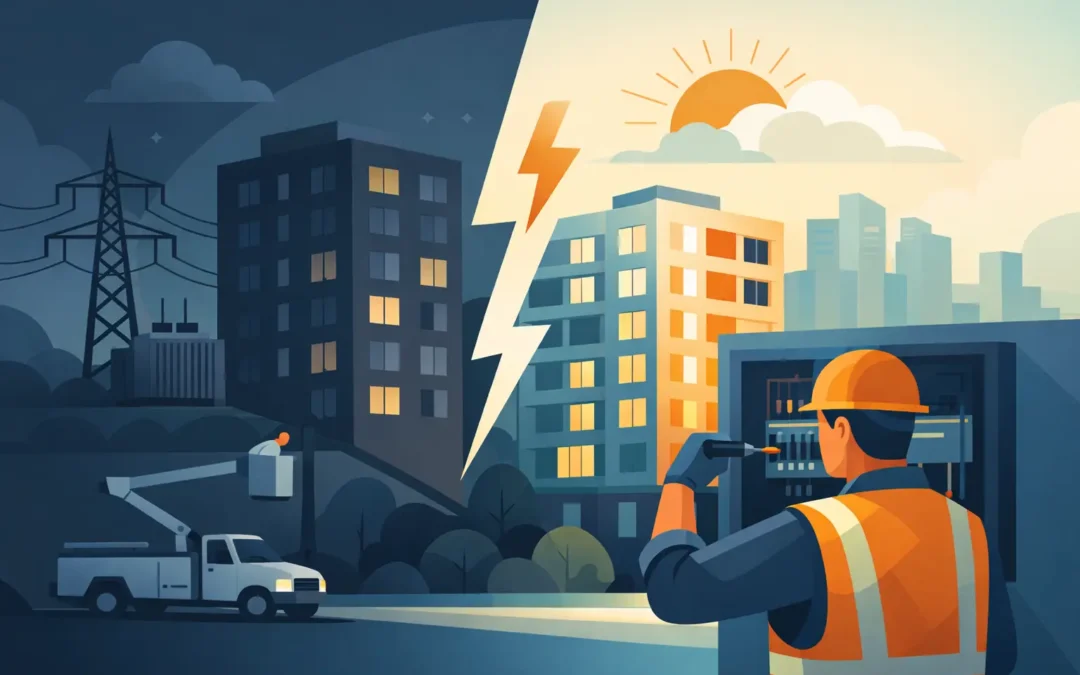
A dark hallway, silent elevators, and a garage door that will not open can turn a building outage into a serious property-management issue quickly. Condo power restoration is not simply a matter of turning a breaker back on. The source of the failure must be identified, the electrical system must be checked for damage, and power needs to return in a controlled order that protects residents, equipment, and the building.
For condo boards, property managers, and building operators, a fast response matters. So does resisting the urge to reset equipment before a licensed electrician has confirmed it is safe. A rushed restart can damage electrical gear, create repeat outages, or leave a fault hidden inside the system.
What Condo Power Restoration Involves
The first question is whether the outage affects one suite, a section of the building, common areas, or the full property. A single-unit issue may point to a tripped breaker, a failed appliance, damaged wiring, or a panel problem within that suite. A building-wide outage may involve the utility supply, main switchgear, transformers, meter equipment, distribution panels, or a fault in a major feeder.
That distinction affects both the urgency and the repair plan. If emergency lighting, fire alarm systems, sump pumps, elevators, security access, or life-safety equipment are affected, the situation needs immediate professional attention. Even where backup power is available, it may only serve selected systems and may have limited runtime.
A licensed electrician begins by confirming the condition of the incoming electrical supply and identifying which sections of the distribution system remain energized. They then test panels, breakers, feeders, disconnects, and related equipment to locate the point of failure. Power should only be restored after damaged components are isolated or repaired and the system has been tested.
Why Condos Need a Different Restoration Plan
Condo electrical systems are more complex than most single-family homes. One building may have a utility service feeding main switchgear, multiple distribution panels, mechanical equipment, retail spaces, parking areas, individual meter banks, and hundreds of separate suites. A fault in one area can affect another, especially in older buildings or properties that have undergone multiple renovations.
The restoration process also has to account for shared systems. Restoring power to residential units while leaving a water booster, ventilation system, fire safety device, or garage exhaust fan offline can create a new problem. The goal is not merely to make lights come back on. It is to return the building to safe, workable operation.
This is why clear communication between the electrician, property manager, security staff, elevator contractor, utility provider, and condo board is often necessary. Residents need practical updates too, particularly when access systems, elevators, refrigeration, heating, cooling, or parking are affected.
The Safe Order for Restoring Power
Every outage is different, but a sound restoration process follows a disciplined sequence. First, the electrician verifies whether the utility supply is available. If the supply is down, the utility must address that issue before building equipment can be fully restored. If supply is present, the investigation moves inside the property.
Next, the electrician inspects the main electrical equipment for signs of overheating, water intrusion, loose connections, blown fuses, tripped protective devices, burned insulation, or damaged bus components. Water in an electrical room, for example, can turn a routine outage into a more involved repair. Equipment may need to be dried, cleaned, tested, or replaced before it can be safely energized.
Once the fault is isolated, restoration typically begins with the main service and critical building systems. Depending on the property, that can include fire and life-safety equipment, emergency lighting, security systems, pumps, heating equipment, and ventilation. Distribution panels and individual areas are then brought back online in stages. This controlled approach helps the electrician identify abnormal loads or faults before they affect the whole building again.
Do Not Keep Resetting Breakers
A breaker that trips once may have responded to a temporary overload. A breaker that trips again has provided useful information: there may be a short circuit, damaged cable, failed equipment, or overloaded circuit downstream. Repeatedly forcing it back on can damage the breaker and increase the risk of overheating or fire.
The same applies to main breakers and electrical disconnects. Building staff should document what happened, note any smells, sounds, water leaks, or visible damage, and leave troubleshooting to a licensed professional. That information can shorten the diagnostic process when emergency help arrives.
Common Causes of Condo Outages
The cause may be external, internal, or a combination of both. Utility failures, severe weather, vehicle damage, and construction activity can interrupt incoming service. Inside the building, common causes include aging switchgear, failed breakers, overloaded panels, loose terminations, water damage, deteriorated cables, and equipment failures in mechanical rooms or parking garages.
Load growth is another issue that deserves attention. Buildings originally designed for lower electrical demand can face added pressure from electric vehicle chargers, air-conditioning equipment, renovated suites, commercial tenants, and modern appliances. A system may appear to work normally until a high-demand period exposes weak connections or insufficient capacity.
Not every outage requires a complete electrical upgrade. Sometimes the repair is limited to a failed breaker, damaged feeder, or connection that has overheated. However, recurring outages, visible heat damage, frequent breaker trips, or panels operating near capacity are signs that the building should receive a broader assessment. The right scope depends on the age of the equipment, available capacity, condition of the electrical room, and the building’s future plans.
What Property Managers Should Do During an Outage
Start by protecting people and preventing avoidable damage. Keep residents away from electrical rooms, panel rooms, and any area with smoke, sparks, burning odors, or water near electrical equipment. If there is an immediate fire or life-safety threat, contact emergency services first.
Then confirm the scope of the outage. Determine whether neighboring buildings have power, whether common-area lighting is working, which floors or units are affected, and whether elevators, fire systems, pumps, or security equipment are operating. Avoid opening energized panels or attempting repairs. A quick record of timing, affected areas, recent construction, weather conditions, and any alarms can help the electrician locate the problem faster.
Notify residents with direct, useful information. Let them know which services are affected, whether elevators should be avoided, what access points are available, and when the next update will be provided. It is better to give a realistic status update than to promise a restoration time before the cause has been confirmed.
Preventing the Next Building Outage
Emergency repairs restore service, but preventive maintenance reduces the chance of another disruptive event. Regular inspection of main switchgear, distribution panels, breakers, electrical rooms, and high-load equipment can identify heat damage, corrosion, loose connections, and capacity concerns before they become a shutdown.
Thermal scanning can be especially useful in larger condo properties because it can reveal hot spots at connections and breakers without dismantling every part of the system. Load assessments are also worthwhile when a building is considering EV charging, major renovations, new commercial equipment, or other additions that increase demand.
Electrical rooms should remain dry, accessible, and free of storage. Panels need clear working space, accurate labeling, and covers in place. These basics make a real difference during an emergency, when an electrician needs immediate access and building staff need to know what serves each area.
Get Qualified Help When Power Is Down
Condo outages demand a contractor who can work safely around multi-unit distribution systems, coordinate with building personnel, and provide clear answers under pressure. Eclipse Electrical Services supports emergency electrical calls, repairs, upgrades, inspections, and building maintenance for condos and commercial properties across Toronto and the GTA.
If your building has lost power, has repeat breaker trips, or shows signs of electrical damage, arrange a licensed assessment before restarting equipment. A careful repair now can protect residents, avoid equipment losses, and give your condo board a clearer plan for keeping the building reliable.