
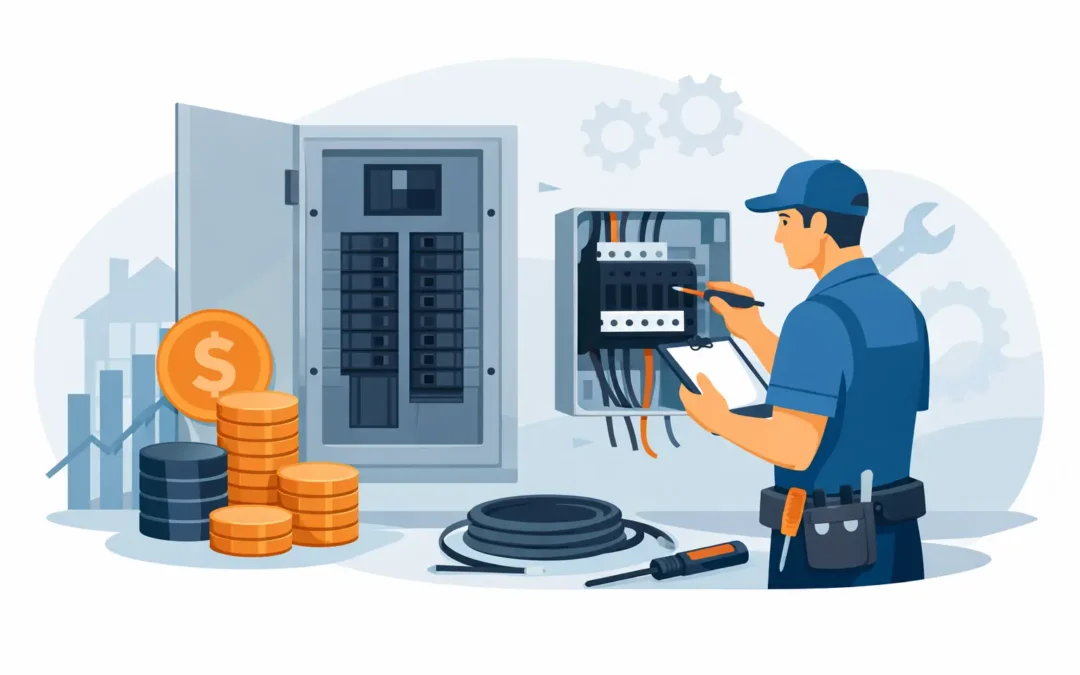
If your lights flicker when the AC kicks on, breakers trip for no clear reason, or your panel still has little room for new circuits, the breaker panel replacement cost starts to feel less like a future project and more like a current problem. For most property owners, the real question is not just price. It is what you are paying for, what can change the number, and whether a repair will buy you time or simply delay a bigger issue.
A panel replacement is one of those jobs where the cheapest quote is not always the lowest final cost. Electrical panels tie into your whole system. Capacity, code compliance, utility coordination, grounding, and the condition of existing wiring can all affect the scope.
What is the average breaker panel replacement cost?
In many residential settings, breaker panel replacement cost commonly falls somewhere between $1,500 and $4,000 for a straightforward job. If the project involves a service upgrade, meter work, aluminum wiring corrections, extensive rewiring near the panel, or a difficult installation, the price can climb higher.
For commercial spaces, small retail units, mixed-use buildings, and industrial properties, pricing varies much more. Load requirements, shutdown planning, panel size, and code-related upgrades can push the cost well beyond what a typical home would pay. That is why accurate quotes usually require an on-site review instead of a rough number over the phone.
The panel itself is only one part of the price. Labor, permits, inspections, utility coordination, and the condition of the existing electrical system often matter just as much.
What affects breaker panel replacement cost most?
The biggest factor is service size. Replacing a 100-amp panel with another 100-amp panel is generally less expensive than upgrading to 200 amps. Once service capacity changes, there may be added work involving the meter base, service entrance cable, grounding system, and utility approval.
Panel location also matters. A panel in an open basement utility room is easier to replace than one tucked into a finished wall, closet, or older commercial back room with limited access. If drywall cutting, patching, or rerouting conductors is needed, the total goes up.
Age and condition of the existing system can change the price quickly. On older properties, electricians sometimes open the panel area and find deteriorated connections, damaged bus bars, double-tapped breakers, undersized grounding, or wiring that no longer meets code. That does not always mean a full rewire is needed, but it does mean the quote may need to account for corrective work.
Permit and inspection requirements are another piece of the total. A licensed electrical contractor should factor these into the job and explain what is included. If a quote seems unusually low, it is worth confirming whether permits, inspection coordination, and utility reconnects are part of the price or left out.
Repair or replacement?
Not every panel problem means full replacement. If a single breaker is failing, a circuit is overloaded, or one connection has loosened, repair may be enough. A good electrician should tell you when a targeted fix makes sense.
Replacement becomes more likely when the panel is outdated, unsafe, undersized for the building, or showing repeated signs of failure. Common reasons include scorching, heat damage, corrosion, frequent breaker trips, buzzing, water exposure, or a panel that is already full when you need to add circuits for an EV charger, renovation, or new equipment.
There is also a practical side to the decision. If you are paying for repeat repairs on an old panel with limited capacity, replacement can be the more cost-effective move over time. It is not just about safety. It is about reliability and avoiding ongoing service calls.
When a service upgrade changes the price
A lot of people search for panel replacement pricing when what they actually need is a service upgrade. Those are related, but they are not the same job.
If your property needs more power for a home addition, electric range, heat pump, hot tub, shop equipment, or tenant improvements, simply swapping the panel may not solve the issue. In that case, the service feeding the building may need to be upgraded as well.
That can add several layers to the work. The electrician may need to replace the service mast or cable, update grounding and bonding, coordinate with the utility, and install a larger panel with new main disconnect capacity. The job becomes more involved, and the cost reflects that.
For business owners and facility managers, load calculations are especially important. A panel should not be sized by guesswork. It should match actual and planned demand so you are not paying to oversize unnecessarily or risking future capacity problems.
Residential, commercial, and industrial costs are not the same
Homeowners often look for one simple number, but the right price depends on the property type.
In a house, the job is usually more predictable. Access is often easier, the service type is familiar, and the panel feeds standard household loads. There can still be surprises in older homes, but many residential replacements follow a fairly clear scope.
In a commercial setting, the project often has to be scheduled around business operations. Downtime matters. There may be tenant coordination, after-hours work, labeling requirements, dedicated equipment circuits, and code issues tied to occupancy type. These jobs take more planning, and that affects labor cost.
Industrial work adds another level. Heavier loads, distribution equipment, three-phase systems, production continuity, and safety procedures can all make the replacement more specialized. In that environment, speed matters, but so does precision. A rushed shortcut in a panel room can become a serious operational problem later.
Warning signs that should not wait
Some panel issues are budget decisions. Others are urgent safety concerns.
If you smell burning near the panel, see scorch marks, hear crackling or buzzing, notice breakers that will not reset, or find signs of moisture inside or around the enclosure, it is time to call a licensed electrician promptly. The same goes for panels that feel hot, show visible rust, or trip repeatedly under normal use.
For commercial properties, nuisance tripping may be dismissed as an inconvenience until it starts affecting refrigeration, point-of-sale systems, servers, or production equipment. At that point, delay gets expensive.
How to compare quotes without getting burned
When reviewing pricing, ask what is actually included. A proper quote should clarify panel size, breaker allowances, permit handling, inspection, grounding updates, labeling, disposal of old equipment, and whether utility coordination is part of the scope.
It should also state what could trigger added charges. For example, hidden wiring defects, code corrections outside the immediate panel area, meter base replacement, or drywall repair may or may not be included initially. That does not mean the contractor is being vague. It means some conditions are impossible to confirm until the work begins. The key is whether they explain that clearly upfront.
A dependable contractor will also discuss downtime. Most panel replacements involve shutting power off for part of the day. In homes, that is usually manageable. In businesses, timing needs more planning. If refrigeration, security, IT, or essential equipment is involved, the electrician should talk through the shutdown strategy before work starts.
Is breaker panel replacement worth it?
In many cases, yes. A new panel can improve reliability, reduce nuisance tripping, create room for future circuits, and bring an outdated system closer to current safety standards. If you are planning renovations or adding major electrical loads, replacement can prevent a lot of frustration later.
That said, value depends on the actual need. If the problem is isolated and the panel is otherwise in good condition, repair may be the smarter spend. The right answer comes from an honest inspection, not a sales pitch.
For property owners in older buildings around Toronto and the GTA, panel work often uncovers a mix of aging infrastructure and newer electrical demands. That is where working with a licensed contractor matters. You want someone who can assess the whole system, explain the options in plain language, and complete the work safely without dragging the job out.
If you are weighing breaker panel replacement cost, treat the number as part of a bigger decision. The goal is not just to replace a box on the wall. It is to make sure your property has safe, dependable electrical service that fits how you actually use it now and what you plan to add next.