
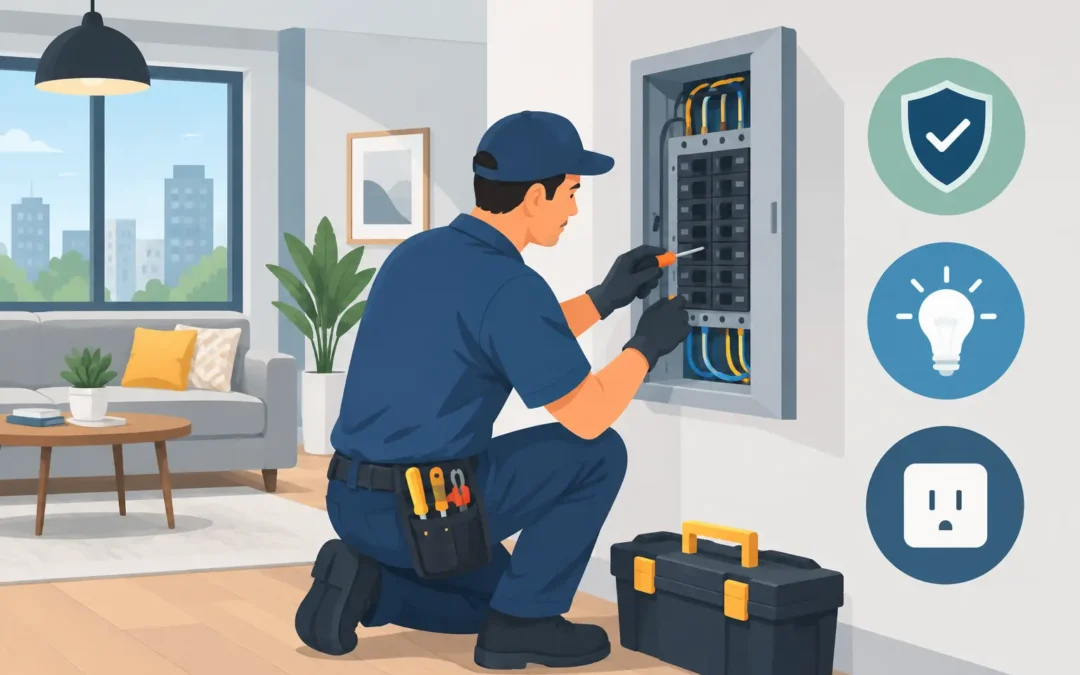
A breaker that trips when the microwave runs, outlets that feel loose, or extension cords running across the living room are not small apartment annoyances. They are signs your electrical system may not match how you live. This apartment electrical upgrade guide explains what to check, which improvements make the biggest difference, and when to bring in a licensed electrician.
Apartment upgrades need a different approach than work in a detached house. Your unit may be tied to a shared electrical room, governed by condominium rules, or subject to landlord approval. The goal is not to replace everything automatically. It is to correct safety issues, add capacity where you need it, and make sure the work is properly permitted and completed to code.
Start With the Electrical Problems You Can See
Before planning an upgrade, pay attention to the everyday signs. A single flickering light bulb can be a bulb or fixture issue. Flickering across several rooms, however, can point to a loose connection, overloaded circuit, or service problem that needs prompt inspection.
Frequent breaker trips deserve attention as well. A breaker is designed to shut off power when a circuit is overloaded or faulty. Resetting it once after clearly overloading a circuit may be reasonable. Resetting it repeatedly without finding the cause is not. The same applies to a fuse that keeps blowing in an older unit.
Call a licensed electrician promptly if you notice burning odors, buzzing from a panel or outlet, warm wall plates, sparking, discoloration, shocks from appliances, or lights that dim heavily when equipment starts. Do not remove outlet covers or open the electrical panel to investigate. These symptoms can indicate loose or damaged wiring and should be treated as a safety concern.
Know What You Are Allowed to Upgrade
The first question is ownership. If you rent, the landlord is generally responsible for the fixed electrical system, including wiring, the panel, and permanently installed outlets. You may be able to request additional outlets, better lighting, or a dedicated circuit, but approval should come before work begins.
Condo owners often have more responsibility inside their unit, but condo corporations can still control changes that affect common wiring, risers, meters, electrical rooms, walls, or fire-rated assemblies. Some buildings require written approval, proof of insurance, a licensed contractor, and notice before construction starts. Older high-rise buildings may also have limited electrical capacity available to each unit.
A qualified electrician can help identify what is inside your unit versus what belongs to the building. That distinction matters. Adding a receptacle may be straightforward, while increasing service capacity or installing equipment that affects common infrastructure can require building coordination and a more involved design.
Prioritize Safety Before Convenience
An electrical upgrade does not always begin with a new panel. In many apartments, the most useful work is replacing unsafe or outdated devices and correcting problems found during an inspection.
Ground-fault circuit interrupter, or GFCI, protection is especially important around sinks and other areas exposed to moisture. A GFCI quickly cuts power when it detects a ground fault, reducing the risk of electric shock. Kitchens, bathrooms, laundry areas, and similar locations are common places where this protection may be required. If an older apartment has standard receptacles near water, have an electrician assess the setup.
Arc-fault circuit interrupter, or AFCI, protection can also be required in many living areas. It is designed to detect dangerous arcing that ordinary breakers may not catch. Requirements depend on the building, the scope of renovation, and local electrical rules, so this is not a do-it-yourself decision.
Tamper-resistant receptacles are worth considering in homes with young children. New, properly grounded receptacles also provide a safer and more dependable connection for everyday electronics. Replacing a two-prong outlet with a three-prong one does not automatically create a ground. The wiring and protection method must be evaluated first.
Plan Capacity Around How You Actually Use the Unit
Modern apartments carry more electrical demand than many older units were designed for. Home office equipment, air conditioners, induction cooktops, portable heaters, window AC units, entertainment systems, and charging devices can quickly load a small number of circuits.
Start by identifying the appliances that draw the most power. Portable heaters are a common issue because they can use most of a typical branch circuit on their own. Microwaves, toaster ovens, air fryers, hair dryers, and portable air conditioners can create the same problem when they share a circuit with other loads.
A dedicated circuit is often the right answer for a high-demand appliance or a new permanent installation. It can reduce nuisance tripping and prevent one appliance from affecting power elsewhere in the unit. It is not always possible in every apartment, though. Access to walls and ceilings, panel space, building rules, and available capacity all affect the scope and price.
Avoid treating power bars and extension cords as permanent wiring. A quality surge-protecting power bar can be useful for low-demand electronics, but it does not increase circuit capacity. Never connect one power bar to another, run cords under rugs, or use damaged cords. If you need them every day because outlets are too far away, adding receptacles is the safer long-term solution.
Consider a Panel or Service Upgrade Carefully
Panel upgrades are valuable when the existing panel is unsafe, obsolete, damaged, overcrowded, or unable to support needed circuits. They may also be necessary when a renovation adds major loads, such as a new electric range, laundry equipment, central cooling, or a substantial kitchen upgrade.
But a panel upgrade inside the unit does not always mean the building can provide more power. In a condo or multi-unit building, service capacity may be limited by the meter equipment, common distribution system, or electrical room. A proper assessment looks beyond the panel cover and considers the full electrical path.
If the panel is functioning safely and has room for a planned circuit, a full replacement may not be necessary. A reliable electrician should explain the condition of the equipment, the capacity calculation, the work required, and the options available. The right recommendation is based on the unit’s actual loads and future plans, not a one-size-fits-all package.
Upgrade Lighting for Better Function and Lower Maintenance
Lighting upgrades can make an apartment more comfortable without major electrical changes. Recessed lighting, under-cabinet kitchen lighting, dimmers, bathroom vanity lighting, and properly placed ceiling fixtures improve usability where it matters most.
The trade-off is access. Installing a new ceiling box or recessed lights may require opening drywall, working around concrete slabs, or coordinating with the unit above. In some apartments, surface-mounted fixtures or track lighting deliver a better result with less disruption.
LED fixtures and bulbs use less energy and generally last longer than older lighting options. Choose compatible dimmers and LED-rated bulbs or fixtures. A dimmer that is not rated for the lighting load can cause flickering, buzzing, or poor dimming performance.
Do Not Overlook Smoke and Carbon Monoxide Alarms
Electrical renovations are a good time to review smoke and carbon monoxide alarm placement and operation. Requirements vary based on the building type, fuel-burning equipment, and local rules, but alarms should never be ignored because they are part of the unit’s safety system.
Hardwired alarms may be interconnected so that one alarm activates others. Replacing, relocating, or disconnecting them without understanding the circuit can affect the entire system. Test alarms regularly according to the manufacturer’s instructions, replace batteries where applicable, and have damaged or outdated units assessed by a professional.
What a Professional Electrical Assessment Should Cover
A useful assessment is more than a quick look at the panel. The electrician should ask how you use the apartment, what equipment you plan to add, whether breakers trip, and whether the building has any renovation requirements. They should inspect accessible wiring, outlets, switches, panel condition, grounding, and visible signs of overheating or improper past work.
For a larger project, expect a clear scope of work that separates necessary safety repairs from optional improvements. You should also understand whether permits, inspections, condo approvals, drywall repairs, or access to common areas are part of the project. This prevents surprises once work is underway.
Cost depends on access, building age, the number of circuits required, and whether the project affects shared infrastructure. A small outlet or lighting upgrade may be completed with limited disruption. Rewiring an older unit or upgrading building-related equipment is a larger project that requires more planning. Cheap shortcuts with electrical work can create expensive repairs later, along with real safety risks.
Apartment Electrical Upgrade Guide: When to Call
Call for professional help when a breaker trips repeatedly, outlets or switches show heat damage, you are planning a renovation, or your apartment cannot safely support the equipment you use. It is also wise to schedule an inspection before buying high-demand appliances or beginning kitchen, bathroom, or home office work.
For apartment owners and property managers in Toronto and the GTA, Eclipse Electrical Services can assess electrical concerns, explain practical options, and complete licensed upgrade work with building requirements in mind. The best next step is usually a clear on-site assessment, not a guess based on what is behind the wall.
A safer apartment is built one sound decision at a time: fix warning signs early, plan new loads before buying equipment, and use qualified electrical work that protects both your unit and the people in it.