
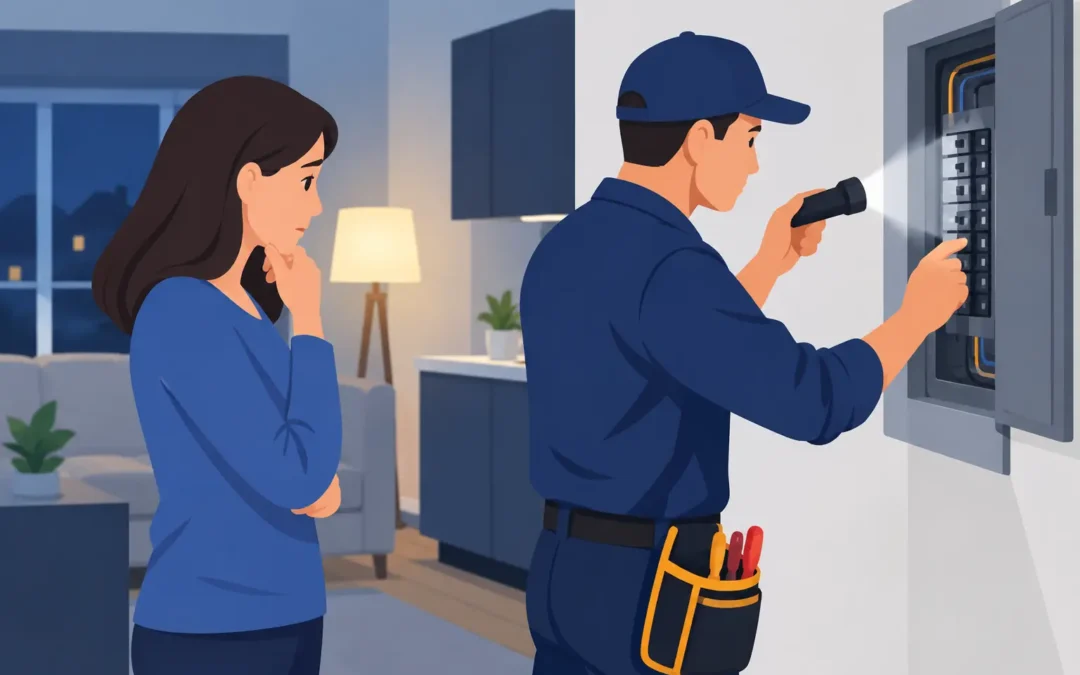
A burning smell from an outlet, a panel that keeps tripping, or power loss affecting critical equipment is not a problem to put off until tomorrow. When you search for an emergency electrician near me, the goal is not just to restore power quickly. It is to make the property safe, identify the real fault, and prevent a small electrical issue from turning into damage, downtime, or fire risk.
For homeowners, business owners, and property managers, the right response depends on what is happening. Some issues can wait for a scheduled repair. Others require immediate action from a licensed electrician.
When You Need an Emergency Electrician Near Me
An electrical emergency is any issue that presents an immediate risk to people, property, or business operations. If there is smoke, visible sparking, a burning odor, or signs of an electrical fire, get everyone to a safe location and call emergency services first. Do not attempt to investigate the source or put water on an electrical fire.
Call for urgent electrical service when you notice any of the following:
- Breakers that trip repeatedly and will not stay on
- A hot, buzzing, scorched, or discolored outlet, switch, or electrical panel
- Flickering lights or partial power loss throughout the property
- Water near electrical equipment, wiring, outlets, or a panel
- A damaged service mast, meter base, exterior cable, or fallen power line
A single breaker trip after using a high-demand appliance may not always be an emergency. However, a breaker that trips again as soon as it is reset is telling you something. The circuit may be overloaded, there may be a short circuit, or equipment or wiring may be failing. Repeatedly resetting it can make the situation worse.
The same applies to flickering lights. A loose bulb is one thing. Lights dimming across several rooms, power cutting in and out, or a panel making unusual noises can point to a loose connection, overloaded service, or a problem with the electrical supply. These issues need professional assessment, especially in older Toronto-area homes and commercial spaces with expanding power demands.
What to Do Before Help Arrives
Your first job is to reduce risk, not diagnose the repair. If it is safe to access the panel and there is no smoke, heat, or water around it, turn off the affected breaker. If you cannot identify the circuit or the problem appears to affect the whole building, switch off the main disconnect only if you can do so safely.
Do not touch damaged wiring, wet electrical equipment, or an outlet that is warm to the touch. Keep children, employees, tenants, and customers away from the area. If water is involved, stay clear until a qualified electrician confirms that the power has been isolated and the area is safe.
For a commercial property, protect operations without creating a second hazard. Shut down affected machinery using normal procedures where possible. Avoid running extension cords across walkways or using makeshift power arrangements to keep the business open. Temporary power can be useful, but it must be planned and installed correctly.
If an appliance appears to be the source of the issue, unplug it only when the plug, cord, and outlet are cool and undamaged. If there is heat, discoloration, or sparking, leave it alone and shut off power at the breaker instead.
Why Fast Electrical Response Matters
Electrical faults do not always fail dramatically. Sometimes the warning signs are subtle: a light switch that feels warm, an outlet that stops working intermittently, or a breaker that trips only when several devices are running. Left unresolved, those problems can damage insulation, connections, appliances, or sensitive electronic equipment.
Fast service also matters because electrical downtime has a cost. At home, it can mean spoiled food, no heat or air conditioning, a disabled sump pump, or loss of charging and communication. In a business, it can interrupt point-of-sale systems, refrigeration, security equipment, production machinery, lighting, and tenant operations.
The right emergency electrician will stabilize the situation first, then investigate the cause. That may involve testing circuits, checking panel connections, inspecting damaged devices, identifying overloads, or locating a fault in wiring. Restoring power without finding the cause is not a complete repair.
Choosing an Emergency Electrician Near Me
In an urgent situation, it is tempting to call the first number you find. Response time matters, but so do qualifications and communication. Look for a local electrical contractor that offers 24-hour emergency support, sends licensed electricians, and can clearly explain what is being done before work starts.
A professional emergency visit should include a practical assessment of the immediate hazard, safe isolation of the affected circuit or equipment, and a clear explanation of the repair options. Some faults can be repaired on the spot. Others may require replacement parts, utility coordination, a panel upgrade, or a follow-up visit. A dependable contractor will be upfront about that rather than promising a quick fix that does not address the underlying issue.
Ask what caused the failure, what was repaired, and whether there are conditions that need follow-up. For example, a failed outlet may be an isolated device problem. It may also be the first visible sign of loose wiring, water intrusion, an overloaded circuit, or aging aluminum wiring. The answer affects whether a targeted repair is enough or whether a broader inspection makes sense.
For Toronto and GTA properties, local experience is valuable. Electrical systems vary widely between older homes, condo units, retail spaces, warehouses, and newer construction. A contractor who works across residential, commercial, and industrial properties can assess the issue in the context of how the building is actually used.
Common Emergencies at Homes and Businesses
At homes, emergency calls often involve overloaded circuits, damaged outlets, panel faults, water damage, and power loss to essential systems. Renovations can also uncover unsafe wiring, improper connections, or circuits that were not designed for modern loads. Adding EV charging, air conditioning, kitchen appliances, or a finished basement can push an older electrical service beyond its practical capacity.
In commercial settings, the problem may involve lighting circuits, tripped equipment breakers, damaged disconnects, failed panels, or power loss affecting a critical area. Businesses often have more complex load requirements, and the safest repair may require isolating a specific section while keeping other areas operational. That takes planning, proper testing, and clear communication with the person responsible for the site.
Industrial facilities can face additional concerns, including three-phase equipment, motor controls, distribution panels, and production-related downtime. These are not DIY repairs or jobs for an unqualified handyman. The cost of an incorrect repair can be much higher than the cost of bringing in a licensed electrical contractor promptly.
What Emergency Electrical Service May Cost
Emergency service generally costs more than a standard scheduled visit because it involves after-hours availability, rapid dispatch, and immediate troubleshooting. The final cost depends on the time of day, the accessibility of the equipment, the severity of the fault, required parts, and whether the repair can be completed during the initial visit.
The lowest price is not always the best value when safety is involved. A low upfront call-out rate can become expensive if the issue is misdiagnosed or temporarily patched. A proper repair should focus on safe workmanship, code-aware solutions, and a clear scope of work.
When possible, ask for an explanation of the service call, the identified fault, and the recommended repair before authorizing larger work. If the situation must be made safe immediately but a permanent repair requires additional time, the electrician should explain the temporary measures and next steps.
Preventing the Next Electrical Emergency
Not every emergency can be predicted, but many can be reduced through routine maintenance and timely upgrades. Electrical safety inspections are especially useful after purchasing an older property, completing renovations, taking over a commercial unit, or noticing recurring breaker trips and power quality issues.
Avoid overloading power bars, using damaged extension cords, or treating frequent breaker trips as normal. If your electrical panel is outdated, crowded, corroded, or no longer has capacity for new equipment, a planned upgrade is usually safer and less disruptive than waiting for a failure.
Eclipse Electrical Services provides emergency electrical support for homes, businesses, and facilities across Toronto and surrounding communities. When something does not look, sound, or smell right, shut off power if it is safe to do so and get qualified help before the problem has a chance to grow.