
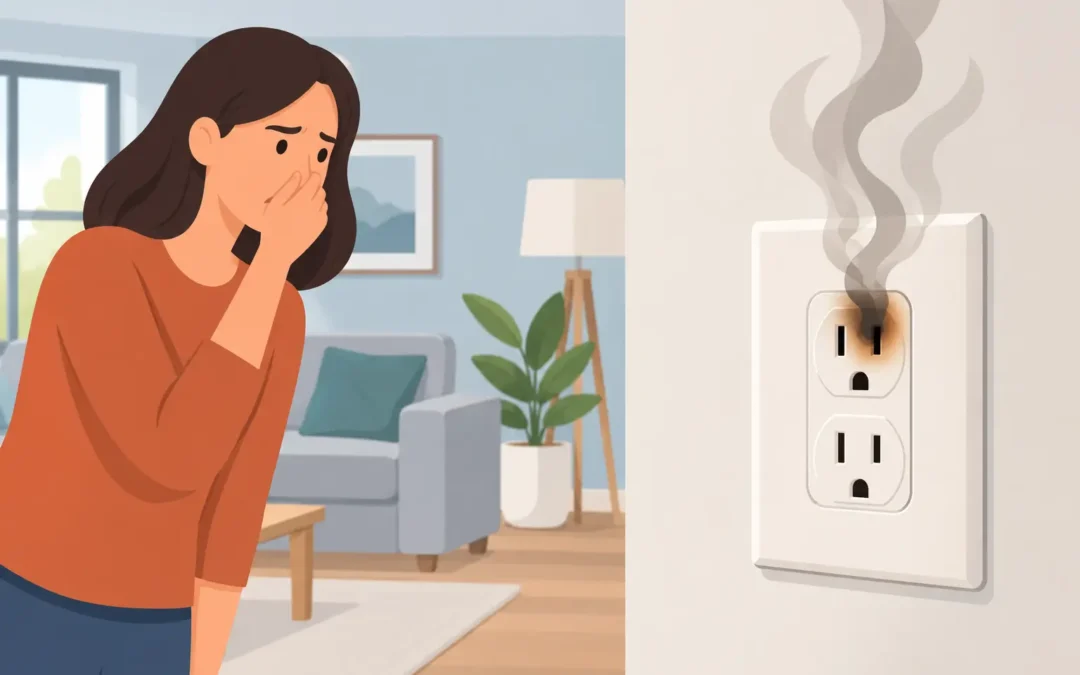
A burning smell near an outlet is not something to monitor for a few days. If you are asking what causes a burning outlet smell, the usual answer is overheating somewhere in the electrical connection, device, or wiring. That heat can damage insulation, melt plastic components, and in serious cases start a fire.
The safest response is to stop using the outlet immediately. Unplug anything connected to it, avoid touching a hot cover plate or cord, and shut off the circuit at the electrical panel if you can do so safely. A licensed electrician should inspect the issue before the outlet is used again.
What causes a burning outlet smell?
Electrical outlets are designed to carry power without producing noticeable heat or odor. A smell similar to burning plastic, hot rubber, fish, or scorched dust means something is not operating as it should. The cause may be limited to one worn receptacle, but it can also point to a loose connection inside the wall or an overloaded circuit.
The smell may seem to disappear after an appliance is unplugged or the circuit breaker trips. That does not mean the problem has fixed itself. Intermittent faults can still leave damaged wiring or a weakened connection behind.
Loose wiring connections
Loose connections are one of the most common reasons an outlet overheats. Electricity passing through a loose terminal creates resistance. Resistance creates heat, and that heat can char wire insulation, discolor the outlet, and produce a burning odor.
Connections can loosen over time due to normal expansion and contraction, vibration, poor original installation, or repeated use of the outlet. Older outlets that use push-in wire connections are especially worth checking, as those connections can become less reliable with age.
A loose connection may affect only one outlet, or it may affect several devices downstream on the same circuit. Flickering lights, outlets that work only sometimes, buzzing, or a warm wall plate are all warning signs that should be treated seriously.
An overloaded outlet or circuit
A power strip full of chargers may look harmless, but high-demand equipment can overload an outlet or the circuit supplying it. Portable heaters, microwaves, air fryers, hair dryers, kettles, window air conditioners, and shop tools draw substantial power. Running more than one of these loads on the same circuit can create overheating.
An overloaded circuit often trips its breaker. But a breaker may not trip immediately if the issue is a poor connection at the outlet rather than a clear overcurrent condition. Extension cords, multi-plug adapters, and overloaded power bars can also heat up at their plug connections.
Unplugging the appliance is a sensible first step, but do not assume the appliance is automatically the only issue. An electrician can determine whether the outlet, the circuit capacity, or the equipment itself is responsible.
A worn, damaged, or defective outlet
Outlets wear out. The internal contacts that hold a plug firmly in place can weaken after years of use. A loose plug can arc inside the receptacle, producing heat and a burning smell. You may also see brown marks around the slots, melted plastic, or cracking on the face of the outlet.
Physical damage matters as well. A receptacle may be damaged by a hard impact, moisture exposure, paint contamination, or a plug that has been forced in at an angle. Replacing an outlet is often a straightforward repair, but the wiring and box behind it must be inspected at the same time. Installing a new receptacle over heat-damaged wiring only hides the real problem.
Arcing inside the outlet or wall
Electrical arcing occurs when electricity jumps across a gap rather than following its intended path through a solid connection. It can produce a sharp popping sound, a crackling noise, heat, and the smell of burning plastic or insulation.
Arcing can result from loose wiring, damaged cords, deteriorated insulation, a faulty outlet, or nails and screws that have damaged wiring inside a wall. Because arcs can reach very high temperatures, they are a significant fire risk. Do not continue resetting a breaker that trips after an outlet has smelled hot, sparked, or made noise.
Faulty appliances and damaged cords
Sometimes the outlet is not the source. A failing appliance, charger, power bar, or extension cord can overheat at the plug and transfer heat to the receptacle. Look for damaged insulation, bent prongs, loose plugs, black marks, or a cord that feels unusually warm.
If the odor appears only when one item is connected, leave that item unplugged. Still, have the outlet checked if there are any marks, heat, or odor remaining afterward. A damaged appliance can harm a previously sound outlet, and a weak outlet can damage a good appliance.
Moisture, corrosion, and outdoor exposure
Moisture inside an electrical box can lead to corrosion, short circuits, and overheating. This is more common in bathrooms, kitchens, basements, garages, exterior outlets, and commercial areas exposed to cleaning, humidity, or weather.
Ground-fault circuit interrupter outlets are commonly required in locations where water may be present. If an outlet near water smells burnt, trips repeatedly, or shows signs of rust or discoloration, keep it out of service until it has been inspected. Do not try to dry or clean the inside of the outlet yourself.
What to do when an outlet smells like it is burning
Act promptly, but do not take risks around energized equipment. First, stop using the outlet and unplug devices only if the plug and outlet are cool and there is no sparking or smoke. If the outlet is hot, smoking, buzzing, or visibly damaged, leave it alone.
Next, turn off the relevant breaker at your electrical panel if you can identify it safely. If you see flames, heavy smoke, or fire spreading, get everyone out of the building and call emergency services. Do not use water on an electrical fire.
Avoid common temporary fixes. Do not keep using the outlet with a different plug, cover the smell with air freshener, replace a breaker with a larger one, or rely on a power bar to work around the problem. These actions can increase the hazard or delay a necessary repair.
When you need an electrician right away
A burning outlet smell deserves prompt professional attention, particularly when it comes with heat, discoloration, smoke, sparking, buzzing, or repeated breaker trips. You should also call for service if several outlets stop working, lights flicker when equipment starts, or you notice a burning odor from the electrical panel.
For businesses, property managers, and facility operators, do not wait for a minor outlet issue to interrupt operations or create a safety concern for staff and customers. A qualified electrician can isolate the circuit, inspect the outlet and wiring connections, test for damage, and make repairs that match the actual cause.
In Toronto and across the GTA, Eclipse Electrical Services can respond to urgent electrical faults and carry out the repairs, upgrades, or safety inspections needed to put the circuit back into safe working order. The goal is not simply to replace a burned outlet, but to find why it overheated in the first place.
A burning electrical smell is your warning to stop using the circuit and get it checked. Addressing it early is usually simpler, safer, and less costly than dealing with damaged wiring or a preventable electrical fire.