
A tripped breaker during a busy shift, flickering lights in a retail space, or a panel that fails without warning can stop work immediately. Knowing how to reduce electrical downtime helps homeowners, business owners, and facility managers avoid disruptions that cost time, revenue, and peace of mind.
Electrical downtime is not always caused by a major failure. Often, it starts with small warning signs that are ignored because the system is still working. A warm outlet, a breaker that trips occasionally, dimming lights when equipment starts, or an overloaded power bar can point to a problem that deserves attention before it becomes an emergency.
Start With the Real Cause of Electrical Downtime
The fastest way to restore power is not always the best way to prevent the next outage. A breaker may trip because a circuit is overloaded, but the underlying issue could be new equipment added to an old circuit, damaged wiring, a failing breaker, moisture intrusion, or a problem with the connected appliance.
For commercial and industrial properties, the cause can be more complex. Aging switchgear, poor load distribution, loose electrical connections, insufficient capacity, and deferred maintenance can all create avoidable downtime. Resetting equipment without finding the source may get operations moving again, but it can also increase the risk of repeat faults or equipment damage.
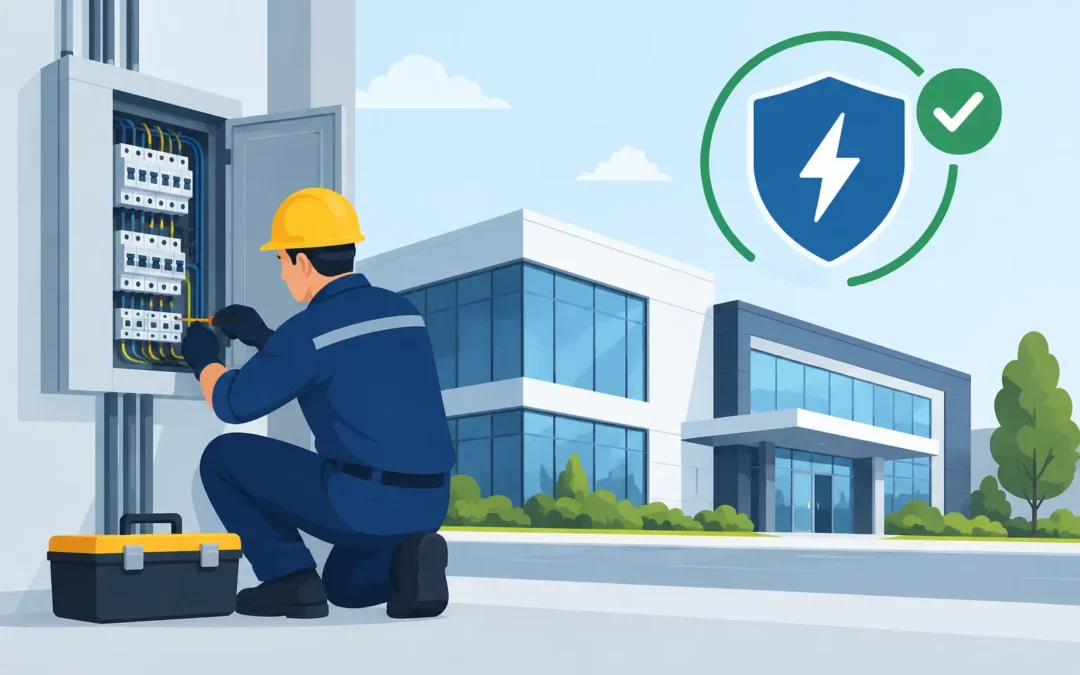
A licensed electrician can test the circuit, inspect the panel, identify heat damage or loose connections, and determine whether the issue is isolated or part of a larger capacity problem. This matters because the right repair depends on the condition of the system, not just the immediate symptom.
Use Preventive Electrical Maintenance
Preventive maintenance is one of the most practical ways to reduce electrical downtime. Instead of waiting for a fault, schedule inspections and service while systems are operating normally. This gives an electrician time to spot worn components, overloaded circuits, corrosion, damaged conduit, and signs of overheating before they cause a shutdown.
The right maintenance schedule depends on the property. A home may need an inspection after a renovation, panel upgrade, water damage event, or the installation of high-demand equipment such as an EV charger. A restaurant, office, warehouse, retail store, or manufacturing facility may need more frequent checks because electrical systems support lighting, HVAC equipment, refrigeration, production equipment, security systems, and computer networks.
During a maintenance visit, a qualified electrician may check panel conditions, breaker performance, grounding, circuit loads, connections, emergency lighting, and visible wiring. Thermal scanning can also be useful in larger commercial settings because it helps identify hot spots that may not be visible during a standard visual inspection.
Stop Overloading Circuits
Overloaded circuits are a common reason for nuisance tripping and unplanned outages. They are especially common in older homes and commercial spaces that have changed use over time. A circuit designed for a few office devices may later be asked to support heaters, printers, monitors, kitchen equipment, or additional workstations.
Avoid treating power bars and extension cords as permanent solutions. They may be useful temporarily, but they do not add electrical capacity. If a circuit repeatedly trips, the answer may be to install a dedicated circuit, redistribute loads, or upgrade the electrical panel.
High-demand equipment usually benefits from its own properly sized circuit. Examples include EV chargers, electric ranges, dryers, air conditioners, sump pumps, commercial refrigeration, servers, and certain shop equipment. Dedicated circuits improve reliability and reduce the chance that one device will interrupt power to other essential equipment.
Plan Electrical Upgrades Before Capacity Becomes a Problem
Electrical systems are often upgraded only after they fail to keep up. That approach can lead to rushed decisions, longer disruptions, and more expensive emergency work. Planning ahead gives property owners more control over timing and budget.
If you are renovating, adding equipment, expanding a business, converting a basement, installing an EV charger, or completing a commercial fit-out, include electrical capacity in the planning stage. An electrician can calculate expected loads, review available panel space, and recommend whether new circuits, a subpanel, service upgrade, or switchboard work is needed.
There is a trade-off here. Not every property needs a full panel replacement simply because it has an older panel. If the existing equipment is safe, properly sized, and has room for planned additions, targeted upgrades may be more cost-effective. On the other hand, panels with recurring issues, obsolete components, visible damage, or insufficient capacity should not be stretched beyond their limits.
Protect Critical Equipment With Backup Power
Some downtime cannot be prevented. Utility outages, severe weather, vehicle damage to electrical infrastructure, and unexpected equipment failures can interrupt service even in a well-maintained building. For essential systems, backup power can make the difference between a short inconvenience and a serious operational problem.
The appropriate solution depends on what must stay running. A homeowner may prioritize a sump pump, furnace, refrigerator, internet connection, or medical equipment. A business may need emergency lighting, security, point-of-sale systems, servers, refrigeration, communications, or selected production equipment.
Battery backup systems and uninterruptible power supplies are useful for sensitive electronics and short-duration continuity. Generators can support longer outages, but they must be correctly sized, installed, and connected through approved transfer equipment. Never connect a portable generator directly to building wiring without a proper transfer switch. Improper connections can endanger occupants, utility workers, and electrical equipment.
Keep Panels and Electrical Rooms Accessible
Electrical rooms often become storage areas because they are out of sight. That creates delays when a breaker trips, a disconnect needs to be accessed, or emergency repairs are required. It can also create safety and code compliance concerns.
Keep electrical panels, disconnects, switchboards, and emergency shutoffs clearly labeled and accessible. Staff or occupants should know which panel serves key areas of the property, but they should not be encouraged to perform electrical repairs themselves. A simple circuit directory can save valuable time during an outage, particularly in commercial buildings with multiple panels or tenant spaces.
Good labeling also helps prevent mistakes. When a technician needs to isolate a circuit for repair, accurate identification reduces the chance of shutting down unrelated equipment or disrupting more of the building than necessary.
Respond Early to Warning Signs
Electrical problems rarely improve on their own. Call a licensed electrician when you notice repeated breaker trips, buzzing from a panel, burning odors, hot outlets or switches, discolored receptacles, flickering lights, shocks or tingling from equipment, or power loss affecting part of the property.
For businesses, track recurring electrical issues instead of treating each call as separate. If a particular circuit fails every few weeks, record what equipment was operating at the time, what area was affected, and whether there were weather conditions or recent changes to the space. This information helps identify patterns and speeds up diagnosis.
If there is smoke, sparking, a burning smell, exposed damaged wiring, or a panel that feels hot, treat it as an electrical emergency. Shut off power only if it is safe to do so, keep people away from the area, and arrange professional service immediately.
Work With a Licensed Electrician Who Can Act Quickly
Downtime is reduced when repairs are completed correctly the first time. That means using a licensed electrical contractor who can diagnose the issue, explain the options clearly, obtain required permits when applicable, and perform work that suits the property’s current and future needs.
For Toronto and GTA property owners, Eclipse Electrical Services handles electrical troubleshooting, repairs, safety inspections, panel and switchboard upgrades, dedicated circuits, commercial maintenance, and emergency electrical calls. Fast response matters, but so does making sure the repair addresses the condition that caused the outage.
The best time to deal with an electrical weakness is before it interrupts your home, tenants, customers, or operations. A focused inspection and a practical upgrade plan can prevent a minor electrical issue from becoming the reason your property goes dark.