
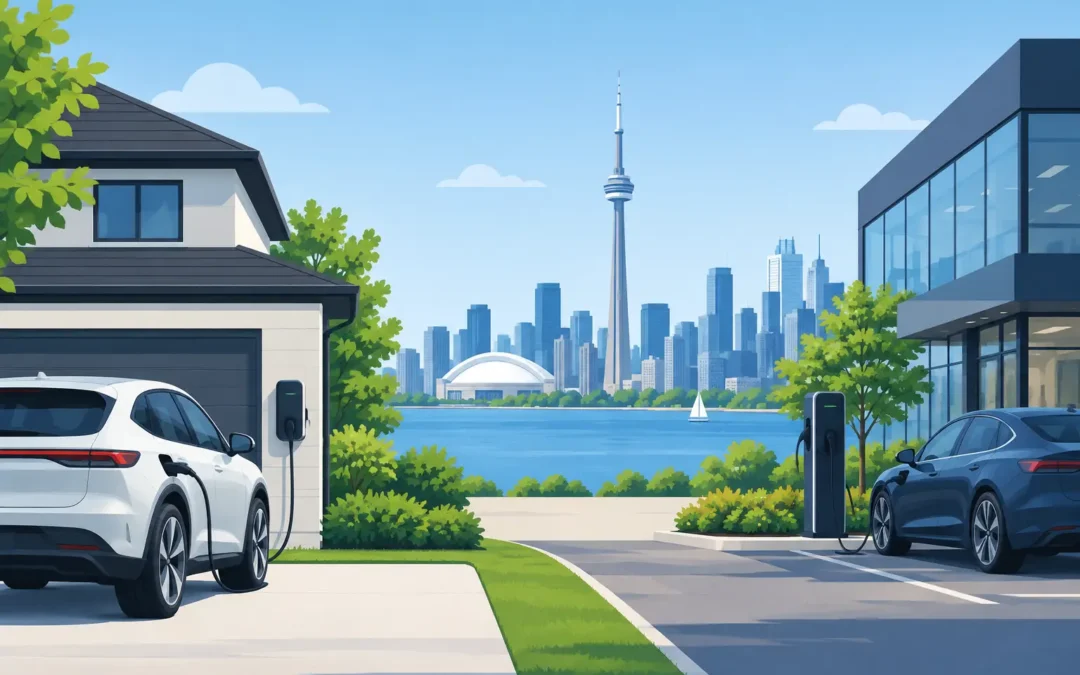
A new electric vehicle should make daily travel simpler, not create a daily hunt for an available public charger. Proper EV charging at home, at work, or at a commercial property starts with the electrical system behind the charger. The unit on the wall matters, but so do panel capacity, circuit sizing, wiring routes, permits, and the quality of the installation.
For Toronto and GTA property owners, a licensed electrician can assess the site before equipment is purchased, identify any electrical limitations, and provide a clear plan for safe, dependable charging. That approach helps prevent surprise upgrade costs, nuisance breaker trips, and installations that cannot keep up with how the vehicle is actually used.
What EV Charging Level Is Right for Your Property?
The right charger depends on driving habits, available electrical capacity, the type of property, and how long vehicles are parked. Faster is not automatically better if the electrical upgrade required is disproportionate to the benefit.
Level 1 charging uses a standard 120-volt outlet. It is the slowest option, but it can work for drivers with short daily trips and plenty of overnight parking time. The outlet and circuit still need to be in good condition and properly rated for continuous use. Extension cords and overloaded garage circuits are not a safe long-term charging plan.
Level 2 Charging for Most Homes
For most homeowners, a Level 2 charger is the practical choice. It uses a dedicated 240-volt circuit and can add substantially more range during an overnight charge than a standard outlet. It is well suited to households that drive daily, own more than one EV, or want predictable charging without relying on public stations.
Level 2 charging is not a one-size-fits-all installation. Chargers come in different amperage ratings, and the right choice depends on the vehicle, panel capacity, cable run, and future plans. A larger charger may require a panel upgrade or load management solution, while a properly selected lower-amperage unit may meet the household’s needs without unnecessary work.
Workplace and Commercial Charging
Workplace, retail, fleet, and multi-unit residential charging require a broader view. Property owners need to consider how many vehicles may charge at the same time, who will use the stations, whether access needs to be controlled, and how electricity costs will be managed.
A few chargers may be enough for a small office today, but conduit pathways and electrical capacity should be planned for expansion. Installing the infrastructure during a renovation, parking lot project, or tenant fit-out is usually less disruptive and more cost-effective than opening walls or excavating again later.
DC Fast Charging Has Different Requirements
DC fast chargers are designed for rapid public or fleet charging, not typical single-family homes. They require significant electrical service capacity, specialized equipment, site planning, and often utility coordination. For commercial properties, they can be valuable where fast turnover matters, but the project needs a detailed electrical assessment before a budget or timeline is set.
EV Charging Installation Starts With a Load Calculation
The key question is not simply whether there is an empty breaker space in the panel. An electrician needs to determine whether the electrical service has enough capacity to safely support the added continuous load of an EV charger along with the building’s existing demands.
That assessment considers equipment such as electric heat, air conditioning, ranges, dryers, hot tubs, elevators, machinery, and other loads that may operate at the same time. In older homes and commercial buildings, the panel may be full, undersized, or already carrying additions made over many years.
A proper site review also looks at the practical details that affect the final installation:
- The distance between the electrical panel and the parking location
- Whether the charger will be hardwired or connected through an approved receptacle
- Indoor or outdoor mounting conditions and weather protection
- Wall access, finished spaces, detached garages, and trenching needs
- Permit requirements and inspection for the property type
These details influence labor, materials, and scheduling. They also determine whether the installation will look clean, remain protected from damage, and be easy to service in the future.
When Does an Electrical Panel Upgrade Make Sense?
Not every EV charger requires a panel upgrade. Many homes can support a correctly sized Level 2 charger on the existing service. However, an upgrade may be the right answer when the load calculation shows limited capacity, the panel is outdated, breakers are frequently tripping, or the household is adding other major electrical loads.
A panel upgrade is also worth considering during a larger renovation. If a homeowner is adding an electric heat pump, induction range, workshop equipment, or a second EV, planning the electrical service as one project can avoid repeated work and conflicting upgrades.
For businesses, the decision may involve a service upgrade, new distribution equipment, transformer work, or managed charging controls. Load management can allow multiple chargers to share available capacity by adjusting charging output as building demand changes. It can be a smart option where expanding service immediately would be costly, but it must be designed around actual operating needs.
Choosing the Right Location for an EV Charger
Convenience matters. At home, the charger should reach the vehicle’s charge port without stretching the cable across a walking path, driveway, or garage entrance. The mounting location should protect the equipment while leaving reasonable room to park, open doors, and move around the vehicle.
For a detached garage or outdoor parking pad, the electrical route needs careful planning. Trenching, underground wiring, outdoor-rated equipment, and protection from physical damage may be required. A low upfront quote that skips these details can turn into a repair problem after the first winter or a few seasons of use.
At commercial sites, placement affects traffic flow, accessibility, lighting, signage, and future expansion. Chargers should not create parking conflicts or block service vehicles. For property managers, it is also useful to establish who is responsible for maintenance, access, billing, and responding when a station is out of service.
Why Licensed EV Charging Installation Matters
An EV charger operates for long periods at a high electrical load. That is why the circuit, breaker, wire sizing, connections, grounding, and protective devices must be selected and installed correctly. A charger may appear to work after an improper installation, but heat buildup, loose connections, overloaded circuits, and unsuitable outdoor equipment can create serious safety issues over time.
Licensed electrical work also helps protect property owners when permits, inspections, insurance documentation, resale questions, or commercial compliance requirements arise. The job should be completed to applicable electrical code requirements, with the installation matched to the equipment manufacturer’s instructions.
This is especially important when a charger is added to an older property. Existing wiring, panel labeling, grounding, and previous alterations may need attention before new equipment is installed. A thorough electrician addresses those conditions rather than treating the charger as an isolated add-on.
Plan EV Charging for the Next Vehicle Too
A charger installation is a chance to make a property more useful for years ahead. Even if there is only one EV today, it is worth discussing a second vehicle, a future garage conversion, tenant needs, or business fleet growth. Adding conduit or allowing space in distribution equipment now may save substantial work later.
The best plan is not always the biggest charger or the most expensive upgrade. It is the solution that safely fits the property, daily driving needs, budget, and likely future demand. Eclipse Electrical Services can assess your electrical system, explain the available options in plain language, and provide a no-obligation estimate for residential or commercial EV charger installation.
A reliable charging setup begins with an honest site assessment. Before ordering equipment, have the electrical capacity and installation path checked so the charger you choose will be ready when you need it.