
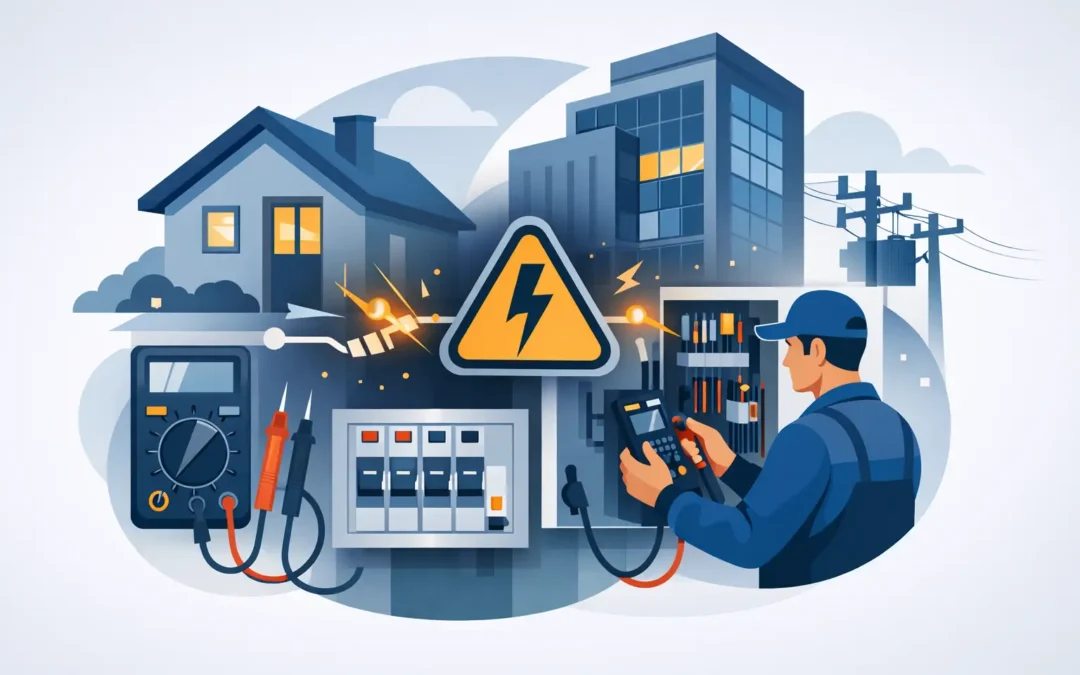
A breaker trips during the dinner rush. Half the office loses power before opening. Lights flicker every time the air conditioner starts. Electrical fault diagnosis is the process of finding the actual cause of problems like these before a small disruption becomes damaged equipment, downtime, or a serious safety risk.
The visible symptom is not always the fault. A tripped breaker may point to an overloaded circuit, a failing appliance, loose wiring, water intrusion, or a short circuit. The right repair starts with a licensed electrician testing the system methodically rather than replacing parts based on a guess.
When an Electrical Fault Needs Immediate Attention
Some electrical problems can wait for a scheduled service call. Others should be treated as urgent. If you smell burning, see smoke or sparking, feel warmth at an outlet or electrical panel, hear persistent buzzing, or have a breaker that will not reset, turn off power to the affected area if it is safe to do so. Do not keep resetting the breaker or try to work around the issue with extension cords.
Water near electrical equipment is another reason to act quickly. A damp basement outlet, damaged exterior receptacle, leaking roof near a light fixture, or flooded commercial area can create an immediate shock and fire hazard. Keep people clear of the area and arrange emergency electrical service.
For businesses, a partial power loss may also affect alarms, refrigeration, point-of-sale systems, network equipment, ventilation, or production equipment. Fast diagnosis matters because restoring power without identifying the cause can lead to a second failure and more costly downtime.
Common Signs Behind Electrical Fault Diagnosis
Electrical systems usually give warning signs before they fail completely. The key is recognizing patterns and reporting them clearly to the electrician.
Breakers That Trip Repeatedly
A circuit breaker is designed to shut off power when it detects excessive current or a fault. One trip after a major appliance starts may indicate the circuit is overloaded. Repeated trips, especially when little is plugged in, can signal a damaged wire, defective outlet, failing breaker, or a problem within connected equipment.
Older homes often have circuits serving more rooms and appliances than they were designed to handle. A kitchen countertop circuit, basement circuit, or garage circuit may have been extended during a renovation without enough capacity. In that case, the permanent solution may be a new dedicated circuit or panel upgrade, not a larger breaker. Installing an oversized breaker on undersized wiring can create a fire risk.
Flickering or Dimming Lights
A single flickering fixture can be as simple as a loose bulb, incompatible dimmer, or failing LED driver. Flickering throughout a room or across several areas deserves closer attention. It may be caused by a loose connection, overloaded circuit, voltage drop, deteriorating service equipment, or a problem with the neutral conductor.
Lights that dim when a large appliance starts are not always an emergency, but they should not be ignored if the change is severe or getting worse. In a commercial space, the same issue can affect sensitive electronics, LED lighting, and operating equipment.
Dead Outlets and Partial Power Loss
When one outlet stops working, the fault may be at that outlet, a nearby connection, a tripped GFCI receptacle, or a breaker. When several outlets or lights lose power together, the affected circuit needs to be traced. The first dead device is not necessarily where the issue began.
GFCI outlets are common in kitchens, bathrooms, garages, exterior areas, and other locations exposed to moisture. A tripped GFCI can cut power to outlets farther down the circuit. Resetting it may restore power, but if it trips again, there is a reason. Moisture, damaged cords, faulty appliances, or wiring faults can all be involved.
Warm Outlets, Buzzing, or Discolored Equipment
Outlets, switches, plugs, and panel covers should not feel hot during normal use. Heat, discoloration, buzzing, crackling, or a sharp burnt-plastic smell can indicate loose connections or arcing. Arcing occurs when electricity jumps across a gap instead of traveling through a secure connection, generating extreme heat at the fault point.
Do not cover the symptom with a new faceplate or continue using the outlet carefully. Stop using it. These are the situations where prompt professional inspection can prevent a localized wiring problem from becoming a fire.
How a Licensed Electrician Finds the Cause
Proper electrical fault diagnosis is a structured process. It begins with the details: what stopped working, when it happens, what equipment is running at the time, whether there has been recent renovation work, and whether the problem follows rain, temperature changes, or heavy electrical use.
The electrician then performs a visual inspection of the panel, breakers, outlets, switches, fixtures, and accessible wiring. Signs such as loose conductors, corrosion, moisture, overloaded connections, damaged insulation, and improper previous work can narrow down the search quickly.
Testing comes next. Depending on the issue, this may include checking voltage, continuity, grounding, polarity, circuit load, insulation condition, and the operation of protective devices. The electrician isolates sections of the circuit to determine where power is being lost or where the fault is occurring. For intermittent problems, testing may need to happen while the affected appliance or equipment is operating.
This approach is particularly valuable in commercial and industrial properties. A fault may involve lighting controls, three-phase equipment, service connections, switchboards, tenant improvements, or equipment installed by another contractor. The goal is to identify the failed component and the condition that caused it to fail, so the same issue does not return after a temporary fix.
Why DIY Electrical Troubleshooting Can Make Things Worse
Homeowners and property managers can safely gather useful information: which rooms are affected, which breaker is involved, what was plugged in, and whether the problem started after a storm or renovation. Beyond basic checks, electrical diagnosis should be left to a qualified electrician.
Removing panel covers, replacing breakers, opening outlets, or bypassing a tripping device can expose people to live parts and create code or insurance problems. The risk is greater in older properties, where wiring methods may not match current standards and hidden modifications are common.
There is also a practical cost issue. Replacing an outlet because it looks suspicious may not solve a loose connection upstream. Replacing a breaker may not correct a damaged appliance or overloaded circuit. Targeted testing often saves money because it avoids repeated service calls and unnecessary replacements.
Repairs That May Follow a Fault Finding Visit
The repair depends on the evidence, not just the symptom. A simple job may involve replacing a worn receptacle, faulty switch, damaged cord connection, loose conductor, or defective GFCI. Other situations require repairing damaged cable, separating overloaded circuits, installing a dedicated appliance circuit, correcting grounding issues, replacing a breaker, or upgrading an outdated panel or switchboard.
For properties undergoing renovations or fit-outs, diagnosis can reveal capacity limits before new lighting, EV chargers, HVAC equipment, or production loads are added. This is a good time to plan the electrical work properly rather than waiting for nuisance trips and unreliable operation after occupancy.
A clear service report should explain what was found, what was repaired, whether there are related safety concerns, and what future work is recommended. Not every older system needs full replacement. Sometimes a focused repair is appropriate. When a panel is obsolete, damaged, undersized, or showing multiple warning signs, an upgrade may be the safer long-term choice.
Preventing Repeat Electrical Problems
Preventive maintenance is especially useful for commercial buildings, rental properties, and facilities with high electrical demand. Periodic panel inspections can identify loose connections, heat damage, corrosion, overloaded circuits, and aging protective devices before they interrupt operations.
At home, avoid overloading power bars, use appliances on their intended circuits, replace damaged cords promptly, and pay attention to changes in how your electrical system behaves. Keep the electrical panel accessible and clearly labeled. If a breaker begins tripping more often, arrange an inspection before it becomes an emergency.
For homeowners and businesses in Toronto and the GTA, Eclipse Electrical Services can assess electrical faults, make safe repairs, and recommend practical next steps based on the condition of the system. When an electrical issue keeps returning, the most useful next move is not another reset – it is finding the cause and correcting it properly.