
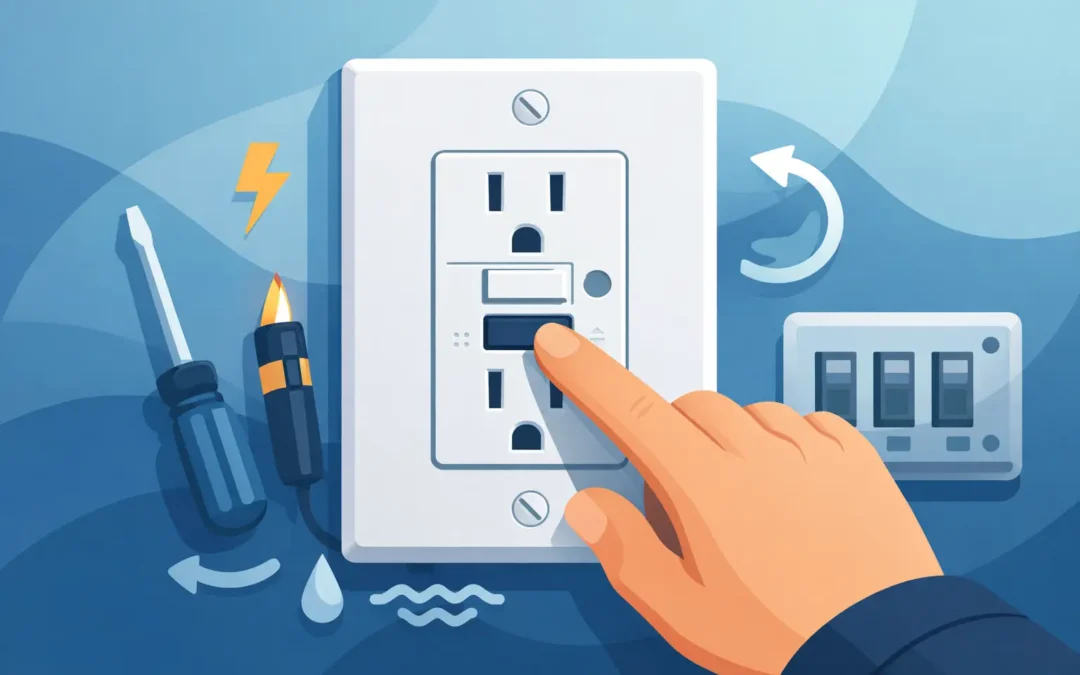
A dead bathroom, kitchen, garage, or outdoor outlet does not always mean the outlet has failed. Often, a ground-fault circuit interrupter has tripped and simply needs to be reset. Knowing how to reset GFCI outlet safely can restore power in minutes, but a reset button is not a fix for a real wiring or appliance problem. If it will not reset or keeps tripping, treat that as a warning sign.
GFCI outlets are designed to shut off power quickly when they detect electricity taking an unintended path, such as through water or a person. That protection is especially important near sinks, in laundry areas, basements, garages, and outside. A tripped GFCI can be inconvenient, but it is doing an important job.
How to Reset GFCI Outlet in 5 Steps
Start by locating the GFCI receptacle. It usually has two buttons on its face: TEST and RESET. The reset button is commonly red, black, or white, depending on the device. The outlet may be in the same room as the dead receptacle, but it may also control outlets farther down the circuit in another room, garage, basement, or exterior location.
First, unplug appliances from the dead outlet and any nearby outlets that may be on the same circuit. This is not always necessary, but it removes a possible faulty appliance or overload before you restore power.
Next, press the RESET button firmly until it clicks. On many models, the button will stay pushed in and power will return. Plug in a small lamp or phone charger to confirm that the outlet is working. Do not rely only on a switch-controlled light, since the switch may be off.
If the reset button will not stay in, check the electrical panel. A circuit breaker may have tripped. A tripped breaker does not always look fully off. Move the breaker firmly to the OFF position first, then turn it back ON. Return to the GFCI outlet and try the reset button again.
Finally, test the GFCI after it resets. Plug in a lamp, press the TEST button, and confirm that the lamp turns off. Then press RESET to restore power. If the test button does not shut off power, or the reset button does not restore it, the device may be defective or incorrectly wired. Arrange for a licensed electrician to inspect it.
Why a GFCI Outlet Trips
A GFCI monitors the amount of current flowing out and returning on a circuit. If it detects even a small imbalance, it disconnects power. That can happen because of moisture, damaged insulation, a worn appliance cord, a failing appliance, or a fault in the wiring.
Sometimes the cause is simple. An outdoor outlet may have moisture inside its cover after heavy rain. A bathroom outlet may trip after a hair dryer or grooming tool is used near a damp counter. In a garage, a refrigerator, freezer, power tool, or extension cord can be the issue.
A GFCI can also trip because it protects more than one outlet. Homeowners often reset the outlet closest to the problem, only to find the actual GFCI is located behind storage in a garage, in a basement, near a utility sink, or on an exterior wall. If several outlets are dead at once, look for a GFCI upstream before assuming each outlet has failed.
Check for These Common Problems Before Resetting
Before repeatedly pressing reset, look for obvious conditions that need attention. Check whether the outlet cover is wet, cracked, loose, discolored, or warm. Do not touch an outlet that is wet or shows signs of heat damage. Turn off the circuit breaker if you can do so safely and call an electrician.
Inspect any appliance that was plugged in when the outlet tripped. Frayed cords, loose plugs, scorch marks, cracked casings, or a burning smell are reasons to stop using the appliance. A GFCI that trips only when one item is connected is often pointing to that item, not necessarily the outlet.
Avoid using extension cords as a permanent solution, particularly outdoors or in damp areas. A damaged or poorly rated extension cord can create a shock hazard and cause nuisance tripping. Outdoor outlets should have weather-resistant covers that protect plugs even while equipment is connected.
It also helps to separate a ground-fault issue from an overload. A standard breaker may trip when too many loads are drawing power. A GFCI trips when it detects leakage or an imbalance. Both can leave an outlet dead, but they point to different problems. Repeated breaker trips may call for circuit changes or a dedicated circuit, while repeated GFCI trips require fault finding.
When a GFCI Outlet Will Not Reset
If the reset button does nothing, do not force it. The outlet may have no incoming power because the breaker is off, another upstream GFCI is tripped, or there is a loose connection on the circuit. Newer GFCI devices may also refuse to reset when they have reached the end of their service life.
A reset that immediately trips is more concerning. Unplug everything on the circuit and try once more. If it holds with everything unplugged, reconnect devices one at a time. When the GFCI trips again, the last appliance or cord connected is a likely source of the problem.
If the GFCI still trips with nothing plugged in, leave it off and call a licensed electrician. The fault could be in a downstream receptacle, exterior box, junction box, light fixture, appliance connection, or damaged cable. Water intrusion and rodent damage can create issues that are not visible from the outlet face.
Do not replace a GFCI with a standard outlet just to stop tripping. That removes a layer of shock protection and does not solve the underlying cause. Likewise, do not bypass the device, tape the reset button in place, or continue using an outlet that is hot, buzzing, sparking, or giving off an odor.
Safe GFCI Maintenance for Homes and Businesses
GFCI protection is easy to overlook because it usually works quietly in the background. Testing each GFCI periodically is a practical way to confirm it can still shut off power. Press TEST, verify that power cuts out, then press RESET. If a critical appliance is connected to a GFCI circuit, plan the test so you do not unintentionally interrupt refrigeration, equipment, or business operations.
For commercial properties, repeated GFCI trips should be documented rather than treated as a minor inconvenience. A tripping outlet near washrooms, kitchens, loading areas, mechanical rooms, or exterior signage can affect staff safety and daily operations. A proper inspection can identify whether the issue is a worn receptacle, a moisture problem, an appliance fault, or circuit damage before it becomes a larger repair.
Older properties may also have outlet configurations that no longer match how the space is used. Renovations, added kitchen equipment, outdoor living upgrades, and new shop equipment can all change electrical demands. An electrician can assess whether the circuit layout and protective devices are appropriate instead of relying on repeated resets.
Call an Electrician When the Problem Keeps Returning
One isolated trip after moisture exposure or a faulty appliance may be straightforward. A GFCI that trips repeatedly, will not reset, has visible damage, or shuts down multiple areas of the property needs professional attention. Electrical faults are not the place for trial-and-error repairs.
Eclipse Electrical Services provides licensed troubleshooting and electrical repairs for homes and businesses. If you are dealing with a stubborn GFCI outlet, a tripped breaker, or unexplained loss of power, a qualified inspection can locate the cause and restore the circuit safely. The right next step is simple: reset it once safely, test it, and if the problem returns, leave the circuit protected and have the fault diagnosed.