
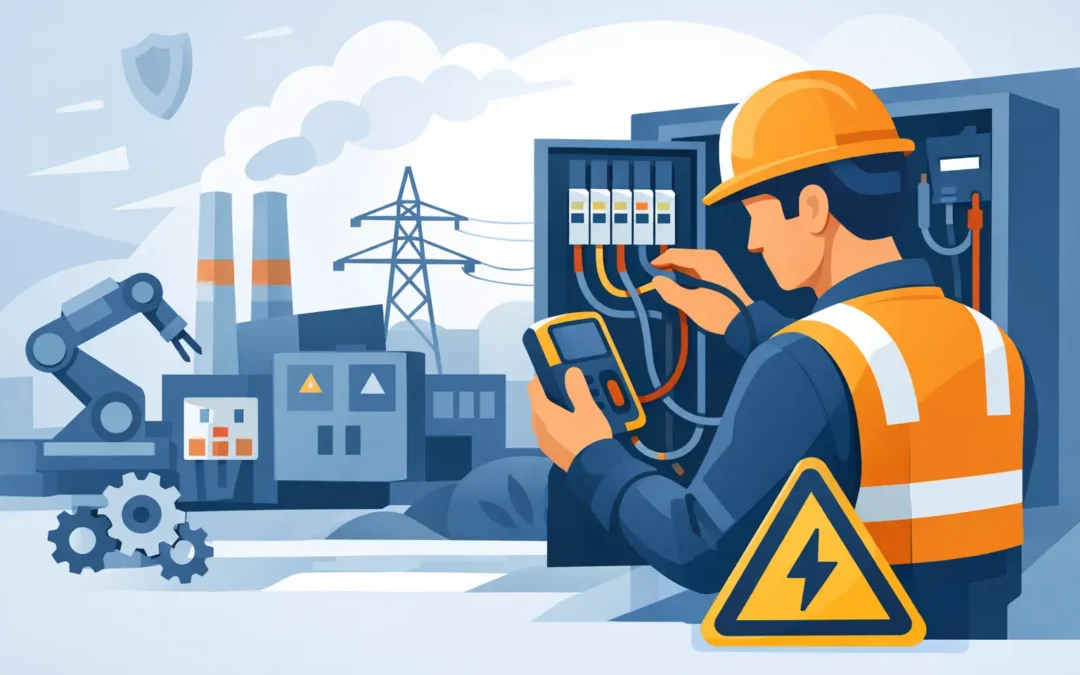
A production line stops, a motor control center trips, or an inspector flags an installation just before startup. In industrial settings, electrical problems rarely stay small. Industrial electrician code requirements are not paperwork to deal with after the work is done. They directly affect worker safety, equipment reliability, insurance exposure, and whether a facility can keep operating.
For facility managers, plant operators, and business owners, the practical goal is simple: get electrical work designed, installed, tested, and documented correctly the first time. That means using a licensed electrician who understands the code that applies to the site, the equipment involved, and the conditions in the work area.
Which Electrical Code Applies to an Industrial Facility?
The first rule is that code compliance is jurisdiction-specific. A requirement that applies in one province, state, or municipality may not apply exactly the same way elsewhere. In Ontario, industrial electrical work is generally governed by the Ontario Electrical Safety Code, which is based on the Canadian Electrical Code and enforced through the Electrical Safety Authority. Local requirements, building conditions, equipment manufacturer instructions, and the authority having jurisdiction can also affect the final scope.
For facilities operating under U.S. rules, the National Electrical Code and local amendments may apply instead. This distinction matters. A contractor should never assume that a familiar installation method is acceptable without checking the governing code and inspection requirements for that location.
Code requirements also depend on the building’s use. A warehouse with basic lighting and distribution has different risks than a food processing plant, automotive shop, chemical handling area, manufacturing floor, or water treatment facility. Moisture, dust, corrosive materials, flammable vapors, washdown procedures, outdoor exposure, and machinery loads all change what a safe installation requires.
Core Industrial Electrician Code Requirements
Industrial electrical systems are built around higher loads, specialized machinery, and operating conditions that are more demanding than a typical commercial space. The code addresses those conditions through requirements for equipment ratings, installation methods, protection, access, and identification.
Proper Load Calculations and Equipment Ratings
Every system starts with capacity. Feeders, branch circuits, transformers, disconnects, switchgear, panelboards, and overcurrent devices must be rated for the calculated load. This includes continuous loads, motor starting current, demand factors where permitted, and anticipated expansion when it is part of the project design.
Undersized conductors or protective devices can create nuisance tripping, overheating, damaged equipment, and fire risk. Oversizing without coordinating the rest of the system can be a problem too. The right answer depends on the equipment nameplate data, operating cycle, conductor installation method, ambient temperature, and the existing electrical infrastructure.
Motor circuits require particular attention. Motors often need correctly sized conductors, overload protection, short-circuit and ground-fault protection, disconnecting means, and suitable controllers. A motor that runs reliably after installation can still fail inspection if the disconnect is inaccessible, the protection is incorrect, or the wiring method is not suitable for the location.
Grounding, Bonding, and Fault Protection
Grounding and bonding are among the most critical industrial electrician code requirements because they provide a controlled path for fault current and reduce the risk of energized metal parts. Equipment enclosures, raceways, cable trays, machinery frames, and other conductive components may require bonding to ensure protective devices operate quickly during a fault.
This is not an area for visual guesses. A loose bonding connection, an improperly installed grounding conductor, or a missing bond at equipment can create serious hazards while remaining unnoticed during normal operation. Verification testing and a proper review of the installation are especially valuable after equipment upgrades, service changes, or modifications to older facilities.
Ground-fault protection may also be required depending on the service size, voltage, equipment configuration, and code in force. Coordination is essential. The protective system must clear a fault quickly enough to protect people and equipment without unnecessarily shutting down the entire facility for a localized issue.
Disconnects, Lockout Capability, and Clear Access
Industrial equipment must have safe means to disconnect power for servicing and emergencies. Disconnects must be correctly rated, located where required, clearly identified, and accessible to the workers who need them. For certain equipment, the disconnect must be within sight of the machinery or capable of being locked in the open position.
Lockout and tagout procedures are workplace safety requirements, but the electrical installation must support them. If a technician cannot reliably isolate a machine before maintenance, the facility has a real safety problem. This is one reason industrial electrical work should be planned with maintenance staff, not just installed from a drawing.
Working space around electrical equipment matters as well. Panels, switchboards, transformers, and disconnects need the required clearances. Storage in front of electrical gear is a common issue in busy facilities, particularly where floor space is tight. Clear access is needed for operation, maintenance, emergency response, and inspection.
Wiring Methods for the Environment
Industrial spaces are not all dry, clean, indoor environments. Wiring methods must match the conditions. That may mean choosing suitable conduit, cable, fittings, enclosures, seals, supports, and corrosion-resistant materials for wet locations, washdown areas, outdoor runs, high-temperature spaces, or areas exposed to physical damage.
In hazardous locations, equipment must be approved for the specific classification. Where combustible dust, flammable gases, vapors, or ignitable fibers may be present, standard electrical equipment can become an ignition source. Classification needs to be assessed carefully because the correct solution depends on the material present, how often it is present, ventilation, process controls, and the area around the source.
A common mistake is treating a hazardous-area installation as a simple equipment swap. Installing an explosion-proof enclosure alone may not solve the compliance issue. Sealing fittings, conduit systems, cable entries, equipment ratings, and installation details all need to work together.
Identification, Labels, and Arc-Flash Information
Industrial electrical systems need clear, durable identification. Panels, disconnects, feeders, circuit directories, equipment rooms, and emergency shutoffs should be labeled so employees and contractors can identify what they are working on without guesswork.
Arc-flash and shock hazard labeling may be required under applicable safety standards and facility policies. Labels should reflect the actual system, not a generic warning applied years ago. After a switchgear upgrade, transformer replacement, or major distribution change, the facility may need its short-circuit and coordination information reviewed so labels and protective settings remain accurate.
Inspections, Permits, and Documentation
Permits and inspections are part of doing industrial electrical work properly. The exact process depends on the jurisdiction and project type, but skipping it can create costly delays during renovations, equipment commissioning, property sales, insurance reviews, or incident investigations.
A well-managed project should include a clear scope of work, equipment specifications, required permits, inspection coordination, and test results where applicable. Keep updated single-line diagrams, panel schedules, equipment manuals, and records of changes. These documents save time when troubleshooting and help future electricians work safely on the system.
Older facilities need extra care. Existing equipment may have been acceptable when installed but may not meet current requirements when it is altered, expanded, or replaced. Not every project requires bringing an entire building up to current code, but modifications can trigger upgrades in the affected area. A site review before ordering equipment can prevent expensive changes later.
When to Call an Industrial Electrician
Call for a professional assessment before adding large machinery, upgrading a service, replacing switchgear, installing new motors or VFDs, changing a production layout, or converting an area to washdown or hazardous use. It is also wise to arrange an inspection when breakers trip repeatedly, equipment frames are energized, panels are overcrowded, labels are missing, or electrical gear shows heat damage, corrosion, or water intrusion.
Eclipse Electrical Services helps industrial and commercial clients across Toronto and the GTA with licensed electrical installations, upgrades, repairs, inspections, and emergency service. The focus is practical: identify what the site needs, complete the work safely, and avoid unnecessary downtime.
The best time to address code concerns is before a shutdown, failed inspection, or equipment fault forces the issue. A qualified review of the electrical system can turn a vague compliance concern into a clear plan for safe, reliable operation.