
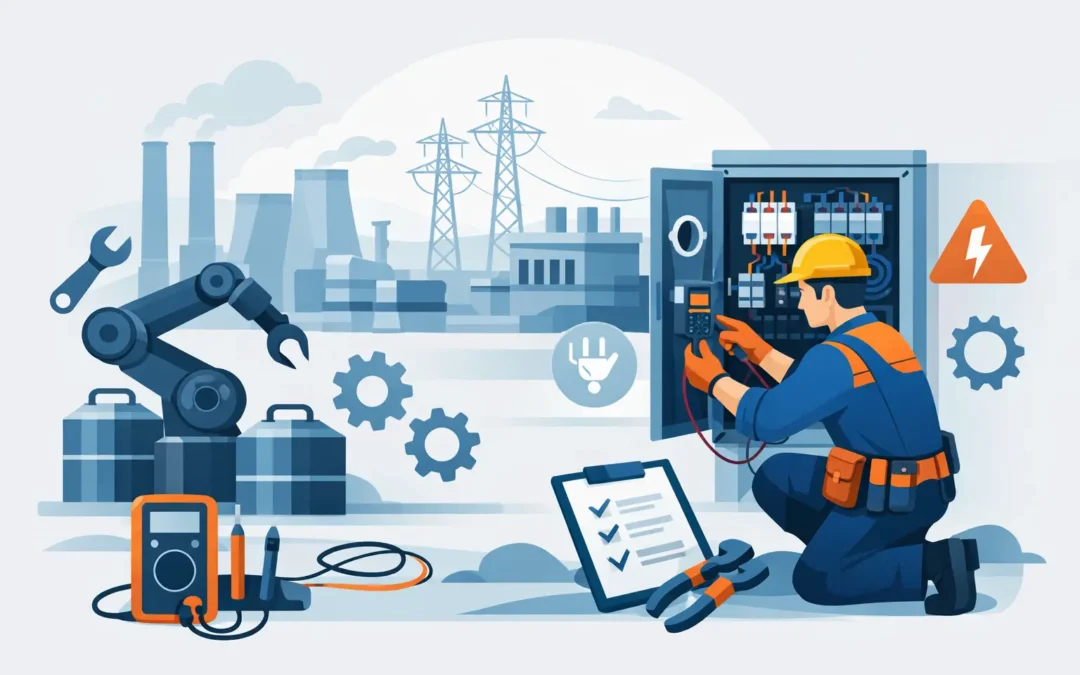
An unexpected trip at a main distribution panel can stop a production line, delay shipments, and put workers at risk within minutes. This industrial electrical maintenance guide is built for facility managers, plant operators, and property decision-makers who need to prevent those failures instead of reacting to them after the fact.
Industrial electrical maintenance is not just about replacing worn parts. It is a practical system for keeping power distribution, controls, motors, lighting, and safety equipment in dependable working order. The right approach protects people first, reduces costly downtime, and gives you a clearer picture of where electrical upgrades are becoming necessary.
What Industrial Electrical Maintenance Should Cover
A useful maintenance program begins with a complete view of the electrical system. That includes the incoming service, switchboards, panels, transformers, feeders, disconnects, motor control centers, variable frequency drives, machinery connections, emergency lighting, and grounding and bonding systems.
The exact scope depends on the facility. A warehouse with high-bay lighting and conveyor equipment has different risks than a food-processing plant with washdown areas, or a manufacturing site running motors and controls around the clock. High loads, heat, vibration, moisture, dust, and frequent switching all shorten the life of electrical components.
Start by identifying assets that can affect safety or production if they fail. A failed office-lighting circuit is inconvenient. A loose connection on a main feeder, an overheating breaker, or a deteriorating motor disconnect can bring operations to a halt. Maintenance time and budget should follow that level of risk.
Build an Industrial Electrical Maintenance Plan Around Risk
A calendar-based inspection schedule is useful, but it should not be the only trigger for service. Equipment that runs continuously, carries high current, operates in harsh conditions, or supports critical production needs more frequent attention than equipment with light duty.
A practical plan separates work into routine checks, scheduled testing, corrective repairs, and planned upgrades. It should also name the person responsible for reporting issues, approving repairs, and keeping records current. When nobody owns the recordkeeping, repeat problems are easy to miss.
Start with a current equipment inventory
Each major asset should have a clear label, location, electrical rating, installation date if known, maintenance history, and a note on its importance to operations. Include available panel schedules, single-line diagrams, and equipment manuals.
If drawings no longer match the facility, correct that early. Unmarked additions, changed loads, and inaccurate panel directories create risk during troubleshooting and emergency work. A licensed electrical contractor can help verify the system and identify gaps before they become a problem.
Set inspection intervals that fit the environment
There is no single inspection frequency that works for every plant. Clean, climate-controlled electrical rooms may require less frequent service than areas exposed to moisture, airborne debris, chemicals, or vibration. Equipment with heavy demand may also need closer monitoring.
For many facilities, a monthly visual review, quarterly targeted checks, and annual comprehensive maintenance is a reasonable starting point. Critical systems may justify more frequent checks or condition monitoring. The goal is not to create paperwork. It is to find developing faults while repairs can be scheduled safely and affordably.
Focus on the Signs of Electrical Failure
Electrical problems often provide warnings before an outage occurs. Operators and maintenance staff should know what to report immediately, even if production has not stopped.
Warning signs include repeated breaker trips, flickering or dimming lights, unusual buzzing, a burning smell, heat around enclosures, damaged conduit, corrosion, loose covers, water near electrical equipment, and controls that start behaving unpredictably. A motor that starts slowly or a drive that faults intermittently may also point to an electrical issue rather than a mechanical one.
Do not treat recurring trips as a nuisance to reset. A protective device is responding to an abnormal condition. Resetting without diagnosing the cause can damage equipment and may expose workers to a serious electrical hazard.
Use thermal inspections correctly
Thermal scanning is one of the most useful tools for finding loose connections, overloaded conductors, failing breakers, and imbalanced loads before they fail. It is most effective when equipment is operating under a meaningful load. A panel inspected while lightly loaded may look normal even though it overheats during peak production.
A thermal image is an indicator, not a diagnosis by itself. Ambient temperature, enclosure design, surface material, and load conditions affect the result. Any abnormal finding should be evaluated by a qualified electrician, with repairs followed by a recheck where appropriate.
Test protective and emergency systems
Emergency lighting, exit signs, disconnects, surge protection, grounding, and protective devices all need attention. These systems are easy to overlook because they may sit idle for long periods. That is exactly why scheduled testing matters.
Where equipment requires shutdown for proper testing or servicing, plan the work around production needs. A brief, controlled outage is usually far less expensive than an unplanned shutdown during a busy shift.
Keep Electrical Rooms Safe and Serviceable
Electrical rooms often become storage areas because they have unused floor space. That creates access problems, blocks working clearances, and can add fuel to an electrical fire. Keep panels, switchboards, disconnects, and transformers accessible, clearly labeled, and free from unnecessary storage.
Housekeeping also makes inspections more accurate. Dust buildup can trap heat, moisture can lead to corrosion, and debris can hide damaged cable or signs of rodent activity. Good lighting in electrical rooms and around machinery is a simple improvement that helps technicians spot issues quickly.
Only trained, authorized personnel should access energized equipment. Your facility should also have clear procedures for lockout and tagout, reporting damaged equipment, and responding to electrical emergencies. These are operational controls, not optional paperwork.
Document Every Repair, Trip, and Change
Maintenance records turn isolated service calls into useful operating information. Log breaker trips, failed components, thermal findings, repairs, load changes, and changes to equipment layout. Include the date, affected equipment, symptoms, corrective work completed, and any follow-up recommended.
This history helps answer practical questions. Is the same motor starter failing repeatedly? Are certain panels approaching capacity? Did a new machine create voltage drop or overload concerns? Are nuisance trips increasing after an expansion?
Good records also help when a new electrician is called to site during an urgent fault. Instead of starting from zero, they can see previous findings and make faster, better-informed decisions.
Know When Maintenance Is No Longer Enough
Maintenance extends equipment life, but it cannot make undersized, obsolete, or damaged infrastructure suitable for growing demand. If panels are full, breakers trip under normal use, equipment lacks proper labeling, or replacement parts are difficult to source, an upgrade assessment is usually the right next step.
Common upgrade needs include switchboard replacements, added distribution capacity, new dedicated circuits for machinery, improved grounding, upgraded lighting, and electrical changes for plant expansions. A proper assessment should consider current load, future load, available capacity, code requirements, fault protection, and shutdown planning.
Cost matters, but the cheapest immediate repair is not always the lowest-cost decision. Repeated emergency calls, lost production, temporary fixes, and hard-to-find parts can quickly cost more than a planned upgrade. On the other hand, replacing equipment solely because it is old is not always necessary. Condition, load demand, safety, and parts availability should guide the decision.
When to Call a Licensed Industrial Electrician
Call for qualified help when there is overheating, smoke, burning odor, repeated trips, damaged service equipment, water intrusion, exposed conductors, unexplained equipment faults, or any issue involving main distribution. If there is an immediate danger, isolate the area if it can be done safely and follow your emergency procedures.
For planned work, bring in an industrial electrical contractor before a shutdown, expansion, equipment move, or major production change. Early review can identify capacity limits and installation requirements before schedules and budgets are locked in.
Eclipse Electrical Services supports industrial facilities across Toronto and the GTA with inspections, repairs, switchboard work, upgrades, and emergency electrical service. Clear scope, safe workmanship, and realistic scheduling matter when your facility cannot afford unnecessary disruption.
The best time to address an electrical weakness is when it appears as a temperature reading, a service note, or a minor recurring fault – not when it becomes a plant-wide outage. Keep your records current, act on warning signs, and schedule qualified maintenance before production forces the decision.