
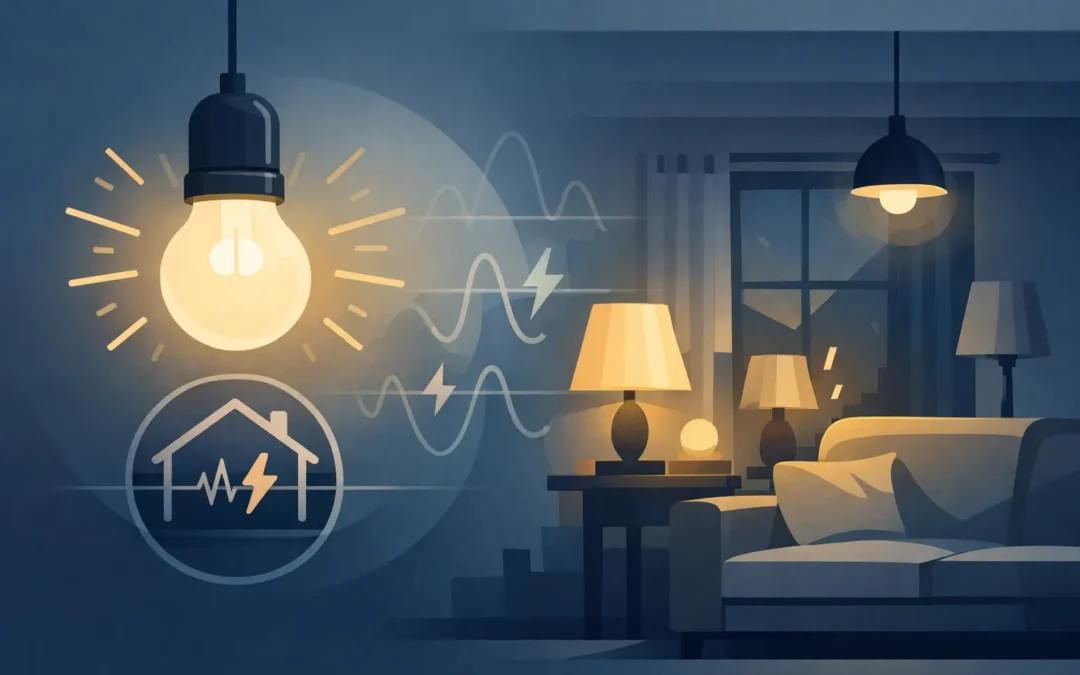
A light that dims for a second when the refrigerator starts may seem minor. But if you are asking, “why do lights keep dimming,” the answer can range from a simple bulb issue to a loose connection, overloaded circuit, or electrical service problem that needs prompt attention. The pattern matters: which lights dim, when they dim, and whether the issue is getting worse.
A licensed electrician can trace the cause safely and recommend the right repair without guessing. For homeowners and property managers, that can prevent nuisance outages, equipment damage, and more serious electrical hazards.
Why Do Lights Keep Dimming?
Lights need a steady voltage to maintain consistent brightness. Dimming happens when the voltage available to a fixture temporarily drops or when the fixture cannot use that power properly. Sometimes the cause is within one light fixture. Other times, it involves a circuit, the electrical panel, a large appliance, or the incoming electrical service.
The most useful first step is to notice the scope of the problem. One flickering or dimming light usually points to a local fixture, bulb, switch, or connection issue. Multiple lights dimming at once, especially in different rooms, deserves more urgent attention because it may indicate a larger wiring or service fault.
A loose bulb, fixture connection, or switch
Start with the most straightforward possibility. A bulb that is not fully seated, a worn socket, or a loose connection inside a fixture can cause intermittent dimming. The same can happen with a failing wall switch or dimmer control.
LED bulbs can also dim or flicker when they are paired with an older dimmer that is not rated for LEDs. Not every dimmer works with every LED driver, and a low-quality or incompatible bulb may behave poorly even when the wiring is sound. Replacing a bulb with a compatible, quality LED may solve a single-fixture issue. If the problem remains, the fixture or switch should be inspected.
Do not remove fixture covers, open switch boxes, or tighten wiring while power is live. If the socket feels hot, the fixture buzzes, or you notice discoloration, stop using it and arrange a professional repair.
Large appliances are pulling heavy startup power
Air conditioners, furnaces, refrigerators, freezers, sump pumps, washing machines, dryers, and power tools can draw a high amount of current when they start. A small, brief dip in nearby lights can occur, particularly in older homes with limited electrical capacity.
That does not automatically mean there is an emergency. However, lights should not dim dramatically every time an appliance runs, and the issue should not affect most of the building. Significant or frequent dimming can mean the appliance circuit is overloaded, the appliance has a motor issue, or the electrical system needs a dedicated circuit or capacity upgrade.
In a commercial space, this may show up when refrigeration equipment, HVAC units, compressors, or machinery cycles on. Facility managers should not treat repeated voltage drops as a normal part of operations. Sensitive equipment, lighting drivers, computers, and control systems can be affected over time.
An overloaded circuit is being asked to do too much
Overloaded circuits are common in older homes, renovated spaces, and offices where equipment has been added over time. Extension cords, power bars, portable heaters, countertop appliances, and electronics can quietly increase demand beyond what a circuit was designed to carry.
Dimming lights may appear alongside warm outlets, frequently tripping breakers, buzzing, or a burning smell. A breaker that trips is doing its job by interrupting unsafe current flow. Repeatedly resetting it without finding the cause can create a bigger problem.
The right fix depends on the load. It may involve redistributing equipment, installing a new dedicated circuit, upgrading wiring, or adding capacity at the panel. Simply replacing a breaker with a larger one is not a safe solution unless the wiring and circuit design are rated for it.
Loose wiring or a failing neutral connection
Loose electrical connections are one of the more serious causes of lights that dim, brighten, or flicker unpredictably. Connections can loosen over time due to heat cycles, vibration, age, previous work, or physical damage. A loose connection creates resistance, which creates heat.
A failing neutral connection can be particularly concerning. In some cases, lights may get brighter in one area while dimming in another as loads change. This is not a bulb problem. It can expose appliances and electronics to unstable voltage and should be checked promptly by a licensed electrician.
Warning signs include lights changing brightness when you use another appliance, outlets that feel warm, a crackling sound near a panel or outlet, scorch marks, or a burning-plastic odor. Turn off the affected circuit if it can be done safely and avoid using the area until it has been inspected.
The electrical panel or service may be undersized or deteriorating
Homes and businesses use more electricity than they did decades ago. Added air conditioning, home offices, EV chargers, modern kitchen appliances, servers, security systems, and expanded lighting all place greater demand on an electrical system.
An older fuse box, a crowded panel, corroded components, or insufficient service capacity can contribute to voltage drop and unreliable lighting. Panel problems are not always visible from the outside. A professional assessment can determine whether the issue is a defective breaker, a damaged bus connection, an improperly balanced load, or a service upgrade requirement.
This is especially relevant during renovations and commercial fit-outs. Adding new equipment without reviewing panel capacity can leave a building with a system that technically works but performs poorly under normal demand.
The problem may be outside the building
If lights dim throughout the property and neighbors report similar issues, the cause may be related to the utility supply, transformer, or service connection. Weather events, damaged overhead lines, and neighborhood demand can also affect power quality.
Even so, do not assume the utility is responsible without having the building side evaluated. The service cable, meter connection, and main panel components need to be ruled out first. An electrician can identify whether the fault appears to be within the property or requires utility involvement.
When Dimming Lights Need Urgent Attention
A brief, minor dimming event may be inconvenient. Certain symptoms call for faster action because they can point to overheating, arcing, or unstable voltage. Contact a licensed electrician promptly if you notice any of the following:
- Lights dim or brighten sharply across several rooms.
- Breakers trip repeatedly or fuses keep blowing.
- Outlets, switches, or the electrical panel feel hot.
- You hear buzzing, popping, or crackling from electrical equipment.
- There is a burning odor, smoke, sparking, or visible discoloration.
- Lights dim after water damage, storm damage, or a recent electrical alteration.
If there is smoke, fire, active sparking, or an immediate danger, leave the area if necessary and contact emergency services. Do not touch a damaged panel, exposed wire, or water near electrical equipment.
What You Can Check Safely Before Calling
You do not need to diagnose electrical wiring yourself, but a few observations can help speed up the repair. Note whether the dimming affects one fixture, one room, or the entire property. Pay attention to what was running when it happened, such as an air conditioner, microwave, refrigerator, or large piece of commercial equipment.
You can also check whether a bulb is properly installed and whether an LED bulb is compatible with its dimmer. Avoid repeatedly resetting breakers or relying on extension cords as a long-term fix. Those workarounds can hide the actual issue and add more load to the circuit.
For Toronto and GTA properties, Eclipse Electrical Services can inspect dimming lights, troubleshoot circuits and panels, and provide practical repair or upgrade options. The goal is not to sell unnecessary work. It is to find the source of the voltage drop and make the system safe, dependable, and suited to the way the property is actually used.
Dimming lights are often your electrical system telling you something has changed. Catching the pattern early and having it checked by a licensed professional is usually faster, safer, and less expensive than waiting for a small warning sign to become a full outage.