
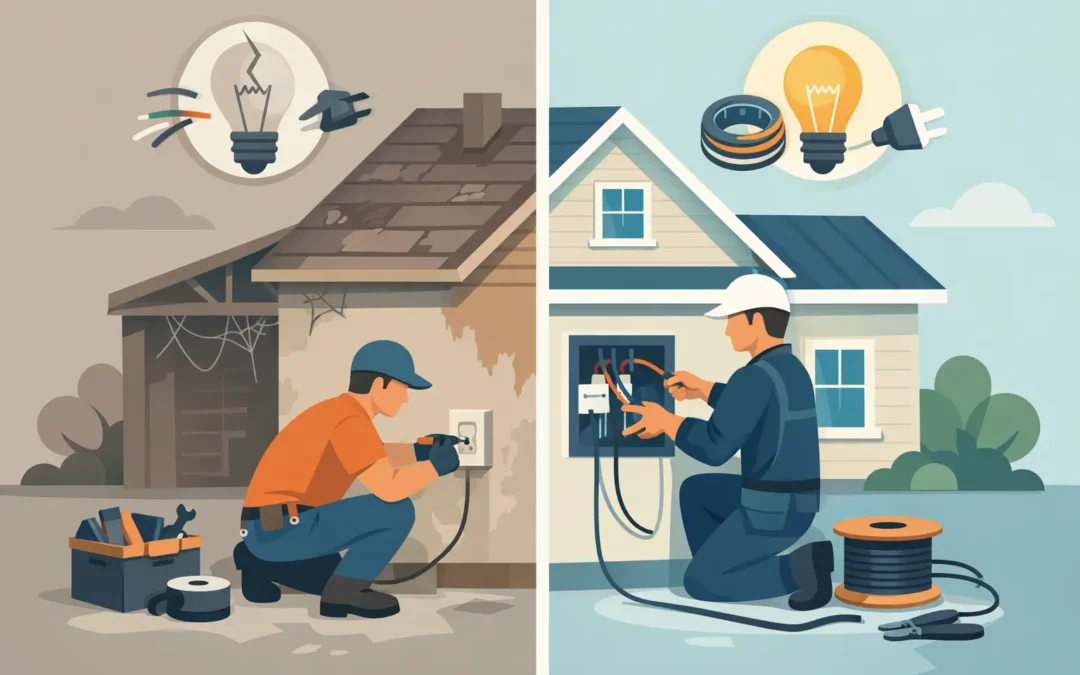
A flickering hallway light is one thing. A breaker that trips every time the microwave and toaster run together is something else. When homeowners start weighing repair vs rewire old house decisions, the real question is not just cost. It is whether the existing wiring is still safe, reliable, and capable of handling how the property is used now.
In older homes, electrical systems often show their age slowly. You might notice warm outlets, dimming lights, two-prong receptacles, a panel that feels undersized, or patchwork work done over decades. Some problems can be repaired cleanly and safely. Others are signs that the wiring has reached the point where replacing sections – or the whole system – makes more sense than continuing to patch it.
Repair vs rewire old house: start with the actual condition
The age of a house matters, but age alone does not decide the job. A well-maintained older home that has had proper upgrades over time may only need targeted repairs. Another house of the same age may have outdated wiring methods, overloaded circuits, or unsafe modifications hidden behind walls and ceilings.
The first step is understanding what is there. That means looking at the panel capacity, the type of wiring, the number and condition of circuits, grounding, outlet condition, and any signs of overheating or deterioration. If the system has been altered repeatedly by different contractors or past owners, that history matters too. Electrical problems rarely stay isolated for long when the overall system is already stretched.
A repair is usually the better call when the issue is limited and the surrounding wiring is still in good shape. That might include a failed switch, a damaged receptacle, a loose connection, a light fixture problem, or one bad section of wiring caused by physical wear. In those cases, a licensed electrician can correct the fault without turning the house into a larger project than it needs to be.
A rewire becomes more likely when the problems are system-wide. If multiple rooms show issues, circuits are overloaded, outlets are ungrounded, the panel is no longer suitable, or the home still relies on wiring that is no longer considered appropriate for modern demand, repairing one symptom at a time often turns into wasted money.
When repair makes sense
Repairs make sense when they solve the root problem, not just the latest symptom. If a breaker trips because a receptacle is damaged or a connection has loosened over time, fixing that issue can restore safe operation without major disruption. The same applies when a single branch circuit has an isolated fault caused by renovation damage, moisture, or age in one accessible area.
There is also a budget reality. Not every older home needs a full rewire right away, and not every homeowner is in the middle of a major remodel. If the electrical system is generally sound and an inspection shows that the issue is contained, a repair can be the practical option that keeps the home safe and functional.
That said, a good repair should come with honest context. If one part is failing because the whole system is near its limit, you want to know that before putting money into a short-term fix. A dependable electrician will tell you whether the repair stands on its own or whether it is buying time before bigger work is needed.
When rewiring is the smarter investment
Rewiring is rarely the cheapest line item, but it can be the least expensive decision over time if the existing system is outdated or unsafe. Houses built decades ago were not designed for modern kitchens, home offices, HVAC loads, entertainment systems, EV charging, or the number of devices people now use every day.
If the home has too few circuits, heavy use gets piled onto the same lines. That leads to nuisance tripping at best and overheating at worst. If the panel is old or maxed out, adding new circuits may not even be possible without a broader upgrade. In that situation, repairs may keep parts of the system limping along, but they do not solve the larger issue.
Rewiring also makes sense when renovations are already opening walls and ceilings. Once access is available, replacing outdated wiring is often more cost-effective than coming back later and paying for separate demolition and repairs. For older properties being updated for resale or long-term ownership, rewiring can improve safety, support modern appliances, and reduce the risk of recurring electrical calls.
There is another factor homeowners sometimes overlook: confidence. If you are constantly wondering whether an outlet is safe to use, whether a breaker will trip again, or whether hidden wiring is one overloaded extension of old work after another, the value of a properly updated system is not just technical. It is peace of mind.
Signs your old house may need more than a repair
Some warning signs point to a broader electrical problem. Frequent breaker trips, buzzing outlets or switches, scorch marks, flickering across multiple rooms, and a burning smell should never be treated as minor annoyances. Those are signs to stop guessing and get the system checked.
Other signs are less dramatic but still important. Two-prong outlets throughout the house, not enough receptacles in key rooms, heavy dependence on power strips, and visible patchwork wiring often mean the home has outgrown its original setup. If the panel has no room for expansion or the service size is too small for current use, repairs alone may keep you stuck with the same limitations.
For buyers, landlords, and property managers, inspection findings often bring this issue into focus fast. If the report identifies outdated components, lack of grounding, unsafe additions, or deficiencies across multiple areas, it is usually better to plan strategically than to chase one deficiency after another.
Cost is not just the invoice
Most people compare repair and rewiring based on immediate price, which is fair. A repair is almost always cheaper upfront. But the full cost includes repeat service calls, disruptions, wall access, future upgrades, and risk exposure if old wiring keeps causing problems.
A house that needs three or four rounds of electrical work over the next two years can end up costing more than a planned rewire or partial rewire done properly. There is also the cost of inconvenience. If tenants, family members, or business operations are affected by recurring outages or unreliable circuits, that has real value attached to it.
The right decision often depends on how long you plan to keep the property and what work is already planned. If you are staying long-term, modernizing the electrical system can be a sound investment. If you are addressing one isolated problem in an otherwise solid system, repair may be the right move.
Partial rewiring can be the middle ground
This is where the conversation gets more practical. It is not always repair or full rewire with nothing in between. In many older homes, the best approach is a partial rewire focused on high-demand or high-risk areas.
Kitchens, bathrooms, basements, additions, and garages are common places where older wiring falls short of current needs. Replacing wiring in those spaces while repairing still-serviceable areas elsewhere can improve safety and function without forcing a full-house project immediately.
A staged plan can also work well for homeowners managing budget carefully. If the panel upgrade is needed first, that can be done now, with circuit replacement in phases as renovations or access opportunities come up. What matters is that the plan is based on the actual condition of the system, not guesswork.
Get a diagnosis before you choose a path
The biggest mistake in repair vs rewire old house decisions is treating it like a generic internet question. Old houses vary too much for that. Two homes built in the same decade on the same street can have completely different electrical histories.
A licensed electrician should inspect the panel, representative outlets and switches, accessible wiring, grounding, circuit layout, and any visible signs of damage or poor workmanship. From there, you can get a clear answer on whether a repair is enough, whether a partial rewire is the smarter route, or whether the house is due for a full update.
At Eclipse Electrical Services, that is how we approach older homes – straightforward advice, safe workmanship, and solutions that make sense for the property instead of overselling work that is not needed.
If your old house is showing electrical problems, the best next step is simple: find out what condition the system is really in before another small issue turns into a larger one.