
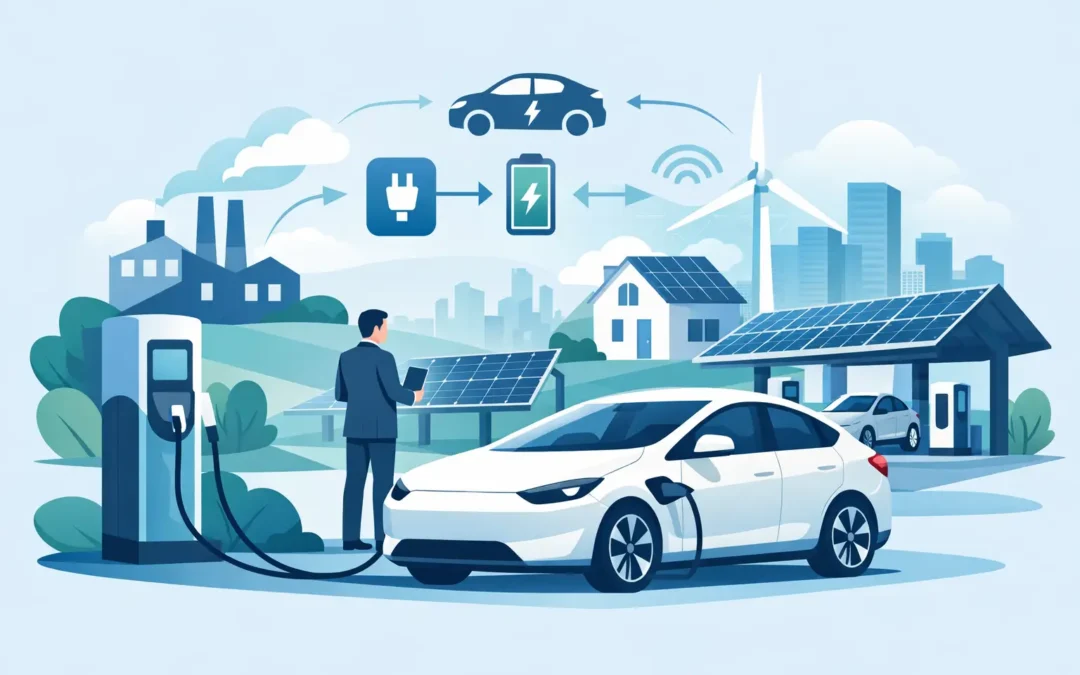
A basic wall charger used to be enough for most EV owners. That is changing fast. EV charging installation trends now reflect a market that is moving beyond simple plug-in convenience and toward smarter power management, faster charging, and better long-term planning for homes, workplaces, retail sites, and multi-unit properties.
For property owners, that shift matters because charger demand is no longer just about keeping up with one vehicle. It often means preparing for two-car households, employee charging, tenant expectations, fleet growth, and tighter electrical capacity. The installation itself is only one part of the job. The bigger issue is whether the electrical system can support what comes next without constant upgrades and avoidable downtime.
What is driving EV charging installation trends?
The biggest driver is simple – more electric vehicles are on the road, and more people expect charging where they live, work, and shop. A homeowner buying a first EV might only need a single Level 2 charger today. A year later, that same household may add a second EV and realize the original setup was not planned with expansion in mind.
Commercial and mixed-use properties are seeing a similar pattern. Tenants, employees, and customers increasingly ask whether onsite charging is available. In some cases, installing chargers helps attract and retain tenants. In others, it supports daily operations for service vehicles or delivery fleets. Either way, charging is starting to look less like a nice extra and more like a practical building feature.
Another factor is utility pressure. Electrical demand is growing, but service capacity at many buildings is not unlimited. That has made power sharing, load management, and panel planning much more important than they were a few years ago.
Smart load management is becoming standard
One of the clearest EV charging installation trends is the move toward smart load management. Instead of treating every charger like a standalone appliance, newer systems monitor available electrical capacity and distribute power where it is needed.
This matters because upgrading utility service or replacing major electrical infrastructure can be expensive and disruptive. In many properties, especially older homes or commercial buildings with existing electrical loads, smart management allows chargers to be installed without forcing a major service upgrade right away.
That does not mean load management is always the better choice. It depends on the building, the number of chargers, and how the chargers will be used. A single-family home with plenty of panel capacity may not need anything complicated. A condo garage, office building, or fleet yard usually does. The right approach comes down to actual load calculations, usage patterns, and future plans, not guesswork.
Level 2 charging is still the practical standard
There is a lot of attention on fast charging, but for most homes and many businesses, Level 2 remains the practical standard. It provides a solid balance of installation cost, charging speed, and everyday usability.
For homeowners, a Level 2 charger usually makes the most sense because the vehicle can charge overnight without requiring the higher cost and infrastructure demands tied to DC fast charging. For workplaces and small commercial sites, Level 2 often covers typical dwell times as well, especially when vehicles are parked for several hours.
The trend is not that Level 2 is being replaced. It is that Level 2 installations are becoming more strategic. Property owners are asking better questions about circuit sizing, charger location, cable management, outdoor durability, and whether a system can scale later.
Future-ready installations are getting more attention
A rushed installation can work fine for today and create problems tomorrow. That is why future-ready planning is becoming a bigger part of EV charger work.
In practical terms, this means thinking beyond the first charger. It can involve installing conduit for future expansion, reserving panel space, planning for extra parking spaces, or selecting chargers that can communicate with each other as demand grows. For commercial clients, it may also mean thinking about user access, metering, billing options, and the difference between customer charging and staff charging.
There is a trade-off here. Building for future expansion adds cost upfront. But leaving no path for growth often costs more later when walls, pavement, or distribution equipment have to be reopened or replaced. The right balance depends on budget, property type, and how likely expansion is over the next few years.
Multi-unit residential properties face more complex decisions
One of the most important EV charging installation trends is the growing demand from condos, apartment buildings, and other multi-unit properties. This is where installations get more complicated because the electrical design has to work for multiple users with different schedules, parking arrangements, and billing needs.
A one-off charger for a single resident may be possible in some buildings, but that approach often breaks down as more residents request access. At that point, the property needs a broader plan. Without one, capacity gets used up unevenly, installation paths become messy, and later upgrades become harder to manage.
For building owners and managers, the better approach is usually to assess the full electrical system early and create a staged charging plan. That can include shared infrastructure, managed load distribution, and clear rules for expansion. It is not the cheapest way to start, but it is usually the cleaner way to grow.
Commercial sites are focusing on uptime and user experience
For commercial properties, EV charger installation is no longer just about adding equipment to the parking lot. Reliability matters. If chargers are out of service, difficult to access, or poorly located, they quickly become a frustration rather than an asset.
That is why site layout and electrical coordination are getting more attention. Chargers need to be placed where they make sense for traffic flow, visibility, weather exposure, and accessibility. In some cases, the electrical work is straightforward but trenching, bollard protection, signage, and distribution planning are what determine whether the project actually works day to day.
Businesses are also thinking more carefully about who the chargers are for. Public-facing chargers have different demands than fleet chargers or employee-only stations. The installation plan should reflect that. A retail plaza, for example, may prioritize convenience and turnover. A service company with electric vans may care more about dependable overnight charging and minimizing operational delays.
Panel upgrades are still part of the picture
Even with smarter technology, panel upgrades and service upgrades have not gone away. They are still a major part of EV charger projects, especially in older properties.
Some buildings simply do not have enough spare capacity to support added charging loads safely. In those cases, trying to work around the issue only creates risk. A proper assessment can show whether the panel, feeder, grounding, and overall electrical system are ready for the added demand.
This is where working with a licensed electrical contractor matters. An EV charger is not just a mounted device. It is part of the building’s electrical system, and that system has to be evaluated properly before installation starts.
Permitting, code compliance, and safety are getting less optional
As charger adoption grows, expectations around code compliance and safe installation are increasing. That is a good thing. Poorly installed charging equipment can create nuisance tripping, overheating issues, damaged equipment, and real safety concerns.
Homeowners sometimes assume charger installation is a quick add-on. Sometimes it is. Sometimes the job reveals panel limitations, grounding issues, or outdoor mounting challenges that need to be addressed first. Commercial properties face even more variables, especially when multiple chargers, shared parking areas, or public access are involved.
A clean installation should not just work on day one. It should hold up to regular use, weather exposure where applicable, and future service needs without becoming a maintenance headache.
What property owners should do before installing
The best first step is not picking a charger brand. It is understanding the property’s electrical capacity and the real charging demand. That includes how many vehicles need charging, how fast they need to charge, when they will typically be plugged in, and whether the installation may expand.
For a homeowner, that may lead to a simple Level 2 setup with room for a second charger later. For a business or property manager, it may mean a broader site review that looks at panel capacity, distribution equipment, parking layout, and phased rollout options.
In a market like Toronto and the GTA, where many homes and commercial buildings vary widely in age and electrical infrastructure, a one-size-fits-all answer rarely works. Good planning keeps the project practical, code-compliant, and easier to scale when needs change.
The trend worth paying attention to is not just that more chargers are being installed. It is that the better installations are being treated like long-term electrical upgrades, not quick add-ons. If the work is planned properly from the start, the charger does its job quietly, safely, and without forcing bigger fixes a year later.