
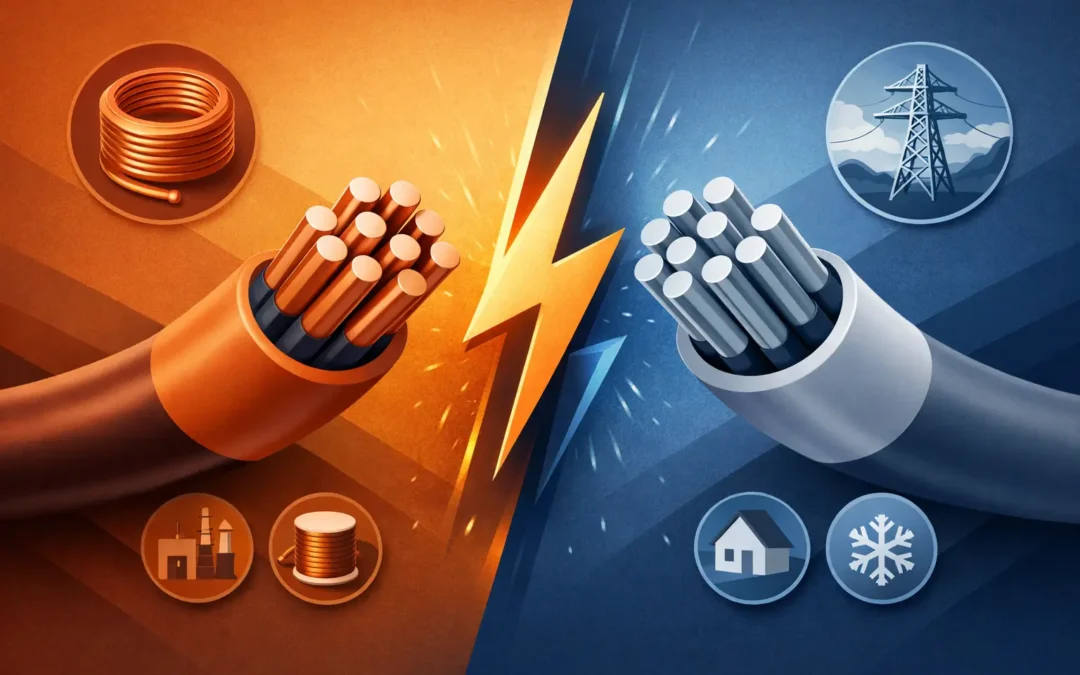
If you are looking at an older property, planning a renovation, or dealing with repeated electrical issues, copper wiring vs aluminum wiring is not a small detail. It affects safety, long-term reliability, repair options, and project cost. For homeowners and property managers, the right answer is usually not about which metal sounds better on paper. It is about what is already in the building, how it has aged, and what a licensed electrician finds during inspection.
Copper wiring vs aluminum wiring – what actually changes?
Copper and aluminum both carry electricity, but they behave differently in real-world installations. Copper is generally more conductive, stronger, and more resistant to expansion and contraction. Aluminum is lighter and less expensive, which is why it became popular in some periods, especially when material costs mattered.
The issue is not that aluminum cannot be used. It can. The issue is that older aluminum branch wiring, especially in homes built or renovated during certain decades, has a track record of connection problems when terminations, devices, or repairs were not handled correctly. Loose connections create heat. Heat leads to arcing, damaged devices, and in the worst cases, fire risk.
Copper tends to be more forgiving. It holds up better at connection points and is less likely to creep or loosen over time. That does not mean copper wiring never fails. Poor workmanship, overloaded circuits, damaged insulation, and outdated panels can still create serious hazards. But if you are comparing the two materials on performance and stability alone, copper usually comes out ahead.
Why copper is often preferred
In most residential and commercial upgrade work, copper is the preferred choice for branch circuit wiring. There are a few straightforward reasons.
Copper has better conductivity, so it can carry the same current with a smaller wire size than aluminum in many applications. It is also more durable and less prone to physical damage during installation. At outlets, switches, breakers, and splices, copper generally provides more dependable long-term connections.
That matters in the field. Electrical systems do not fail in the middle of a cable run very often. They fail at terminations, damaged points, overloaded circuits, and places where past repairs were done quickly or incorrectly. A material that performs better at those points gives property owners more margin for safety and reliability.
For buildings that are being partially rewired, renovated, or expanded, copper also tends to make coordination easier. Many electricians prefer working with it because it is familiar, dependable, and compatible with a wide range of devices and connectors.
Where aluminum wiring still shows up
Aluminum wiring is not automatically a red flag in every situation. Larger aluminum conductors are still used in many service entrance cables, feeders, and commercial or industrial applications. When properly sized, terminated, and installed with the right rated components, aluminum can perform well.
The bigger concern is older solid aluminum branch wiring in houses. That is where inspection matters most. Age, oxidation, improper splicing, mixed materials, and worn devices can all increase risk. If a home has this type of wiring, the next step should not be guesswork. It should be a licensed electrical assessment.
For some property owners, the wiring itself is only part of the problem. The bigger issue is that the electrical system has been modified over the years by multiple contractors or previous owners. Once that happens, you may find aluminum tied into copper without proper connectors, overloaded circuits added during renovations, or devices replaced with parts not rated for aluminum conductors.
Safety concerns with aluminum wiring
The reason aluminum wiring gets so much attention is simple. Connection failure is more likely when the installation or maintenance is not done properly.
Aluminum expands and contracts more than copper when it heats and cools during normal use. Over time, that movement can loosen terminations. Aluminum also oxidizes when exposed to air, and that oxidation can increase resistance at connection points. Higher resistance means more heat. More heat means more stress on the connection.
This does not mean every aluminum-wired property is dangerous. Many are still operating. But it does mean they deserve closer evaluation, especially if you are seeing warning signs like warm outlet covers, flickering lights, tripped breakers, buzzing, or a faint burning smell near devices or panels.
Those are not wait-and-see issues. They should be checked promptly.
Cost difference – upfront vs long-term
If you compare material price alone, aluminum is usually less expensive than copper. That is one reason it has been used for certain applications, especially where large conductor sizes are required and cost savings can be significant.
But material cost is only one part of the decision. Installation requirements, connector compatibility, labor time, and long-term maintenance all matter. In branch wiring, copper often makes more sense because it reduces the chance of future connection problems and simplifies repairs or additions later.
For homeowners thinking about resale, insurance, or renovation planning, the cheaper material is not always the cheaper ownership decision. An older home with aluminum branch wiring may need specialized repairs, approved remediation methods, or full replacement in some areas. That changes the budget quickly.
Should aluminum wiring be replaced?
It depends on the condition of the system, the type of aluminum wiring present, the age of the installation, and whether there are existing signs of failure.
In some buildings, a licensed electrician may recommend targeted repairs with approved connectors and devices rated for aluminum conductors. In others, a more complete rewiring plan is the safer and more practical move, especially if the property is already undergoing renovation or the system has multiple known issues.
A full replacement is not always required the moment aluminum is found. That kind of blanket advice is not useful. What matters is the actual condition of the wiring and the quality of the connections throughout the property. A proper inspection gives you a real answer instead of a guess.
Copper wiring vs aluminum wiring in renovations
Renovation work is often when this issue comes to the surface. Walls are opened, circuits are extended, and hidden problems show up fast.
If an existing property has aluminum wiring and you are adding new circuits, relocating devices, or upgrading a panel, the transition points need to be handled correctly. Copper and aluminum should not simply be tied together with standard methods. The connections must use approved materials and be installed properly to prevent overheating and long-term failure.
This is one of the most common places where do-it-yourself work or rushed handyman repairs create trouble. The lights may work when the job is finished, but the danger builds over time at the splice.
For that reason, renovation projects are a good time to assess whether selective rewiring or a broader upgrade is worth doing now rather than patching around an aging system.
What property owners should look for
You do not need to diagnose wiring material by yourself, but you should know when to call. If a property is older and has a history of electrical issues, or if an inspection report mentions aluminum branch wiring, take it seriously.
Warning signs include flickering lights, breakers that trip without a clear reason, warm switches or outlets, buzzing sounds, discoloration around devices, and any smell of overheating. In commercial spaces, intermittent power issues, nuisance breaker trips, and unexplained equipment disruption can also point to underlying wiring or connection problems.
A licensed electrician can identify the conductor type, inspect the panel and device connections, check for unsafe splices, and recommend whether repair, remediation, or replacement is the right next step.
The practical choice for most buildings
If you are wiring a new area or replacing older branch circuits, copper is usually the practical choice. It is dependable, widely accepted, and better suited to long-term use at common connection points throughout homes and businesses.
If your building already has aluminum wiring, the goal is not panic. The goal is to understand its condition and deal with it properly. Some systems can be made safer with specific repairs. Others are better candidates for replacement, especially if you are already investing in upgrades, tenant improvements, or major remodeling.
At Eclipse Electrical Services, this is the kind of issue we approach the same way we approach every electrical problem – inspect it properly, explain it clearly, and recommend the fix that makes sense for the building, the budget, and the level of risk.
When copper and aluminum are part of the conversation, the best decision usually comes from the wiring you cannot see yet. A careful inspection tells you far more than a label on a cable ever will.