
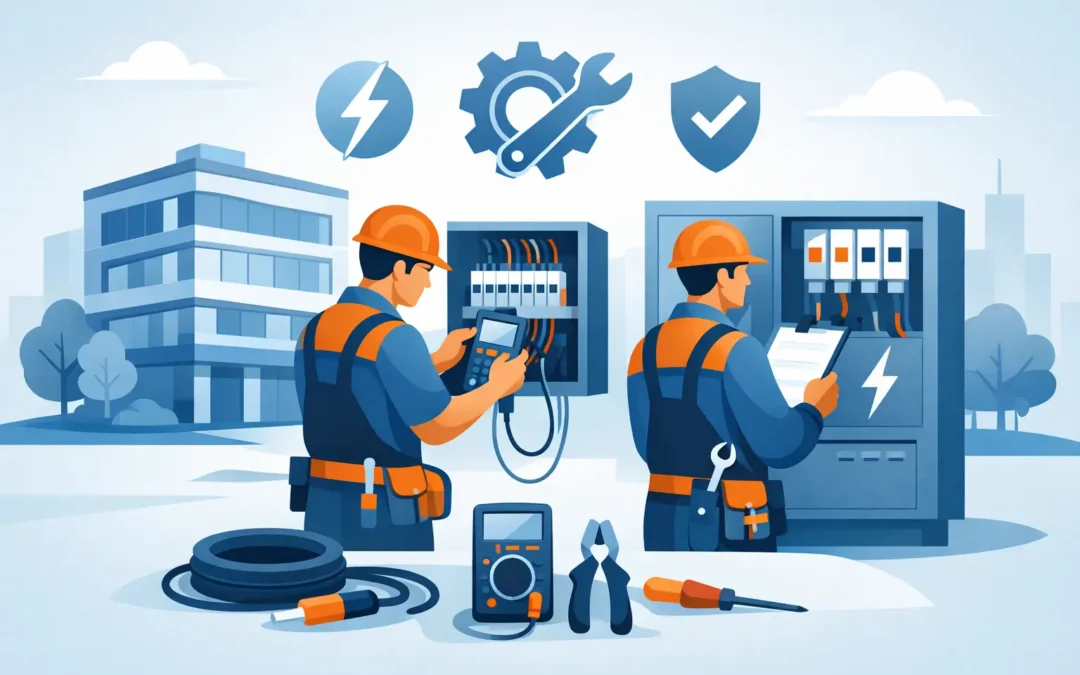
When a breaker keeps tripping in the same tenant space or hallway lights start failing one by one, the issue is rarely just “one small electrical problem.” Building electrical maintenance services are about catching those patterns early, fixing the cause, and keeping the entire property safe and usable without costly disruption.
For property owners and facility managers, electrical maintenance is not just a box to check. It affects safety, tenant satisfaction, equipment life, and day-to-day operations. In a commercial unit, a small fault can interrupt business. In a residential building, it can turn into repeated service calls, nuisance outages, or a serious hazard if it is left alone too long.
What building electrical maintenance services actually cover
Good maintenance work starts with the real condition of the building, not a generic checklist. Older properties usually need more attention around panels, branch circuits, outdated devices, and signs of heat damage. Newer buildings may have fewer failures, but they still need regular inspection, testing, and corrective work to stay reliable.
Building electrical maintenance services typically include panel inspections, breaker replacement, troubleshooting recurring faults, lighting repairs, ballast and driver replacement, wiring repairs, receptacle and switch servicing, emergency lighting checks, and general electrical safety inspections. In some buildings, maintenance also involves common area lighting, parking lot lighting, exit signs, dedicated equipment circuits, ceiling fans, and load checks where systems have expanded over time.
The scope depends on the property. A retail plaza has different priorities than a warehouse. An apartment building has different risks than a detached home or a mixed-use site. That is why practical maintenance work is not about overcomplicating things. It is about identifying what needs attention now, what should be planned next, and what can still be monitored safely.
Why routine building electrical maintenance services matter
Most electrical failures do not appear without warning. They leave clues first. Lights flicker. Breakers trip under normal use. Devices feel warm. Equipment starts drawing uneven power. A section of the building loses power more often than it should. Those are all signs that the system needs inspection before the problem grows.
Routine maintenance reduces the chance of emergency downtime, but that is only part of the value. It also helps control repair costs. A loose connection found during a scheduled visit is usually a straightforward fix. The same loose connection left in place can damage a breaker, overheat a conductor, or shut down an essential circuit at the wrong time.
There is also the issue of safety. Building occupants may not notice what is happening behind panels, above ceilings, or inside junction boxes. Property managers are often the first to hear the complaints, but the real problem may be hidden. Regular electrical service helps uncover those risks before they affect people, operations, or insurance claims.
Common signs a building needs electrical maintenance
Some issues are obvious, while others are easy to dismiss until they become repetitive. If a building has buzzing switches, breakers that trip for no clear reason, burnt outlets, dimming lights when equipment starts, or areas where power reliability is inconsistent, maintenance should move up the priority list.
Another common sign is piecemeal electrical history. Many buildings have had years of small repairs, tenant changes, equipment additions, and quick fixes by different trades. Over time, that creates a system that may still function but no longer performs cleanly or predictably. Maintenance in that case is not just repair. It is a way to bring the electrical system back under control.
High energy use can also point to maintenance needs, although it depends on the building. Sometimes the issue is simply aging lighting. Sometimes it is failing components or circuits working harder than they should. An inspection helps separate normal demand from avoidable inefficiency.
Building electrical maintenance services for commercial properties
Commercial buildings usually need maintenance that supports business continuity first. If power problems affect point-of-sale systems, office equipment, refrigeration, security devices, or tenant operations, the cost of delay rises quickly. That is why commercial maintenance often focuses on response time, fault tracing, and targeted repairs that minimize interruption.
Lighting is a common example. Failed fixtures in offices, storefronts, corridors, or parking areas create safety and appearance issues fast. Replacing lamps alone may not solve it if the real cause is a bad driver, loose feed, voltage issue, or aging fixture. A proper service call addresses the source instead of treating the symptom.
Panel condition matters too. In many commercial spaces, electrical loads change as layouts change. New devices get added, equipment gets moved, and circuits that were fine years ago may now be overloaded or poorly assigned. Maintenance helps identify where the system still works and where it needs adjustment or upgrades.
What apartment and multi-unit buildings should watch for
In multi-unit properties, small electrical problems tend to multiply because shared systems are involved. Common area lighting, laundry equipment, hallway circuits, exterior lights, intercom support equipment, and tenant panels all place demand on the building in different ways.
The challenge is that complaints often arrive one at a time. One tenant reports flickering. Another notices a dead outlet. A superintendent mentions lights failing in a stairwell. These may sound unrelated, but they can point to larger issues such as deteriorated connections, aging panels, or circuits that have been altered too many times.
Maintenance here needs to be organized and responsive. Safety devices should work as intended. Common spaces should stay lit. Repairs should be documented clearly so recurring issues can be tracked instead of repeatedly patched.
Emergency calls versus planned maintenance
There is a difference between emergency electrical work and ongoing maintenance, but the two are closely connected. Emergency calls deal with the immediate problem – loss of power, burning smell, sparking device, failed panel component, or unsafe wiring condition. Planned maintenance reduces the odds of those calls and gives you better control over timing and cost.
Still, not every building can operate on a fixed maintenance calendar. Some clients only call when a problem appears, especially in smaller properties. That is understandable, but it often costs more over time because the work becomes reactive. Larger buildings and commercial sites usually benefit more from a planned approach because downtime has wider consequences.
The right balance depends on the building age, occupancy, electrical load, and budget. A contractor should be honest about that. Not every property needs the same frequency of service, and not every recommendation needs to happen immediately.
Choosing the right contractor for building electrical maintenance services
The quality of maintenance depends on who is doing the work. A licensed electrical contractor should be able to troubleshoot efficiently, explain problems in plain language, and recommend repairs based on actual need rather than guesswork. That matters when the issue is intermittent or when a building has a long history of modifications.
Speed matters, but so does judgment. A good contractor knows when a repair is enough and when a component has reached the point where replacement is the smarter option. They should also understand the different demands of residential, commercial, and industrial environments rather than applying the same approach to every property.
Clear communication is part of the service. If a panel is showing signs of heat, if a circuit needs to be reworked, or if lighting failures point to a larger issue, the client should get a direct explanation of what was found and what should happen next. That is how trust is built, especially for property managers who need dependable information and quick turnaround.
For owners and managers in Toronto and the GTA, that usually means working with a contractor who can handle both routine service and urgent faults without sending you elsewhere when the job gets more involved. Eclipse Electrical Services works with that mindset – practical repairs, licensed workmanship, and fast response when the building cannot wait.
A smarter way to think about maintenance
Electrical maintenance is not about replacing parts for the sake of it. It is about keeping the building usable, safe, and predictable. Some properties need regular scheduled visits. Others need a contractor who can respond quickly, fix problems properly, and help set priorities as issues come up.
What matters most is not letting repeat electrical problems become normal. If lights keep failing, breakers keep tripping, or the same areas keep generating service calls, the building is telling you something. Acting on that early is usually cheaper, safer, and far less disruptive than waiting for a bigger failure to force the issue.
If your building has started showing those signs, the best next step is simple – have it checked by a licensed electrician who can sort out the cause and give you a clear path forward.