
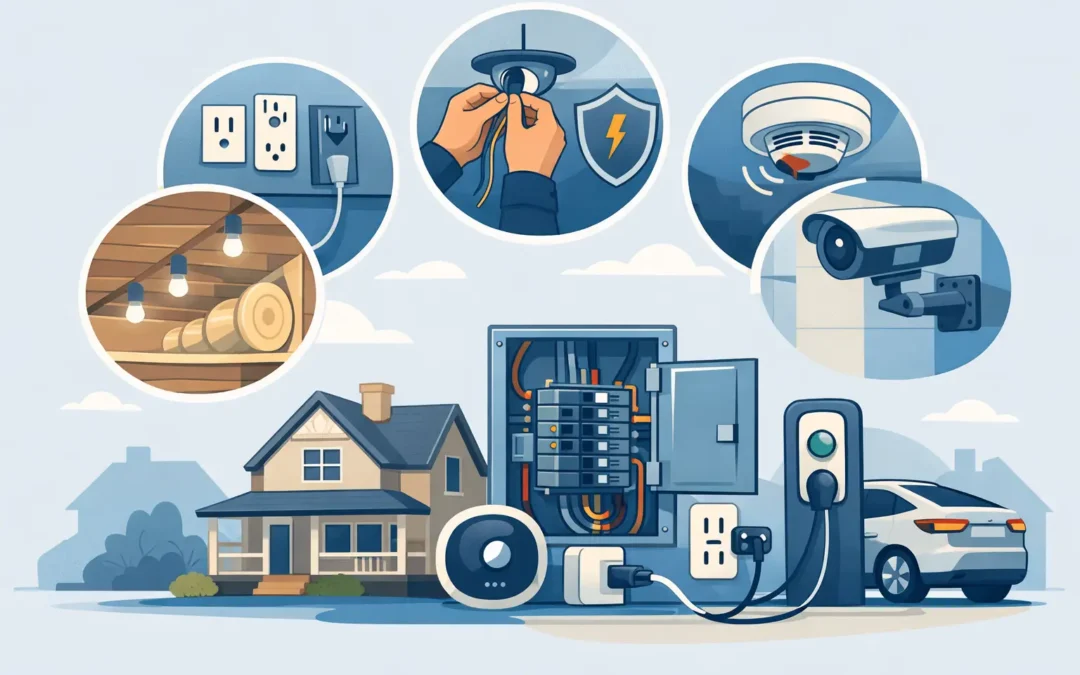
Older homes have a lot going for them – solid construction, character, and neighborhoods people actually want to live in. What they often do not have is an electrical system built for modern demand. If you are weighing the best electrical upgrades for older homes, the right answer usually starts with safety first, then capacity, then convenience.
A house built decades ago may still be running on an undersized panel, ungrounded outlets, worn wiring, or circuits that were never meant to handle air fryers, home offices, EV chargers, and central air. Some homes need a full overhaul. Others just need a few targeted upgrades done by a licensed electrician. The difference matters because the goal is not to overspend. It is to fix real risks and make the home work properly.
How to prioritize the best electrical upgrades for older homes
The smartest approach is to start with what creates the highest risk or the biggest day-to-day problem. If breakers trip constantly, lights flicker, outlets are two-prong, or you still have fuse-based service, those are not cosmetic issues. They are signs the system may be outdated, overloaded, or unsafe.
At the same time, not every older property needs every available upgrade. A small bungalow with modest electrical use may need a panel replacement and some new dedicated circuits. A larger renovated home may also need service upgrades, whole-home surge protection, and rewiring in key areas. Good electrical work is practical. It matches the condition of the home and how you actually use it.
1. Electrical panel upgrade
If there is one upgrade that changes the whole system, it is the panel. Many older homes still have 60-amp or 100-amp service, and that can be tight for modern living. Once you add newer kitchen appliances, laundry equipment, basement finishing, air conditioning, or workshop loads, the existing panel may not have enough capacity.
A panel upgrade gives you more room for safe power distribution and future circuits. It can also replace aging breakers, resolve crowding inside the panel, and improve reliability. In some cases, it is the only way to support bigger additions like a hot tub, EV charger, or major renovation.
This is also where a licensed electrician can spot problems that homeowners do not always see, such as double-tapped breakers, corrosion, overheating, or poor previous work. If your panel is outdated or maxed out, other upgrades may not perform as they should until the service is addressed first.
2. Replace outdated or unsafe wiring
Older wiring is not automatically dangerous, but some types deserve closer attention. Knob-and-tube, aging aluminum branch wiring, brittle insulation, and ungrounded circuits can all create safety and performance issues. You may notice warm outlets, buzzing switches, dimming lights, or breakers that trip without a clear reason.
Rewiring can sound like a major job, and sometimes it is. But it does not always mean opening every wall in the house. In many cases, the best path is targeted rewiring in the areas under the most strain, such as kitchens, bathrooms, basements, additions, or rooms with heavy electronics.
The trade-off is budget versus long-term value. A partial rewire may solve urgent risks now, while a full rewire makes more sense during a major remodel when walls are already open. Either way, unsafe or deteriorating wiring is not the place to cut corners.
3. Add grounded outlets and GFCI protection
Two-prong outlets are common in older homes, and they are a sign the system may not be grounded the way modern installations are. That matters because grounding helps reduce shock risk and protects equipment. It also affects what you can safely plug in around the house.
One of the most useful upgrades is bringing outlets up to modern safety standards, especially in kitchens, bathrooms, garages, basements, laundry rooms, and outdoor areas. GFCI protection is designed to shut power off quickly if it detects a ground fault, which is especially important in areas where moisture is present.
This is one of the best electrical upgrades for older homes because it improves safety without always requiring a full system replacement. The exact solution depends on the wiring already in place. Sometimes grounding can be added properly. In other cases, GFCI protection is part of the safer path until broader upgrades are completed.
4. Install dedicated circuits where modern loads demand them
A lot of older homes were wired for a much simpler lifestyle. One general-purpose circuit might feed several rooms, or a kitchen may not have enough dedicated capacity for today’s appliances. That is when you start seeing nuisance tripping, overloaded receptacles, and extension cords doing work they should never be doing.
Dedicated circuits give high-demand equipment its own protected electrical path. This is especially important for microwaves, refrigerators, dishwashers, laundry appliances, sump pumps, window AC units, freezers, and workshop tools. Home offices can also benefit if you are running multiple monitors, computers, printers, and network equipment every day.
This upgrade is not flashy, but it makes a big difference in how the home functions. It reduces overload risk, improves convenience, and helps expensive appliances run the way they should.
5. Upgrade lighting and switches
Lighting upgrades are often treated as a finishing touch, but in older homes they can solve real electrical issues. Old fixtures may run hot, switches may be worn out, and poor lighting in stairwells, entrances, basements, and exterior walkways creates practical safety concerns.
Replacing outdated fixtures with efficient LED lighting can lower energy use and improve visibility at the same time. Updating switches is also worth considering, especially if some feel loose, crackle, or do not work consistently. In certain areas, adding dimmers, motion sensors, or better task lighting can improve comfort without major construction.
For homeowners planning a broader refresh, this is a good area to combine safety and usability. A licensed electrician can also make sure the wiring and boxes behind those fixtures are in good condition before new equipment goes in.
6. Whole-home surge protection
Most people think of surge protection as a power bar under a desk. That helps for electronics, but it does not cover your full electrical system. Whole-home surge protection is installed at the panel and helps protect appliances, HVAC equipment, smart devices, and other major components from voltage spikes.
In older homes, this can be especially worthwhile because newer electronics are often being added to an electrical system that was never designed with them in mind. Power surges can come from the utility side, storms, or large equipment cycling on and off inside the home.
It is not a substitute for fixing wiring or panel issues, but it is a smart layer of protection once the core system is in decent shape. Compared with the cost of replacing damaged appliances or control boards, it is often a practical investment.
7. Prepare for future power needs
One of the easiest mistakes with electrical work is doing only enough for today. If you already know an EV charger, basement renovation, heat pump, hot tub, or kitchen upgrade is coming, it makes sense to plan for it now. That might mean increasing service capacity, leaving room in the panel, running conduit, or installing circuits during related renovation work.
Planning ahead usually costs less than doing the same work in stages. It also helps avoid patchwork solutions that become more expensive and harder to manage later. For many homeowners, the best upgrade is not just solving a current problem. It is making sure the house can handle what comes next.
When an inspection should come first
If you have just bought an older home, are starting a renovation, or suspect hidden electrical issues, an inspection is often the best first move. It gives you a clearer picture of what is outdated, what is unsafe, and what can wait. That matters because electrical problems are not always obvious from the surface.
A proper inspection can identify overloaded circuits, code issues, aging components, missing protection, and signs of amateur work. From there, you can make informed decisions instead of guessing. For homeowners in Toronto and the GTA, that often means prioritizing the work that improves safety right away and scheduling the rest in phases that fit the budget.
Older homes do not need perfect electrical systems overnight. They need safe, sensible upgrades done properly, in the right order, by someone who knows what to look for. If you start there, the house becomes easier to live in, easier to renovate, and far less likely to surprise you when you least need it. Eclipse Electrical Services helps homeowners take that next step with licensed work that is practical, fast, and built to last.