
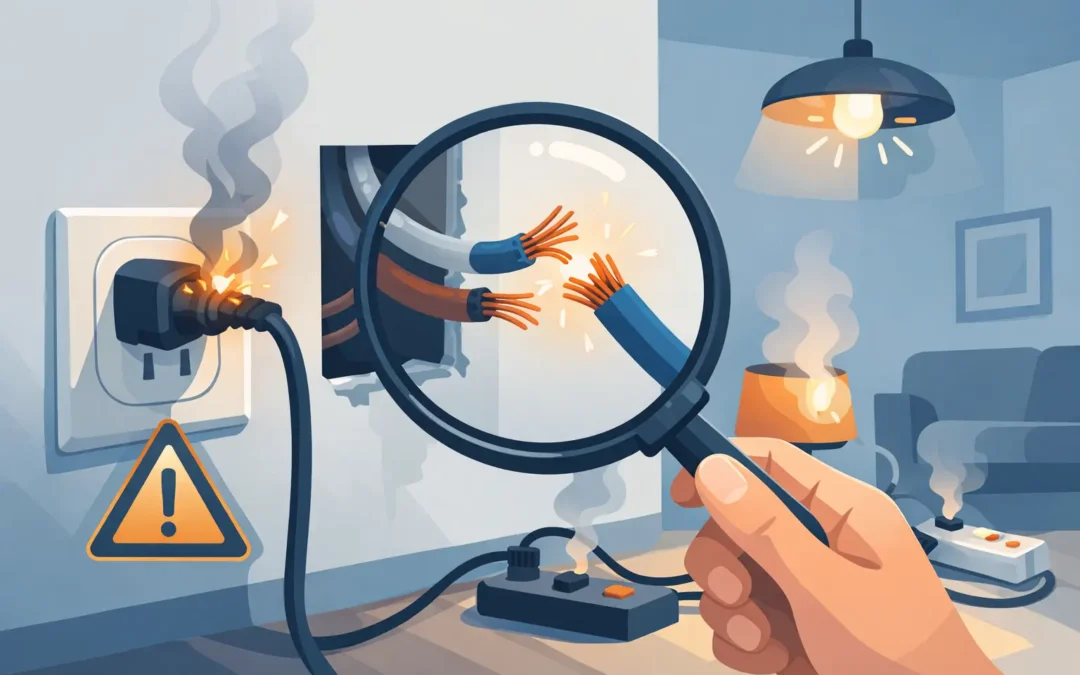
A breaker that keeps tripping is annoying. A warm wall plate, a buzzing outlet, or lights that flicker for no clear reason is different. If you are wondering how to spot faulty wiring, the goal is not to diagnose every hidden issue yourself. The goal is to recognize the warning signs early, stay safe, and get a licensed electrician involved before a small fault turns into damaged equipment, fire risk, or a full power loss.
Faulty wiring does not always announce itself with sparks. In many homes and commercial spaces, the first clues are subtle. Maybe a light dims when the microwave starts. Maybe one outlet has stopped holding plugs tightly. Maybe there is a faint burning smell you cannot place. These problems can come from loose connections, overloaded circuits, damaged insulation, aging wiring, poor past repairs, or moisture getting where it should not.
How to spot faulty wiring before it gets worse
The most common sign is repeated breaker trips. A breaker is supposed to trip when a circuit is overloaded or a fault is detected, so one trip after plugging in too many heaters is not unusual. But if the same breaker trips again and again under normal use, that points to a deeper problem. It could be damaged wiring, a short, or a device on the circuit pulling more power than it should.
Flickering or dimming lights are another common red flag. One flickering bulb can simply be a bad bulb or a loose lamp connection. If multiple fixtures flicker, especially when larger appliances start up, that can suggest a loose connection, an overloaded circuit, or a service issue. In older properties, this is especially worth checking because aging systems are less forgiving when demand increases.
Buzzing sounds deserve attention. Electricity should be quiet. If you hear buzzing from a switch, outlet, panel, or light fixture, that may mean arcing or a loose connection. The same goes for crackling sounds. That is not a wait-and-see issue.
Heat is another warning sign. Switches and outlets should not feel hot to the touch. A plug can feel slightly warm when powering certain equipment, but the faceplate, wall area, or switch itself should never feel unusually warm or hot. Heat often means resistance is building at a connection point, and resistance creates the conditions for failure and fire.
A burning smell, especially one that smells like melting plastic, is one of the clearest signs of electrical trouble. If you notice it near an outlet, panel, appliance connection, or baseboard area, turn off power to that circuit if you can do so safely. Then stop using the area until it has been inspected.
Signs of faulty wiring people often overlook
Some issues are easier to dismiss because they look minor. Discolored outlets and switch plates are a good example. Brown, black, or yellow marks can point to heat damage or arcing behind the device. Even if the outlet still works, that discoloration is a serious warning.
Loose outlets are another one. If a plug falls out easily or needs to be angled to work, the receptacle may be worn out. Sometimes that is just a bad outlet. Sometimes it is part of a larger problem involving poor connections or damaged wiring behind the wall.
You should also pay attention to mild shocks or tingling sensations. If you touch a switch plate, appliance, or outlet and feel a small shock, that is not normal. It can indicate improper grounding, faulty wiring, or a fault in the appliance itself. Either way, it needs professional attention.
Unusual odors that come and go can also be misleading. Electrical faults do not always produce a constant smell. A loose connection may only heat up when the circuit is under load, which means the odor may appear only when certain equipment is running.
For business owners and facility managers, unexplained equipment interruptions can be an early clue. If computers, refrigeration units, POS systems, or lighting circuits cut out without an obvious cause, wiring faults may be part of the problem. In commercial settings, waiting too long can mean downtime, damaged equipment, and safety issues for staff and customers.
Where faulty wiring tends to show up
Faulty wiring can exist anywhere, but some areas are more likely to develop issues. Kitchens, bathrooms, basements, garages, and outdoor circuits see more moisture, heavier loads, or both. These spaces often run appliances, heaters, fans, and lighting from circuits that work harder than those in low-demand rooms.
Older homes are another category to watch closely. Age alone does not mean a home is unsafe, but older wiring systems may not match current electrical demands. Renovations done over time can also create problems if previous work was rushed, unlicensed, or patched together without proper upgrades.
Commercial and industrial properties have their own pressure points. Panels serving added equipment, tenant fit-outs, lighting upgrades, or machinery often reveal issues when the original electrical system was never properly expanded to support the load. A system can appear functional right up until it is pushed past its limits.
What not to do when you suspect faulty wiring
If you think wiring may be faulty, avoid opening outlets, switches, or panels unless you are qualified to do that work. The risk is not just shock. You can also make the problem harder to trace if connections are moved or disturbed.
Do not ignore repeated symptoms because they seem manageable. A circuit that only trips once a week is still a problem. A light that only flickers during heavy use is still a problem. Electrical faults often get worse gradually, which is why people adapt to them instead of addressing them.
It is also a mistake to keep using extension cords as a workaround. If a room does not have enough working outlets, or certain outlets stopped working and everyone started plugging into another wall across the room, you may be masking the real issue while adding another load problem.
When to shut the power off and call right away
Some signs mean you should act immediately. If you see sparks from an outlet or panel, smell burning, notice smoke, hear crackling, or find a hot switch or outlet, turn off the breaker to that area if you can do it safely. If you are not sure which breaker controls it, or the panel itself seems affected, it is better to stop using the area and call an electrician right away.
The same goes for water exposure. If wiring, outlets, or electrical equipment may have been affected by leaks or flooding, do not assume everything is fine because the power still works. Moisture can damage insulation and create hidden faults that show up later.
In emergency situations, fast response matters. A licensed contractor with troubleshooting experience can isolate the issue, test circuits properly, and make safe repairs without guesswork. That is especially important in occupied homes, rental properties, offices, and businesses where downtime and safety concerns both matter.
How a licensed electrician confirms the problem
Knowing how to spot faulty wiring is useful, but confirming the cause takes proper testing. A licensed electrician will usually look at the panel, inspect affected outlets or fixtures, check for loose or damaged connections, test voltage and load behavior, and look for signs of overheating or improper grounding.
Sometimes the fix is straightforward, like replacing a damaged outlet, tightening a failed connection, or separating overloaded devices onto the right circuit. Other times, the issue points to a larger upgrade, especially in older properties or spaces that have added equipment over the years.
That is where practical judgment matters. Not every symptom means a full rewire. But not every quick fix is enough either. The right answer depends on the age of the system, the condition of the wiring, and how the property is being used today.
If you are dealing with any of these warning signs, getting the system checked sooner is the safer and often less expensive move. Companies like Eclipse Electrical Services handle these issues every day, from small residential faults to larger commercial troubleshooting calls.
Electrical problems rarely improve on their own. If something feels off, trust that instinct, stop using the affected circuit when needed, and get a licensed electrician to look at it before it becomes a much bigger repair.