
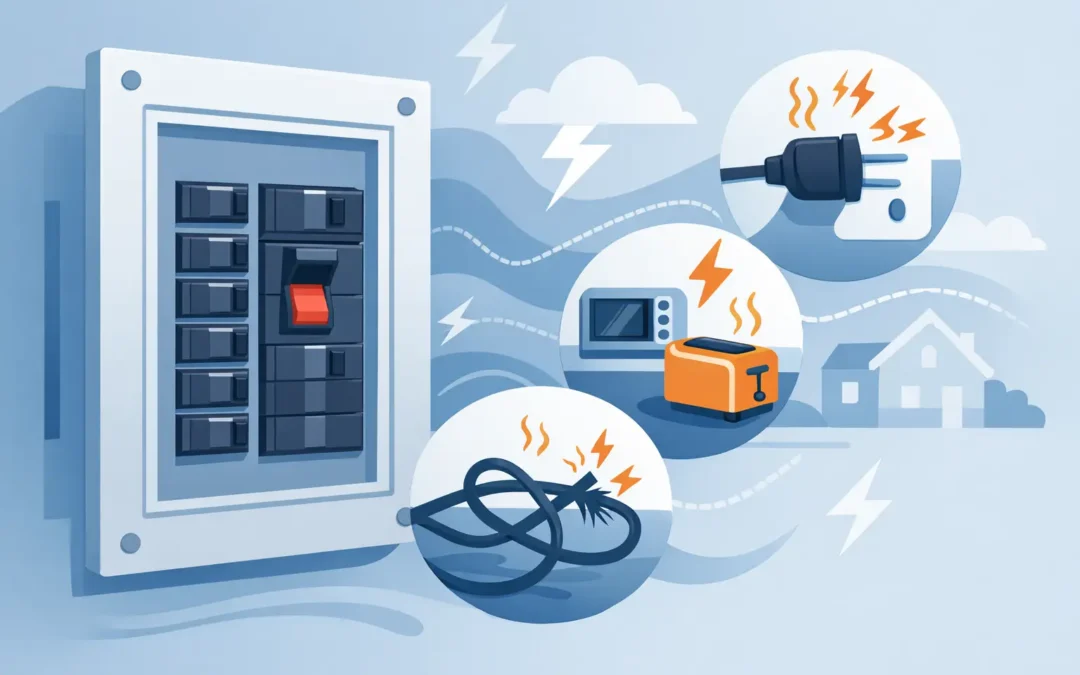
A breaker that trips once can be a minor annoyance. A breaker that keeps shutting off the same circuit is a warning sign. If you are asking why does breaker keep tripping, the short answer is that the circuit is sensing an unsafe condition and cutting power before wiring, devices, or equipment overheat.
That is the part many people miss. The breaker is not the problem by default. In many cases, it is doing exactly what it is supposed to do. The real issue is usually overload, a short circuit, a ground fault, a weak breaker, or a problem somewhere on the line. The right fix depends on what is actually causing it.
Why does breaker keep tripping in the first place?
A circuit breaker is a safety device. It monitors the electrical flow on a circuit and trips when the current goes beyond safe limits or when it detects a fault. That trip stops power before damage gets worse.
In homes and businesses, the most common cause is simple overload. Too many appliances, tools, or devices are running on one circuit at the same time, and the breaker cuts power to protect the wiring. This shows up often in kitchens, laundry areas, workshops, office break rooms, and older properties where the electrical system was not designed for modern demand.
The second major cause is a fault condition. A short circuit happens when hot and neutral wires touch. A ground fault happens when electrical current takes an unintended path to ground, often through damaged insulation, moisture, or a failing device. These faults can trip a breaker immediately, sometimes the moment you switch it back on.
Then there is the less obvious possibility. Sometimes the breaker itself is worn out, loose in the panel, or no longer holding under normal load. That does happen, but it should be treated as a diagnosis, not a guess.
The most common reasons a breaker keeps tripping
Circuit overload
This is the everyday cause. If the same breaker trips when a microwave, toaster, kettle, or space heater runs together, the circuit is likely carrying more than it should. In commercial settings, it might be multiple office machines, refrigeration equipment, or power tools sharing one line.
Overload problems are often predictable. The breaker trips after a few minutes of use, during peak demand, or whenever a specific combination of equipment is on. If unplugging one high-draw appliance stops the issue, that points strongly to load, not damage.
Still, the fix is not always as simple as using fewer devices. If a circuit is regularly maxed out during normal use, it may need to be redistributed, upgraded, or separated onto dedicated lines.
Short circuit
A short circuit is more serious. It usually trips the breaker fast, sometimes instantly. You may notice a burnt smell, discoloration around an outlet, buzzing, or a breaker that will not stay on at all.
This can be caused by damaged wiring, loose terminations, a bad outlet, a failed light fixture, or a defective appliance. In older buildings, wire insulation can break down over time. In active workspaces, cords and receptacles can also take abuse.
Ground fault
Ground faults are common in bathrooms, kitchens, garages, basements, exterior circuits, and commercial washdown or damp environments. Moisture, damaged cords, and faulty equipment are frequent triggers.
These faults matter because electricity is finding a path it should not be taking. That raises the safety risk, especially in areas where people may be in contact with water, metal, or concrete.
Arc fault or nuisance tripping
Newer systems may have AFCI breakers that are designed to detect dangerous electrical arcing. These improve safety, but they can be more sensitive. A damaged cord, loose connection, aging switch, or even an incompatible device can trip them.
Sometimes owners describe this as nuisance tripping. Sometimes it is. Sometimes it is the first sign of a hidden wiring problem behind a wall. That is why guessing can get expensive.
Faulty appliance or equipment
Not every tripping issue starts in the panel. A refrigerator, sump pump, HVAC component, treadmill, copier, or microwave can have an internal fault that trips an otherwise healthy circuit.
If the breaker only trips when one specific piece of equipment is plugged in or turned on, that equipment becomes the main suspect. The circuit may still need to be checked, but the appliance should not be ruled out.
Weak or failing breaker
Breakers do wear out. Heat, age, repeated tripping, poor panel conditions, and loose connections can all shorten their life. A failing breaker may trip below its rated load or feel loose and unreliable when reset.
That said, replacing a breaker without testing the circuit is not good practice. If there is an underlying fault, a new breaker will trip too.
What you can safely check before calling an electrician
Start with the pattern. Does it trip only when certain appliances are running? Does it trip immediately or after some time? Is it one room, one outlet, or one piece of equipment? Those details help narrow the cause.
Next, unplug everything on that circuit if you can identify what is connected. Reset the breaker once. If it holds with everything unplugged, plug devices back in one at a time. If it trips when a certain device is added, stop there.
Check for obvious warning signs around outlets, switches, and cords. Warm faceplates, scorch marks, buzzing, a burning smell, or flickering lights are not minor issues. Neither is water near electrical equipment.
You can also look at whether the problem started after a renovation, new appliance install, seasonal heating or cooling change, or equipment move. New load on an old circuit is a common trigger.
What not to do
Do not keep resetting the breaker over and over. If it trips repeatedly, it is protecting the circuit for a reason.
Do not replace a breaker with a larger one to stop the nuisance. That can allow the wiring to carry more current than it was designed for, which creates a real fire hazard.
Do not ignore a breaker that only trips occasionally. Intermittent faults are still faults. In some cases, they point to loose connections that worsen over time.
And do not open the panel if you are not qualified to work inside it. Even with the main breaker off, parts of the panel can still be energized.
When a tripping breaker means you need urgent service
Some situations should be treated as same-day electrical problems. If the breaker will not reset at all, trips the moment it resets, or is tied to a burning smell, smoke, crackling, sparking, or visible heat, stop using that circuit and get it checked right away.
The same goes for breakers feeding critical systems. In a home, that might be a sump pump, furnace, or refrigeration circuit. In a commercial property, it could affect lighting, point-of-sale equipment, cooling, security, servers, or production equipment. Downtime costs money, and electrical faults rarely improve on their own.
For property managers and business owners, repeated tripping can also point to broader capacity issues. If tenant improvements, office additions, kitchen equipment, or new machinery were added without proper load planning, the problem may not be one bad breaker. It may be a panel or distribution issue that needs a more complete solution.
How an electrician diagnoses the real cause
A proper diagnosis starts with load and circuit testing, not guesswork. The electrician will identify what the breaker serves, inspect connected devices, test for overload or fault conditions, and look for signs of damaged wiring, poor terminations, moisture, or breaker failure.
In some cases, the fix is straightforward, like replacing a damaged receptacle or faulty breaker. In others, the right answer is adding a dedicated circuit, correcting a wiring fault, repairing a connection, or upgrading a panel that no longer suits the building’s demand.
That is especially true in older homes and commercial spaces that have been modified over the years. You can end up with circuits serving more than they should, mixed-use wiring runs, or equipment added on top of systems that were already near capacity.
Why a permanent fix matters
A breaker that keeps tripping is not just inconvenient. It is one of the clearer warning signals your electrical system gives you. The trade-off is simple. You can keep resetting it and hope the issue stays minor, or you can find out whether the circuit is overloaded, the equipment is failing, or the wiring has a fault that needs attention.
For many property owners, the practical move is to deal with it before it turns into heat damage, spoiled inventory, lost business time, or a dead circuit at the worst possible moment. A licensed contractor can sort out whether the problem is the breaker, the branch circuit, or the equipment connected to it and recommend the most cost-effective repair.
If you are in Toronto or the GTA and the same breaker keeps tripping, getting it checked early usually saves time, disruption, and repeat callouts later. A good electrical repair should leave you with a circuit that works normally, trips only when it truly should, and does not leave you guessing every time you switch something on.