
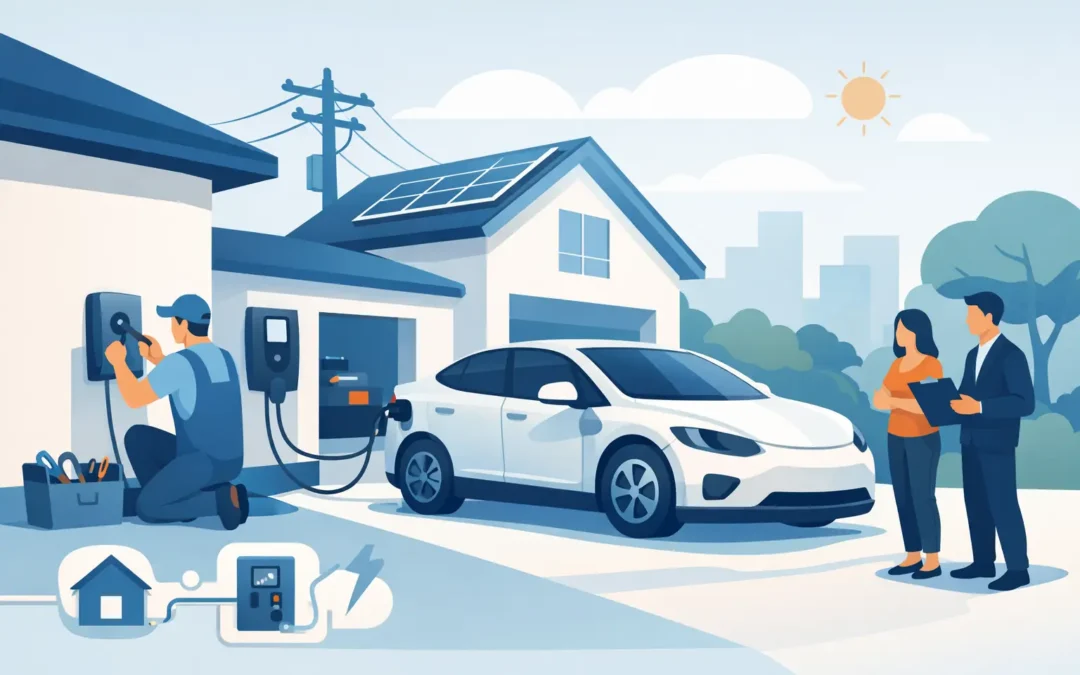
The first surprise for most homeowners is that learning how to install EV charger equipment is not really about mounting a box on the wall. The real work is making sure your electrical system can handle it safely, consistently, and without causing nuisance trips or expensive rework later.
If you want reliable charging at home, the job starts with your panel, your available capacity, and the charger type that fits your vehicle and driving habits. For some properties, installation is straightforward. For others, it can mean a panel upgrade, a longer cable run, or planning around detached garages, condo parking, or shared commercial spaces.
How to install EV charger the right way
A proper EV charger installation starts with a site assessment. That means looking at your main service size, panel condition, breaker space, grounding, charger location, and the route from the panel to the charger. A licensed electrician will also check whether your setup needs load calculations to confirm the system can support the added demand.
This is where many online how-to guides oversimplify things. A Level 2 charger can draw a significant amount of power for hours at a time. That makes it different from plugging in a small appliance or even adding a standard outlet. The charger has to be matched to the circuit, the breaker, the wire size, and the actual capacity of the property.
For most homes, Level 1 charging uses a standard outlet and is slow but simple. Level 2 charging is what most drivers really want because it cuts charging time dramatically. It usually requires a dedicated 240-volt circuit, and that is where professional installation matters.
Start with your charging needs
Before any tools come out, it helps to answer one practical question: how fast do you actually need to charge? If you drive short daily distances and can leave the car plugged in overnight, a lower-amperage Level 2 setup may be enough. If you have two EVs, a long commute, or limited charging windows, you may need a higher-capacity charger.
Bigger is not always better. A higher-amperage charger may sound appealing, but if your electrical service is already close to its limit, it can trigger extra upgrade costs. In many cases, a smart charger with load management offers a better balance between charging speed and installation cost.
Check panel capacity and breaker space
This is often the make-or-break step. A home may have 100-amp service, 150-amp service, or 200-amp service, but that number alone does not tell the whole story. What matters is how much spare capacity is actually available after accounting for existing loads such as air conditioning, electric ranges, dryers, hot tubs, and other major equipment.
If the panel has no space for a new double-pole breaker, or if the load calculation shows the service is already near capacity, the installation may require a subpanel, load-sharing equipment, or a full service upgrade. That adds cost, but it is better to know upfront than discover it halfway through the job.
In older homes, the panel itself may be the issue. If it is outdated, damaged, or already overloaded, adding an EV charger is not the place to cut corners.
Choosing the charger and installation location
The best charger location is usually the one that keeps cable runs reasonable and daily use easy. For many homeowners, that means the garage wall near the vehicle charging port. For others, it may be an exterior wall, a carport post, or a detached garage.
Distance matters. The farther the charger is from the electrical panel, the more labor and material the job usually requires. Long wire runs, trenching, wall fishing, concrete work, or weatherproof equipment can all affect the final price.
You also want to think about how the charger will be used every day. A technically possible location is not always the best one. If the cable barely reaches the car, crosses a walkway, or leaves the charger exposed to avoidable damage, it is worth revisiting the layout.
Plug-in vs hardwired
Some EV chargers are plug-in models, and some are hardwired. Both can work, but the right choice depends on the equipment, local code requirements, and how permanent you want the setup to be.
A plug-in charger can be convenient if you may replace or relocate it later. A hardwired charger often offers a cleaner, more secure installation and may be required or preferred for higher-amperage setups. This is one of those details where the right answer depends on the property and the charger model, not just personal preference.
Permits, code, and why DIY is risky
If you are researching how to install EV charger equipment yourself, the biggest issue is not whether you can physically mount it. It is whether the installation will meet electrical code, pass inspection where required, and operate safely under sustained load.
EV chargers are not casual add-ons. They are continuous loads, which means the circuit and overcurrent protection have to be sized correctly. Wire type, conduit requirements, outdoor protection, GFCI rules, disconnect requirements, and mounting height can all come into play depending on the charger and the site.
A DIY installation can create real problems. Best case, the charger does not work properly. Worse, you end up with overheated wiring, breaker trips, inspection issues, insurance problems, or equipment damage. For businesses and commercial sites, code compliance is even more critical because liability and operational downtime are on the line.
That is why most property owners are better served by hiring a licensed electrician who handles EV charger installations regularly. The job moves faster, the installation is cleaner, and the result is easier to trust.
What the installation process usually looks like
Once the site is assessed and the charger is selected, the electrician will map the circuit route, confirm breaker sizing, and determine whether any panel upgrades or load management devices are needed. If permits apply, those are handled before work begins.
The physical installation typically includes mounting the charger, running the dedicated circuit, installing the breaker, making all terminations, labeling the panel, and testing the equipment. If the charger is outdoors, weatherproofing and proper enclosure ratings are part of the job, not optional extras.
Testing matters. A charger should not just power on. It should be verified for proper voltage, stable operation, correct breaker function, and safe charging performance with the vehicle.
Common issues that affect cost and timing
A basic installation near the panel is usually the fastest and most affordable. Costs rise when the panel is full, the service is undersized, the charger location is far away, or access is difficult.
Older properties can add another layer. Hidden wiring conditions, masonry walls, detached structures, and outdated panels often mean more labor. Commercial and industrial settings may also require planning around operating hours, tenant access, parking layouts, and power distribution demands.
If you are comparing quotes, make sure you are comparing the same scope of work. One quote may include permits, a load calculation, mounting hardware, and full testing, while another may leave those items out.
Homeowners, businesses, and multi-unit properties
The answer to how to install EV charger equipment changes depending on the property type. A single-family home is usually the most straightforward. A small business may need to think about employee use, customer access, billing, and future expansion. Multi-unit residential properties often involve shared electrical infrastructure, condo rules, metering questions, and longer approval timelines.
That is why planning ahead matters. If you think you may add another EV in the future, it often makes sense to size parts of the installation with expansion in mind. Spending a little more now can prevent reopening walls or reworking circuits later.
For property owners in Toronto and the GTA, this is becoming a more common upgrade across homes, retail sites, and commercial buildings. The demand is growing, but the basic rule stays the same: the charger should fit the property, not the other way around.
When to call a licensed electrician
If your panel is older, your service size is unclear, your garage is detached, or you want a Level 2 charger, it is time to bring in a professional. The same goes for commercial installations, shared parking areas, or any project where permits and inspections may be required.
A good electrician will not just install the unit. They will explain what your property can support, what upgrades are actually necessary, and what options make the most sense for your budget. That practical approach is what saves time and avoids paying twice.
At Eclipse Electrical Services, that is how EV charger work is approached – clear advice, safe installation, and no unnecessary complication. If you are planning to add charging at your home or property, the smartest first step is a proper assessment. A clean install starts with honest answers, and that makes the finished job a lot easier to live with.