
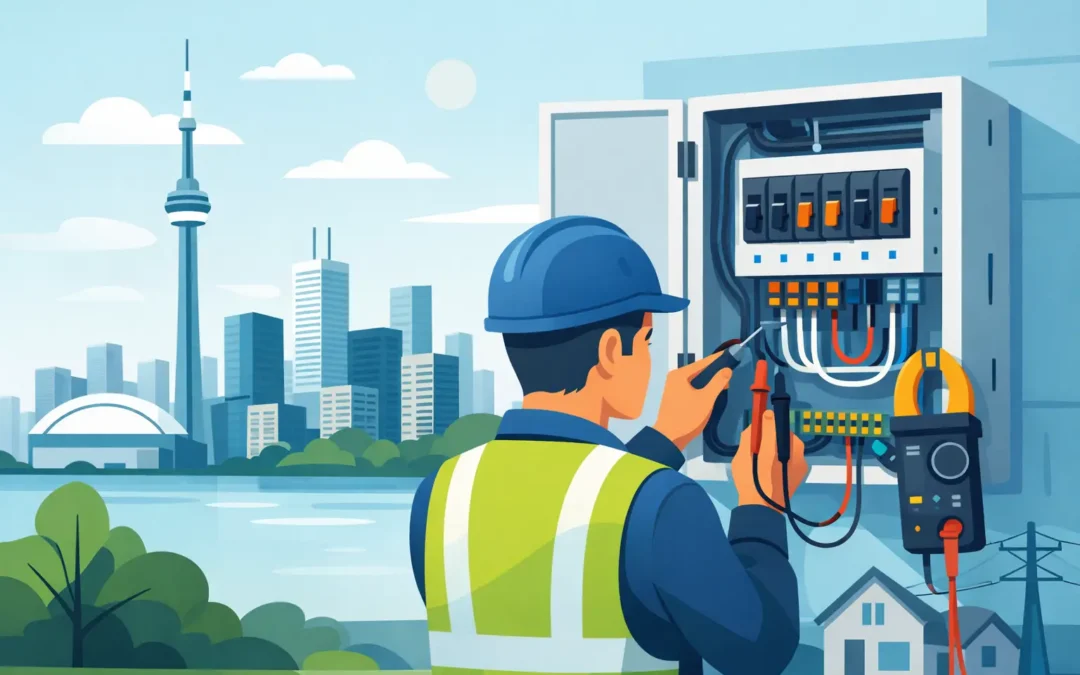
If your breakers trip when the AC kicks on, the lights dim when appliances start, or your panel still runs on an older fuse setup, an electrical panel upgrade Toronto property owners put off too long can turn into a safety and reliability problem fast. In a city with aging homes, basement renovations, EV charger installs, and growing power demands, the panel matters more than most people realize.
A panel upgrade is not just about adding more amperage. It is about making sure your electrical system can safely handle the way the property is actually being used. For homeowners, that might mean a kitchen renovation, a finished basement, or a new heat pump. For commercial spaces, it could mean tenant improvements, added equipment, or code-related corrections found during maintenance or inspection.
When an electrical panel upgrade in Toronto makes sense
A lot of panels get attention only after something stops working. That is usually late in the process. The better time to look at your panel is when you start noticing patterns – repeated breaker trips, buzzing, heat around the panel, limited breaker space, or older equipment that has not kept up with newer electrical loads.
Older Toronto homes are a common example. Many were built long before today’s demand for central air, induction ranges, home offices, sump pumps, and EV charging. A 60-amp or outdated 100-amp service may still function day to day, but that does not mean it is the right fit for the property. If the system is stretched, nuisance trips become more common and adding new circuits gets harder.
For businesses, the issue is often capacity and uptime. A small shop may need more power for refrigeration, lighting, point-of-sale systems, or specialized equipment. A commercial unit going through a fit-out may also need panel changes to support the new layout. In those cases, the upgrade is less about convenience and more about keeping operations stable and avoiding recurring electrical faults.
Common signs your panel is no longer enough
Some warning signs are obvious. Others are easy to ignore because the building still has power. If breakers trip regularly, especially when multiple appliances run at once, that is a sign the system may be overloaded or poorly distributed. If lights flicker when larger equipment starts, that points to strain somewhere in the system.
An outdated fuse box is another clear signal. Fuse systems are not automatically unsafe just because they are old, but they are usually less practical for modern electrical needs, and many property owners upgrade them when renovating, selling, or addressing insurance requirements.
You may also run into a more basic problem – no room left in the panel. If every new addition requires a workaround, tandem breaker discussion, or shifting circuits around just to create space, the panel may be at its limit. That matters when you want to install an EV charger, add a legal basement apartment, expand office equipment, or bring in heavier mechanical loads.
A panel that feels warm, smells burnt, shows rust, or has visible damage is not something to watch and wait on. Those conditions need a licensed electrician to assess the situation properly.
What an electrical panel upgrade Toronto job usually involves
The scope depends on the property and the reason for the upgrade. In some cases, the work is mainly replacing an old panel with a new one and reorganizing circuits properly. In others, the project includes a service upgrade, new breakers, grounding updates, meter-related coordination, or additional circuits for new equipment.
For example, adding an EV charger often raises a practical question. Can the existing panel support the charger without overloading the service? Sometimes the answer is yes with the right load calculation and circuit planning. Sometimes the answer is no, and the property needs a panel or service upgrade first. The same goes for major renovations, electric heating changes, and commercial fit-outs.
A proper upgrade starts with evaluating the actual load, not guessing based on square footage alone. That is where experience matters. The right electrician looks at the age of the system, existing service size, intended additions, code requirements, and whether the current panel is still safe and serviceable.
Cost depends on the building, not just the panel
People often ask for a flat number, but panel upgrade pricing depends on the condition of the existing system and how much work is needed around it. A straightforward panel replacement in a property with decent access is different from a full service upgrade in an older building where grounding, meter coordination, or circuit corrections are also needed.
Permits, utility coordination, panel size, and the number of circuits all affect the final price. So does the type of property. A detached home, retail unit, industrial workspace, and multi-tenant commercial building each come with different requirements.
This is also where cheaper quotes can be misleading. If one estimate leaves out needed code updates, proper labeling, or cleanup of existing wiring issues, it may look attractive at first and cost more later. A good quote should be clear about what is included, what is being corrected, and whether there are any likely extras based on what was seen onsite.
Why licensing and code compliance matter
Electrical panel work is not a handyman job. It affects the safety of the entire system. A licensed electrical contractor should handle load calculations, panel replacement, circuit organization, grounding and bonding, permits where required, and final testing.
That matters for safety, but it also matters for insurance, property sales, tenant occupancy, and future renovation work. If an unlicensed or poorly documented panel upgrade causes issues later, the property owner is usually the one left sorting out the consequences.
In Toronto, where many buildings have older infrastructure and renovations layered over decades, code compliance is not always simple. A good electrician does not overcomplicate that. They explain what needs to be done, what can stay, and what should be corrected now rather than pushed off until the next problem shows up.
Timing, power shutdowns, and what to expect
Most property owners worry about downtime, and fairly so. Panel upgrades usually require a planned power shutdown, but with good coordination the disruption can be kept manageable. For residential work, that often means scheduling the job around the household’s needs and making sure the shutdown window is clearly explained in advance.
For commercial and industrial properties, timing is even more important. The work may need to happen around operating hours, tenant needs, refrigeration loads, or equipment sensitivity. In those settings, planning is part of the job. The goal is not just to complete the upgrade, but to do it without creating avoidable business disruption.
Not every job is identical. Some upgrades move quickly because the existing system is accessible and the scope is clean. Others take longer because old wiring conditions, added circuits, or utility-side coordination change the timeline. That is normal. What matters is getting a realistic plan upfront.
Panel upgrades and future-proofing
A panel upgrade should solve today’s problem without creating tomorrow’s limit. If you already know you are adding an EV charger, finishing a basement, upgrading HVAC equipment, or expanding a commercial space, that should be part of the planning now.
This does not mean everyone needs the largest possible service. Overspending for capacity you will never use does not make sense either. The right approach is practical – size the panel and service around realistic needs, available load, and near-term plans for the property.
That kind of planning helps avoid repeat work. It also leaves room for cleaner circuit layouts and easier maintenance later. For many property owners, that is one of the biggest benefits. The system becomes safer, more dependable, and easier to expand when needed.
Choosing the right contractor for the job
Panel work is one of those services where trust matters as much as price. You want an electrician who shows up on time, explains the scope clearly, identifies risks before the work starts, and finishes with a panel that is labeled, tested, and ready for real use.
That is especially true if the upgrade is tied to a renovation, emergency issue, or tenant deadline. Fast response matters, but so does workmanship. A rushed install that leaves loose ends behind is not a bargain.
Eclipse Electrical Services handles panel upgrades for homes, commercial properties, and other buildings that need safe, dependable electrical capacity without unnecessary delays. The focus should always be simple – licensed work, clear communication, fair pricing, and a system that holds up when the load is actually on it.
If your panel is outdated, undersized, or already showing signs of strain, it is worth addressing before it turns into a larger outage, safety issue, or stalled project. A good panel upgrade does more than add power – it gives the property a safer foundation for everything that comes next.